

Ralph Waldo Emerson (1803 – 1882) wrote: “The future belongs to those who prepare for it.”
Life is full of choices. What we do with those choices decides our future. We must develop our talents and acquire skills, gain knowledge and learn the lessons of life … no matter what age we are. To achieve our goals, we must work hard by studying and learning all we can. Our goal is to take one step at a time until our dream is fulfilled. We should not compare ourselves to others, noticing their achievements and how quickly they obtained them. We should be concerned with our own growth.
Hugh B. Brown (1883 – 1975) said, “We are not endeavoring to get ahead of others, but to surpass ourselves.”
We must decide what our goal is, work hard, pay the price, and never give up. Helen Keller (1880 – 1968) said, “We can do anything we want to if we stick to it long enough.”
Helen Keller is a good example to us all. She was deaf and blind but never let that stop her progress. She didn’t want to be ignorant or live a life of mediocrity. She wanted to rise above her circumstances.
Elizabeth Stanton is another example of perseverance. She spoke out for women’s rights. She said that women should have the right to vote and receive equal education. Elizabeth had received a higher education at Troy Seminary in New York and felt all women deserved the right to be educated.
When she gave lectures on the subject, it was frowned upon. A pastoral letter from a minister in Massachusetts said a woman who speaks publicly is “unwomanly and unchristian.” The pastor also mentioned that it would “threaten the female character with widespread and permanent injury.” Why were women being held back? Even though it was not proper, she still gave her opinions.
Elizabeth was also an abolitionist and fought adamantly against slavery, prejudice, and inequality but it was not readily accepted. When Elizabeth Stanton went with her husband to a convention in England that was against slavery, she tried to give her opinion but was put down and told that women were not permitted to give speeches. It was solely a man’s place to speak publicly. She didn’t let that stop her. She fought for Women’s Rights for years.
Life is full of choices. When we have challenges in our lives, we wonder if we made the right choice, if we should have done something different. How would life have turned out if we had chosen another direction?
It touched my heart when I read my great grandmother’s experiences. Hannah and her husband came here to America in the mid-1800s for a better life. On the ship from England, Hannah’s one-year-old daughter became very ill, which resulted in deafness. One year after arriving in America, Hannah gave birth to a baby boy but she was not meant to have him long. He died six weeks later. The following year, the sheriff came to her door and announced that her husband had been murdered on the streets of St. Louis, Missouri. Realizing she had to make a living for her children, Hannah took a job as a maid at the largest hotel in St. Louis, hoping to earn enough money to move on.
When her family heard the news, they volunteered to pay for her passage if she returned. But she made the choice to stay. What a courageous woman! If I were Hannah, would I have doubted my decision to go to America? Would I have turned around and headed back to my family in England?
After five years, Hannah had earned enough money to board a riverboat and head northward, far away from St. Louis. That was when she met a wonderful man who fell in love with her. My great grandmother is an example to me. If I were in her shoes, I wonder if I would have had that much courage. Life is full of choices.
Spencer W. Kimball said, “Life gives to all the choice. You can satisfy yourself with mediocrity if you wish. You can be common, ordinary, dull, colorless; or you can channel your life so that it will be clean, vibrant, progressive, useful, colorful, rich.” (“Lesson 35: Wise Choices,” Young Women Manual, 1993, 134)
As we study and learn, we build character, qualities that make us distinctive. We must find out what kind of person we truly are. We might even find hidden talents we didn’t even know we had.
William James O´Shea said, “Character development is the great, if not the sole, aim of education.” (Richard Evan’s Quote Book, Publishers Press, 1971, p. 76.)
Character development is an important part of life. That’s when we learn integrity, wisdom, responsibility, discipline, and to overcome prejudice. Our intellectual growth is as important as our spiritual growth.
David O. McKay said, “True education does not consist merely in the acquiring of a few facts of science, history, literature, or art; but in the development of character.” (Conference Report, April 1928, 102)
While hard work is important, attitude makes a person successful. If we have a deep belief in our cause, then we can accomplish anything. Men aren’t great by accident. It takes hard work and a belief in yourself. If we trip a few times along the way and feel foolish, don’t let it bother you.
Dieter F. Uchtdorf said, “Our destiny is not determined by the number of times we stumble but by the number of times we rise up, dust ourselves off, and move forward.”
Our life is full of choices. What we make of our life is up to us. The important thing is to do the best we can with what we’ve got. Remember that intellectual learning is as valuable as character development.
“Our business in life is not to get ahead of others but to get ahead of ourselves. To break our own record, to outstrip our yesterdays by today, to bear our trials more beautifully than we ever dreamed we could, to give as we never have given, to do our work with more force and a finer finish than ever. This is the true objective. And to accomplish this task, our attitude is reflected in a determination to make the most of our opportunities.” ~ Thomas S Monson (1927 – 2018)
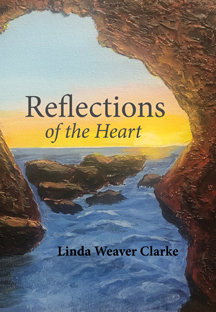
In Reflections of the Heart, I give inspirational advice for all ages. You will learn the secret of happiness and how to deal with the trials in your life. Does music really soothe the soul and help you when you’re frustrated? Does it matter what kind of music you listen to? Is laughter really the best medicine? If so, how does it make a difference in your life? How important is it to develop your spirituality? These are the subjects discussed in this book.