

Most believed it was a man’s world when it came to journalism but there were several women who were so impressive with their writing skills that the publisher took a chance on hiring a female journalist. In doing so, it actually helped the sales of their papers. In France, Anne-Marguerite Petit du Noyer (1663-1719) was a famous female journalist. In fact, her articles were read all over Europe. She wrote about the negotiations that led up to a series of peace treaties and she also reported on scandal and gossip.
A notable writer in American history was Emily Edson Briggs, born in 1830 in Ohio. In 1861, Emily wrote a letter to the Washington Chronicle in order to defend women’s rights in government. The publisher was impressed with her and asked her to write a daily column for the Chronicle and the Philadelphia Press. Emily accepted his offer and used the pseudonym of “Olivia.”
When Abraham Lincoln was president, Emily was the first woman to visit the White House. She was impressed with their hospitality and kindness as she walked the halls of Congress and described the events taking place. She was also among the first journalists who were admitted to the Press Gallery. For over twenty years, she wrote articles for the paper and her columns became well known all over America.
In 1885, when the Pittsburgh Dispatch printed an article titled “What Girls Are Good For,” Elizabeth Cochrane wrote an indignant letter to the publisher. He was so impressed with her writing skills that he offered her a job. She accepted and used the pseudonym “Nellie Bly.”
Elizabeth wrote about women’s prisons, abandoned children, and much more. In 1887, Elizabeth asked if she could investigate a women’s insane Asylum at Blackwell’s Island to see how they were treated. Pretending to be insane, she had herself committed as a patient. The terrible and unkind conditions were reported in her article. It opened the eyes of everyone and the institution had to make a change.
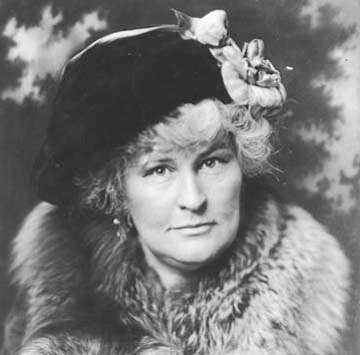
Winifred Sweet Bonfils Black was an excellent journalist and used the pseudonym of “Annie Laurie.” She enjoyed doing undercover work. Some called her a “stunt girl” because of the incredible ways she gathered her stories. In 1892, when she was denied an interview with President Benjamin Harrison, Winifred hid under his railroad car and waited until he sat down to eat. Then she snuck into his dining car and sat down beside him for an interview.
While on another assignment, she dawned some shabby clothes. Collapsing in front of a truck in San Francisco, she pretended to faint. When the men couldn’t revive her, they quickly took her to the hospital. That was exactly what she wanted. Pretending she was poor and without means, Winifred took notes on how she was treated by the staff. After her release, she wrote an article about the way she had been mistreated simply because she had no money. After reading her article, it was reported that some of the staff in her report were fired.
Many times she disguised herself as a boy and was able to expose the terrible conditions in factories and juvenile courts. Her articles made a difference because it created better conditions. She also reported what the city lacked during a natural disaster when people needed help. Realizing their mistakes, the city officials improved on disaster relief. Winifred became one of the most respected journalists because she made a difference.
Eva McDonald Valesh used the pseudonym “Eva Gay.” As a stunt girl reporter, Eva helped many people by improving conditions for factory and service workers. Posing as a worker at a garment factory, she found out what conditions the women were expected to work under. In her article, she wrote about the long hours, terrible wages, and unhealthy conditions. Her article actually inspired a strike, asking for higher wages and better working conditions.
It was unusual for a woman to be a journalist during the 1700s and 1800s. Female columnists have intrigued me a great deal. So I decided to write about an independent young lady who writes her mind. Nothing can stop her from writing the truth and defending the less fortunate. In The Highwayman of Cordovia, the female heroine fights for justice in her small country and her articles inspire patriotism.
In this historical romance, a group of powerful men plan to take over the small country of Cordovia and replace the leader with a king. With the help of a bold highwayman and a patriotic young woman, they work to save their country from being taken over by a power-hungry leader. As they strive to stop the Kingmen and thwart their plans, Christine finds herself falling in love with Austin Knight. The only problem with their relationship is that she thinks he is her knight in shining armor instead of a highwayman. If she finds out his trade, what will her reaction be?
The second book I wrote with a female journalist was A Pleasant Rivalry. In this historical romance,Angelica Davis is surprised when she finds out that an old school chum has returned to Willow Valley to take over his grandfather’s business. Since she writes articles for the Chronicle and Simon Morgan owns the Willow Valley News, they just happen to be rivals. The competition is on. Who will be the first to discover the identity of the jewel thief or the arsonist? Will it be Angelica or Simon? Gradually the feelings she once had for him return as they both search for the same stories. To her surprise, Angelica realizes she is losing her heart to her rival.
You can buy these family friendly books from Amazon as a paperback, eBook, and Audible audiobooks.
The Highwayman of Cordovia: https://www.amazon.com/highwayman-Cordovia-Rebels-Book-ebook/dp/B01N0214KX
A Pleasant Rivalry is available on Audible and Amazon: https://www.amazon.com/Pleasant-Rivalry-Willow-Historical-Romance/dp/1699271178

