
July is pioneer month, a time to think about our ancestors and how they influenced our lives. It’s a time to remember your great grandparents and to be proud of them. We are the people we are because of our ancestors. Thomas S. Monson said, “I admonish all families: search out your heritage. It is important to know those who came before us. We discover something about ourselves when we learn about our ancestors.”
This is true. It’s interesting to learn what traits we inherited from our ancestors. Why do you have an olive complexion? Where does your red hair come from? Why are you so tall? Are you as stubborn as your grandfather? It can be fun to learn about your heritage and all the characteristics you have inherited from them.
James E. Faust said, “Begin to unlock the knowledge of who you really are by learning more about your forebears… In many ways each of us is the sum total of what our ancestors were. The virtues they had may be our virtues, their strengths our strengths, and in a way their challenges could be our challenges. Some of their traits may be our traits.”
I asked myself. Do I have some traits of my great grandparents? In some way, would my challenges be similar to my ancestor’s challenges? Could his or her strengths be my strengths? When I found out how courageous my great, great grandfather was and how he stood up for his beliefs, I became intrigued and wanted to learn more. I wondered if I could be that brave. Here’s an example.
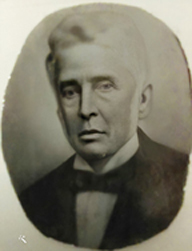
John Davies was from Wales and he worked for a farmer by the name of James Gardner. When Mr. Gardner got word of John’s Baptism, he sent word that he was fired from his job because he did not want a “Mormon” working for him.
One evening John told the missionaries they could hold a meeting in his home to teach the gospel. As soon as Mr. Gardner heard about it, he told John’s daughter to tell her father not to hold another meeting in that house or he would come down in the morning and set fire to their home. The house the Davies we’re renting just happened to belong to this farmer, Mr. Gardner.
Alice ran home and told her father what Mr. Gardner had told her. Turning to the missionary, John said stubbornly, “Elder Williams, go on with the meeting and in the morning I will move my family out of this house.”
After Elder Williams preached a beautiful sermon about our Savior Jesus Christ, he prophesied that Mr. Gardner would not prosper and would die poor. The house was crowded and everyone in attendance heard it. Within two years, Mr. Gardner became very ill and died in poverty.
I asked myself: could my ancestors’ strengths be my strengths? Could their challenges be my challenges? Would I ever have to stand up for my beliefs?
Gerrit W. Gong said, “Connecting with our ancestors can change our lives in surprising ways. From their trials and accomplishments, we gain faith and strength. From their love and sacrifices, we learn to forgive and move forward.”
Could he be right? Will their sacrifices teach us to forgive those who have hurt us? Will their trials and accomplishments help us to gain faith because of their example? Will their trials and sacrifices strengthen us? I would like to tell you a story about a courageous woman who did not back down and stood up for what she believed.
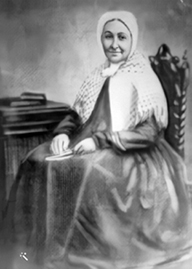
After being forced out of her home in Far West, Missouri because of her religious beliefs, Martha was once again forced out of her home by a mob in Illinois. This time her husband wasn’t beside her because he had passed away from pneumonia. It was just Martha and her seven children.
The leader of the mob was a large burly man. Standing before Martha, he demanded, “Denounce your religion and deny that Joseph Smith is a Prophet of God! If you do, then you will not be hurt and we will not burn down your home.”
Martha had every reason to fear for her life but her strength and faith in Jesus Christ was strong. How could she deny her testimony? She would not deny it. Martha faced this wicked man and his mob with dignity. Stomping her foot, she told him that he could burn it to the ground because she would not deny what she believed to be true.
Martha’s spunk surprised the mob because she was standing up to them and had no fear in her voice. When the leader realized he could not intimidate her, he said, “I’ll give you twenty minutes to pack up and get out.”
With the help of her seven children, Martha gathered all she could into the back of a buckboard. She only had one ox and a cow, so the boys yoked them to the wagon. As they drove away, the mob threw a torch to the roof and burned the house to the ground.
Would I ever have the strength to do what she did? Would I be too afraid to even speak? Would I stand up for my rights like she did? Looking into the piercing dark eyes of the leader, would my testimony of Jesus Christ be unshaken? This courageous woman, Martha Raymer Weaver, was my great, great, great grandmother.
I work at the Family Search Center as a Service Missionary. Being a missionary there isn’t just about genealogy but learning who our ancestors are and how they lived. At FamilySearch, they say that your grandparents’ lives are “made up of stories that document the joys and tragedies of life. Preserving our stories can bless future generations.” Did your ancestors struggle at times and have trials to bear? If so, did it make them stronger? Has it made you stronger?
Dennis Neuenschwander said, “A life that is not documented is a life that, within a generation or two, will largely be lost to memory. What a tragedy this can be in the history of a family. Knowledge of our ancestors shapes us and instills within us values that give direction and meaning to our lives.”
Think about who you are. Were your ancestors musically inclined and was that handed down to you? How about mannerisms and the way we express ourselves? Or the way we walk or even talk? These are questions you may have about your heritage.
Russell M. Nelson said, “We have a natural yearning to connect with our ancestors. This desire dwells in our hearts, regardless of age… When our hearts turn to our ancestors, something changes inside us. We feel part of something greater than ourselves.”
I believe this to be true. Something changed inside me. I learned to feel part of something greater than myself. I’ll tell you how this happened. My grandmother died when I was 15 years old. I didn’t know her very well and didn’t know much about her life. One day I read her autobiography and learned something about her that drew me to her, and I wanted to learn more about my grandmother. What was in her autobiography that grabbed my interest?
It all started when President Lorenzo Snow received a letter from a Mission President in England, asking for lady missionaries to teach the gospel of Jesus Christ because the English people had the mistaken idea that the Church of Jesus Christ of Latter-day Saints mistreated women and they were being abused. The Mission President said that he needed Utah women to be missionaries and prove them wrong.
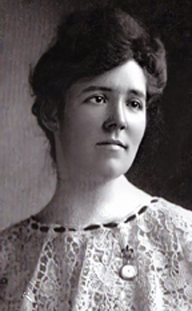
My grandmother, Olive Edna Clark, was one of those first missionaries sent out to teach the gospel of Jesus Christ. At the age of 21, she was the sixth lady missionary sent to England in 1901 for a two-year mission. As I read her mission experiences, I felt a special closeness to my grandmother that I never felt before. Why? I was once a 21-year-old sister missionary. We had something in common!
I learned that they had street meetings where they would sing hymns, teach the gospel, and hand out flyers. That’s something we don’t do today. My grandmother had a beautiful contralto voice and belonged to the well-known Tabernacle Choir before her mission. So you can imagine how her voice easily drew a crowd. She and her companion had a favorite street corner where a half dozen little boys living nearby would watch for them. They learned every word of some of the hymns and would sit on the curb and sing in a loud voice: “igh on the mountaintop.” She thought they were so adorable.
There were times when someone in the group would disagree with their teachings and would try to cause a disturbance. Once someone spit on her companion. Another time someone sicced his dog on them. But the spiritual experiences were those she treasured most. She always listened to the whisperings of the Holy Ghost as she served the Lord.
She wrote: “I knocked on a door. A lady answered and said she knew what I represented and slammed the door. I stood there with a smile on my face and a pleasant gesture. She opened the door the second and third time then asked me in. She said anyone, who can stand there unafraid and with a smile under the circumstances, must have something and know what she’s talking about. I had a nice gospel and social conversation with her and she invited me back again and we became friends.”
My grandmother’s missionary experiences drew me closer to her and I’m excited to meet her in the hereafter. The last time she saw me, I was just a young girl. Does she know how I turned out?
Joseph F. Smith said, “Believe that those who have been faithful, who have gone beyond…can see us better than we can see them; that they know us better than we know them… We live in their presence, they see us, they are solicitous for our welfare, they love us now more than ever… Their love for us and their desire for our well being must be greater than that which we feel for ourselves.”
I hope I have inspired you to sit down and put together your family stories. Don’t put it off. Your children need to be proud of their heritage. I believe our Father in Heaven wants us to learn about our ancestors and understand our heritage.


