Faith, Hope & Charity, Patriotism

Have I Done Any Good in the World?

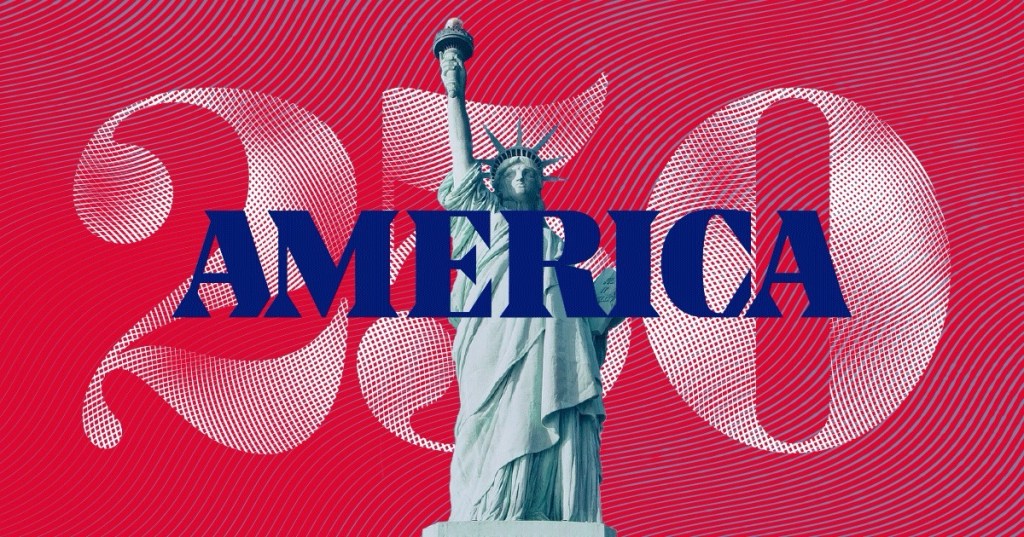
In celebration of the signing of the Declaration of Independence in 1776, there has been a challenge offered throughout America to show our charity to others by volunteering and serving those in need. It was reported to be “the largest volunteer effort in United States history.”

Rosie Rios, chair of the America250 celebration, said, “Think about all the patriots who served in the American Revolutionary War. Think about all the veterans who have risked their lives on our behalf for us to enjoy the freedoms that we have today.”

We should appreciate what they have done and not take it for granted. We have the freedom to worship as we please, freedom of speech, and freedom of press. We can vote for officials rather than be ruled by kings.

I have read about many charitable acts during the America250 celebration. Many are showing genuine concern and compassion for others. And it comes straight from the heart. Jess Whiting encouraged those from my home state of Idaho to do 250,000 acts of service before July 4th and she asked all Idahoans to report their acts of kindness.

Jess said, “I have noticed a subtle difference in our community and among all of our people here.” She has received many reports of charitable acts.

An elderly woman from Caldwell, Idaho wrote: “I am 91 years old and wanted to knit hats for children that are underserved. I knitted 20 hats and gave them to children.” Someone from Kuna, Idaho reported: “I donated $500 to Kuna School District to help pay outstanding lunch debt for children.”

Someone from Burley, Idaho wrote: “I helped a lady whose insurance lapsed to obtain affordable insulin. She doesn’t drive and lives about 10 miles away from the pharmacy and I brought it to her apartment for her.”

Someone reported going with a group to feed people in homeless shelters in Twin Falls. Feeling compassion, ten members of the 1962 graduating class from Payette, Idaho bought food, clothing, toys, backpacks, paper, and notebooks. Then they donated them to the Payette School District.

Wanting to lift the burden of another, someone from Eagle, Idaho reported: “I prepared and brought a meal to a couple. The husband is undergoing cancer treatment and dinner was brought for a treatment day.”

Many charitable organizations are taking part in the America250 celebration. As part of the America250 initiative, The Church of Jesus Christ of Latter-day Saints sent 250 semi-trucks filled with food to 250 food banks throughout the United States.
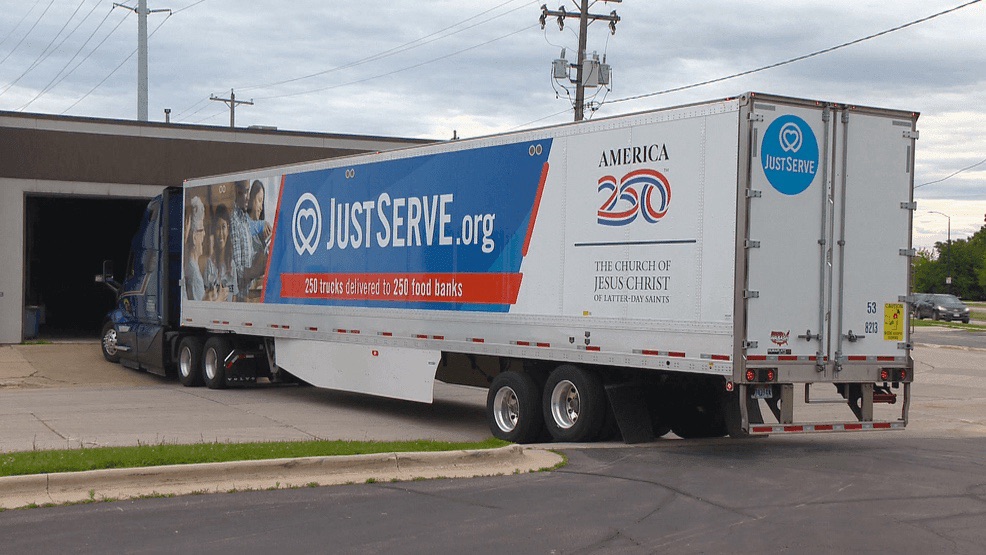
The donations began in November of 2025 and have continued through 2026. Leaving Salt Lake City, the semi-trucks went to Oregon, Arkansas, Texas, Missouri, Michigan. In 2026, they headed for California, Idaho, Arkansas, Arizona, Texas, Tennessee, Alabama, Florida, North Carolina, New York, Nebraska, and Chicago.

Denise Brown, president and CEO of LifeNet4Families said, “Each truckload represents more than food and supplies. It represents dignity, stability and a community coming together to ensure our neighbors are not left behind.”

Micah Chrisman, MANNA FoodBank director of marketing said: “At a time when many families across Western North Carolina are still feeling the strain of rising costs and ongoing recovery challenges, this generous food donation arrives as a powerful reminder that we are not alone.”

In response to the heartfelt appreciation of each food bank, Gerrit W. Gong said America’s “anniversary is an opportunity for all to come together, serve together and express gratitude for the freedoms that have allowed all faiths — including ours — to flourish.”

We are here upon this earth to lift the burdens of others, to bring joy to those in need, to give a hand to those who are struggling. We should make a difference at all times, not just during disasters. It’s important to notice another person’s needs. If we have a feeling that someone is in need of help, follow through with the prompting.

Many years ago, I remember feeling overwhelmed. My new baby was only a month old, toys were strewn across the floor and I didn’t have much energy because of lack of sleep. Not only that we had run out of bread. For lunch I usually fixed peanut butter sandwiches and milk for my three year old and five year old daughters. Why hadn’t I told my husband to pick some up the night before? 

As I stood in the kitchen, looking through the refrigerator and wondering what to fix my children for lunch, I heard a knock at the door. I cuddled my baby in my arms and answered it. There stood a cheerful gray-haired lady with steaming hot bread in her hands. With a smile, she handed it to me and said, “I was baking bread today and thought about you.”

Tears welled up in my eyes as I thanked her, telling her that she couldn’t have come at a better time. She wanted to see my new baby so I invited her in and allowed our sweet neighbor to hold my little treasure. To this day I have a fond memory of that wonderful woman. I have never forgotten that “act of charity.”

In Corinthians 13:2, it says: “Though I have all faith, so that I could remove mountains, and have not charity, I am nothing.” 

Is it possible to make the community that we live in just a little better place? Can we make a difference in the lives of others and in our community? The joy one feels when helping those in need is indescribable. 

Mary Anne Evans, known by her pen name as George Eliot (1819 – 1880), wrote: “What do we live for, if it is not to make life less difficult for each other.”

There are different ways we can show charity and make a difference by sharing our talents. 

When my children were young, I took them to the nursing homes at Christmas time and we would sing familiar songs to the elderly. Their eyes would light up and they would tap their toes to the rhythm. Some would even sing along with us. Years later, my daughters told me that they remembered those days and were glad they had done it. By using our talents, we can uplift others.

Thomas S. Monson said, “We are surrounded by those in need of our attention, our encouragement, our support, our comfort, our kindness… We are the Lord’s hands here upon the earth, with the mandate to serve and to lift His children.”

Each one of us can definitely make a difference in the world by showing charity to others. Make a conscious effort to help those in need, even if it is as simple as just listening to someone who needs to talk.

A lovely hymn reminds us of our duties toward our neighbors: “Have I done any good in the world today? Have I helped anyone in need? Have I cheered up the sad and made someone feel glad? If not, I have failed indeed.” (Have I Done Any Good, Hymns, no. 223.)

Let’s celebrate America250 and show charity by serving those around us.
Patriotism

The Price of Liberty

Freedom is very dear to me and I am grateful for my liberty. Sadly some people take it for granted. There are countries that do not have the liberty we have. The citizens can not say what they feel or worship as they please. In some countries, Christianity cannot be preached. Newspapers, media, and even the Internet are all government controlled. I appreciate my country and the freedom I enjoy. I wonder if we appreciate the patriots who fought for this liberty? 

On July 4, 1776, Thomas Jefferson wrote the “Declaration of Independence,” declaring: “All men are created equal, that they are endowed by their Creator with certain unalienable rights, that among these are life, liberty, and the pursuit of happiness.” These brave patriots hungered for freedom of choice and were willing to fight for their freedom. 

Nathan Hale, a 23-year-old schoolteacher, agreed to go on a dangerous mission for George Washington. He was caught with sketches of British gun emplacements and the penalty for being a spy was death. As he marched to the gallows, he held his head high. Nathan Hale faced the people and declared boldly, “I regret that I have but one life to give for my country.” The patriots knew the value of freedom and were willing to pay the price. 

The Continental Army consisted of farmers and merchants. They lacked enough food for everyone and many times went hungry but yet they still fought for what they believed in. The crossing of the Delaware will never be forgotten. Many were sick, fatigued, and their feet were wrapped with cloth to protect them from freezing weather. George Washington realized they had lost many battles and knew the Continental Army was outnumbered once again, but he was inspired to take his army across the Delaware in a terrible blizzard on Christmas night in 1776. He suspected the Hessians would be weary from the Christmas festivities the night before.

In the early hours of the morning, the surprise attack was a never-forgotten battle of victory that shocked the Hessians, who were German mercenaries and skilled fighters, paid by the British to get rid of the patriots. After a count was taken, it was discovered that not one patriot had been killed in that battle. This victory turned the war around!

The British were stunned at what had happened. They looked down at the Americans and considered them as uneducated rebels. When they found the Continental Army to be so strong, they moved part of their forces to the south, hoping to capture one state at a time. Little did they know what was waiting for them in the south!

Colonial Francis Marion and his men knew how to deal with the enemy in their homeland. He was known as the Swamp Fox and had the most cunning fighting-command in the revolution. He had trained his men to disappear into the thick forest and swamps of South Carolina without a sound. Hidden from sight, they would strike and then quickly move through the woods like silent shadows, fading into the forest and undergrowth. Francis Marion and his men tormented the British army with one ambush after another. This frustrated the British officers because they were helpless in the woods and swamps.

After eight long years, the Americans beat the greatest military power in the world. I am grateful to those patriots who fought for this liberty. When I think about the tremendous price these men paid for our freedom, my heart swells with gratitude. Tears well up in my eyes when I hear the Star-Spangled Banner because I am thankful for these patriots.

I am also grateful for the men and women who have served and are serving to preserve our liberty and the rights of those in other lands. When I see our beloved flag, I remember the Patriots who have fought for our freedom. Please take time to thank a soldier for his service!

Patriotism

The Battle for Freedom

Why do Americans value their freedom and hold it close to their hearts? Why do some get tears in their eyes when they sing “America the Beautiful” or pledge alliance to the flag? Why is freedom of choice important to Americans?

The patriots and many of our ancestors desired to live in a free land, not ruled by a monarchy. They fought with every fiber of strength they had, both bond and free, for the freedom they desired. The Continental Army consisted of farmers and merchants, men who were not learned in the way of combat. These men knew the value of freedom and were willing to pay the price.

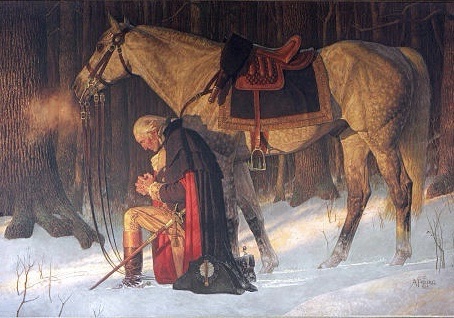
They lost many battles but won the battles that made a difference. The battle that turned the war around for the Americans was the Crossing of the Delaware in 1776. George Washington knew the Continental Army was outnumbered, but he had knelt in prayer and asked for God’s help. That was when it came to him. He would take his army across the Delaware in the middle of the night, hoping the enemy would be sleeping from all the Christmas festivities.

In the early hours of the morning of December 26, 1776, the surprise attack shocked the Hessians, who were German mercenaries, paid by the British to cut down the patriots and end this battle. That day was a never-forgotten battle of victory for the American patriots. The amazing thing about this battle was that not one patriot had been killed. This victory turned the war around.

The British were stunned at what had happened. They considered the patriots as untrained rebels. They figured the war would not last long because they were merely fighting uneducated rogues.

During the war, many of the victories came from the South. Colonial Francis Marion knew how to deal with the enemy in his own homeland. He was known as the Swamp Fox. He had trained his men to disappear into the thick forest and swamps of South Carolina without a sound. Hidden from sight, they would strike and then quickly move through the woods like silent shadows, fading into the forest without a sound. Francis Marion and his men tormented the British army with one ambush after another. This frustrated the British officers who were helpless in the woods and swamps of the South.

While Francis Marion kept the British flustered, the last major battle that made a difference was the Battle at Yorktown, Virginia in 1781. Knowing that General Clinton was stationed in New York and General Cornwallis was in Virginia, General Washington came up with a plan. According to the Army Heritage Center Foundation, “He would fool Clinton into thinking the Continentals were planning to attack New York while instead sneaking away to the south to attack Cornwallis. Washington ordered the construction of large camps with huge brick bread ovens where Clinton could see them to create the illusion that the Continental Army was preparing for a long stay. Washington also prepared false papers discussing attack plans on Clinton, and let these papers fall into British hands.”

In mid-September of 1781, Washington and his men arrived in Virginia, 13 miles from Yorktown, where General Cornwallis and his men had built ten small forts and waited for reinforcements from General Clinton.  Fortunately, “Cornwallis received the unfortunate news that Clinton’s departure from New York had been delayed.”

In the meantime, Washington quickly moved his army south with his French allies to keep Cornwallis in place. At the same time, French naval forces guarded the entrance to Chesapeake Bay, which stopped reinforcements from helping Cornwallis.

It was a genius plan and worked out perfectly. It was Washington who fired the first cannon beginning the “Siege of Yorktown.”  After the capture of various British entrenchments, Cornwallis realized he was trapped and formally surrendered on October 19, 1781. He sent a drummer boy, followed by an officer who was waving a white handkerchief. This was the battle that ended the war. The patriots beat the greatest military power in the world.

Have we ever thought about the tremendous price these men paid for our freedom? The next time you look at an American flag waving in the distance, remember the cost of our freedom. We are “one nation under God, indivisible, with Liberty and Justice for all.” Samuel F. Smith wrote, “Long may our land be bright with freedom’s holy light. Protect us by thy might, Great God, our King!” Without God’s help, we would never have won the war.

Holiday Celebrations, Patriotism

Why We Celebrate Veterans Day

Some people get Veterans Day mixed up with Memorial Day. There is a big difference between the two holidays. Memorial Day honors those in the Armed Services who died during service to their country or died of injuries in battle. But Veterans Day honors all American Soldiers whether living or dead. It is a time to give thanks to those who honorably served their country.

Some Americans may not know why Veterans Day is celebrated in November. The idea came from World War I. On November 11th, 1918, on the 11th hour of the day, an armistice was agreed upon with Germany. In other words a “truce” was made to end the war.

One year later, on November 1919, President Woodrow Wilson declared November 11 as a Day of Remembrance. He called it Armistice Day. It would be a day to give honor to those who valiantly served our country while defending the rights of many people throughout the world.

In Woodrow Wilson’s declaration, he said, “To us in America, the reflections of Armistice Day will be filled with solemn pride in the heroism of those who died in the country’s service and with gratitude for the victory.” 

Once again we entered another war. During World War II, Bob Hope went on tour to entertain the troops. He wanted to give them some joy during this difficult time in their lives. He wrote: “I saw your sons and your husbands, your brothers and your sweethearts. I saw how they worked, played, fought, and lived. I saw some of them die. I saw more courage, more good humor in the face of discomfort, more love in an era of hate, and more devotion to duty than could exist under tyranny.” 

Roosevelt Gubler, a neighbor and relative, served in World War II. Every evening, he would go outside and salute his flag and quote a poem that he had memorized called The Old Ragged Flag written by Johnny Cash. Every Independence Day on Sunday, he would stand up in church and quote this poem with great love in his heart for his country.

Roosevelt would stand proud before the congregation and quote: “I don’t like to brag, but we’re kinda proud of that Ragged Old Flag.” As he came to the end of the poem, I could hear the emotion in his voice as he quoted:

And she’s getting thread bare, and she’s wearing thin,
But she’s in good shape, for the shape she’s in.
Cause she’s been through the fire before
and I believe she can take a whole lot more.
So we raise her up every morning
And we bring her down slow every night.
We don’t let her touch the ground,
And we fold her up right.
On second thought I do like to brag
Cause I’m mighty proud of that Ragged Old Flag.

Armistice Day had become a federal holiday in 1938 but the name changed to Veterans Day on June 1, 1954, honoring all veterans who honorably served their country.

In 1983, President Ronald Reagan gave honor to these valiant men. He said, “Veterans know better than anyone else the price of freedom, for they’ve suffered the scars of war. We can offer them no better tribute than to protect what they have won for us.” 

Americans aren’t the only ones who celebrate this day. There were other countries involved during these World Wars. On November 11th, Canada honors the veterans of World War I and II and calls it Remembrance Day. Great Britain calls it Remembrance Sunday, which is on the second Sunday of November. These countries will also take time to observe two minutes of silence at 11 o’clock in the morning every November 11th, saying a prayer in their hearts for those who fought for freedom.

It is so important for us to thank those who have served our country. When a veteran passes you on the sidewalk, don’t forget to thank him or her for their service. Remember to show your deep gratitude. It is not easy for them to leave their family and loved ones to defend the rights of others. Please show respect for their service.

Patriotism, Writing and Arts

Rebels Who Turn Into Heroes

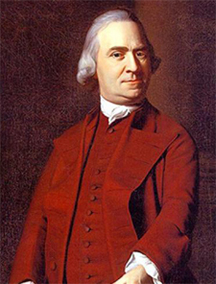
Samuel Adams was considered a rebel and a renegade because he and his compatriots fought against the tyranny of King George who was oppressing the Americans and imprisoning those who could not pay their taxes or spoke their mind in public. He and his men defied the king and his soldiers. Even though he was considered a renegade, the American patriots believed he was a hero. These American “Rebels” formed an army led by General George Washington and they fought for their freedom. The Revolutionary War lasted from 1775 through 1783.

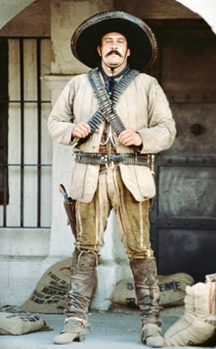
There was another rebel named Pancho Villa who felt the wealthy class of Mexico and its leaders were oppressing the peasants. He openly rebelled against the government of Mexico and had several thousand rebels join his band. The people loved him and considered him a hero for his valiant efforts in fighting for them but the government considered him an outlaw and a renegade.

My good friend and 3rd cousin, Shirley Packer, sent me some surprising and interesting information about Pancho Villa. It gave me a true revelation of what kind of man this rebel really was. James Whetten, her grandfather, met Pancho Villa personally. He was a Christian missionary in Mexico, serving as a Mission President in Chihuahua when he was captured and imprisoned by Pancho Villa’s men and was accused of being a spy for the American Army. This is the account below, taken from James Whetten’s journal.

“President Whetten demanded to speak to the leaders who had apprehended them. After three days of his insisting, he was finally given an audience with Villa and top military advisors. After a few hours, President Whetten discovered that he was being put on trial. It was his burden to prove to them that he was a Mormon missionary and not a spy. What was planned by the military brass to be a very short trial, ending in execution, became a 3-hour discussion about what the Church was doing in Mexico and the principles of the Gospel as applied by members of the church in Mexico. During the discussion, Pancho and his top leaders were very impressed.

“One of his generals, Filipe Angeles, stated, “These men are doing with words and with books, what we’re trying to do with guns!” Pancho agreed with him, and then addressing President Whetten, soulfully said, “I’ve done a lot of things in my life that I’m not proud of.  Do you think there is any hope for someone like me?”

“President Whetten assured him that there was hope for him. They gave him a letter of safe passage through any areas controlled by their soldiers, noting that the letter could also be his death warrant if the federal troops found it on his possession. Pancho Villa was considered a villain and an outlaw throughout the world as well as in Mexico. After that time however, something changed, and historians and the Mexican Secretary of Education began writing about him as a great liberator.  Now he is considered a hero in Mexico.” Taken from James Elbert Whetten’s journal and was published in The Meridian Magazine, August 6, 2019

Isn’t it interesting how rebels are considered renegades by the government, but they are heroes to the people. There are many stories written about a rebel who fights for the rights of others such as Zorro written by Johnston McCulley. There is also another book about a rebel who fights for justice. He fights against the wealthy class, who oppress and treat others poorly. His name is Austin Knight.

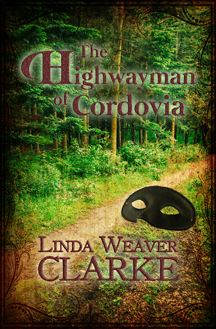
The Highwayman of Cordovia: A group of powerful men plan to take over the small country of Cordovia and replace the leader with a king. With the help of a bold highwayman and the pastor’s daughter, they work to save their country from being taken over by a power-hungry leader. When she writes articles in the local newspaper revealing the corruption in the upper classes, she finds her life is in danger. As they strive to stop the Kingmen and thwart their plans, Christine finds herself falling in love with Austin Knight. The only problem with their relationship is that she thinks he is her knight in shining armor instead of a rebel. If she finds out, what will her reaction be? As a pastor’s daughter, will love override her values?

“The Highwayman of Cordovia takes a pastor’s daughter and mixes her in with a rogue highwayman. The results will surprise you in this battle for freedom and justice. This sweet romance had action and intrigue, mysteries to solve, and villains to thwart.” –Author Charissa Stastny

“Christine and Austin’s story is truly amazing. When Austin and Christine meet again, the feelings they had as kids are still there. Christine is truly a remarkable person. When Austin tries to protect her, their relationship starts to grow. The characters in this book will have you on the edge of your seat, waiting to see what happens next. God is working throughout this whole story. You won’t be able to stop reading it.” –Author Debbie Jamieson

Available on Audible narrated by Carolyn Kashner: https://www.audible.com/pd/The-Highwayman-of-Cordovia-Audiobook/B076CTCJ78.

Available on Amazon: https://www.amazon.com/highwayman-Cordovia-Rebels-Book-ebook/dp/B01N0214KX.

Holiday Celebrations, Patriotism

The Value of Freedom

Freedom is the most precious gift given to man. It isn’t free, but it’s fought for. Why do we value our freedom and hold it so close to our hearts? When we pledge allegiance to our flag, what does that mean to us? Do we take our freedom for granted? Many countries have no rights and are not at liberty to say what they feel or to worship as they please. In some countries, Christianity cannot be preached among the people. Newspapers, media, and even the Internet are all government controlled. Do we appreciate the freedom we possess? Do we appreciate the patriots who fought for the liberty we enjoy?

On July 4, 1776, Thomas Jefferson wrote the “Declaration of Independence,” declaring: “All men are created equal, that they are endowed by their Creator with certain unalienable rights, that among these are life, liberty, and the pursuit of happiness.” These brave patriots hungered for freedom of choice and were willing to die for their freedom.

Nathan Hale, a 23-year-old schoolteacher, felt the conviction of his beliefs so strongly that he agreed to go on a dangerous mission for George Washington. He was caught with sketches of British gun emplacements and the penalty for being a spy was death. As he marched to the gallows, he held his head high. Nathan Hale faced the people and declared boldly, “I regret that I have but one life to give for my country.”

The patriots knew the value of freedom and were willing to pay the price. After eight long years, the Americans beat the greatest military power in the world. Many patriots paid for this freedom with their lives and we should be grateful to those who fought for this liberty. We should honor those who have served and fought to preserve our liberty! When I see our beloved flag, I think of all the men who have fought for our freedom. Take time to thank a soldier for his service!

Holiday Celebrations, Patriotism

Why Honor Our Flag?

When I see our beloved flag, I think of all the men who have fought for our freedom. The soldiers in Iraq, Syria, and Afghanistan have risked their lives so freedom could be preserved. We have troops in other areas, as well. These men have left their wives, children, and families to serve their country.

When arrogant football players refuse to stand and honor the flag, my heart breaks because they don’t appreciate what the soldiers of the past and the soldiers of the present have done for our freedom.

My neighbor, Roosevelt Gubler, was a soldier in World War II. Every morning he would walk outside and look up at the flag that waved in his front yard. He would straighten his shoulders and salute the flag. Every year at church, in celebration of Independence Day, he would quote The Ragged Old Flag from memory, which brought tears to many eyes. He passed away a few years ago, but I will always remember him. He served his country with honor.

Freedom is the most precious gift given to man. It isn’t free, but it’s fought for. Have you ever wondered why tears so freely come to our eyes when we hear the Star Spangled Banner or see our flag waving in the distance? Why do we value our freedom and hold it so close to our hearts?

When we pledge allegiance to our flag, what does that mean to us? Do we take our freedom for granted? Many countries have no rights and are not at liberty to say what they feel or to worship as they please. In some countries, Christianity cannot be preached among the people. Newspapers, media, and even the Internet are all government controlled. Do we understand the freedom we possess? Do you appreciate the patriots who fought for the liberty we enjoy?

On July 4, 1776, Thomas Jefferson wrote the “Declaration of Independence.” This document inspired every patriot to fight for his liberty. As General George Washington stood before the Continental Army with the document in his hand, he took a look at the weary men before him. These underfed men were a sight. Washington knew his men needed to be inspired and this document would do the trick.

As he read the declaration out loud, not a sound was heard as the men listened. Their hearts were touched when he read: “We hold these truths to be self-evident that all men are created equal, that they are endowed by their Creator with certain unalienable rights, that among these are life, liberty, and the pursuit of happiness.”

As these patriots listened, they were buoyed up and ready to fight for their freedom. No one could stop the need they felt for liberty. The Declaration of Independence was inspired of God. These brave patriots hungered for freedom of choice, for their rights, and to worship according to the dictates of their own conscience. The patriots fought with every fiber of strength they had, both bond and free.

Many of these patriots were willing to die for freedom. Nathan Hale, a 23-year-old artist and schoolteacher, felt the conviction of his beliefs so strongly that he agreed to go on a dangerous mission for George Washington. He was caught with sketches of British gun emplacements and the penalty for being a spy was to be hanged. As he marched up the steps of the gallows, he held his head high. When he turned to face the people, he declared boldly, “I regret that I have but one life to give for my country.”

The patriots knew the value of freedom and were willing to pay the price. Most of the victories in the south came from Colonial Francis Marion and his men. Francis Marion knew how to deal with the enemy in his own homeland. He was known as the Swamp Fox and had the slyest fighting command in the whole revolution. He had trained his men to disappear into the thick forest and swamps of South Carolina without a sound. Hidden from sight, they would strike and then quickly move through the woods like silent shadows, fading into the forest and undergrowth. Francis Marion and his men tormented the British army with one ambush after another. This frustrated the British officers because they were helpless in the woods and swamps.

After eight long years, the Americans beat the greatest military power in the world. Many patriots paid for this freedom with their lives and we should be grateful to those who fought for this liberty. We are a great nation with ancestors who fought to be free.

Show your appreciation for your freedom! Respect the flag! Honor those who have served and fought to preserve your liberty! Take time to thank a soldier for his service!