Holiday Celebrations

Juneteenth is a Time to Celebrate

“We hold these truths to be self-evident, that all men are created equal, that they are endowed by their Creator with certain unalienable Rights, that among these are Life, Liberty and the pursuit of Happiness.” ~Declaration of Independence

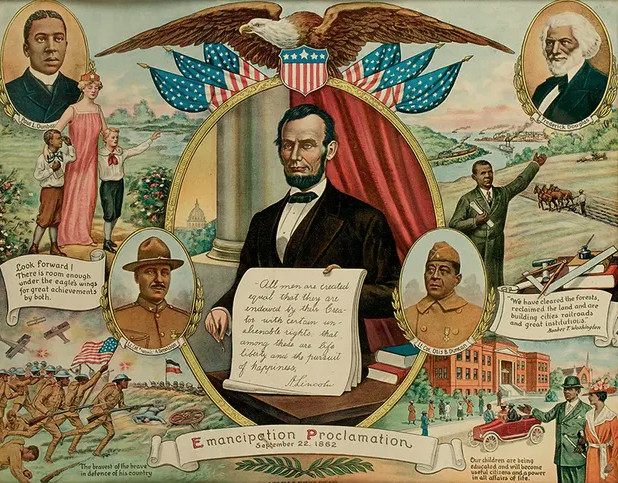
President Abraham Lincoln believed these words and wanted freedom for everyone. He wanted equality. When he signed the Emancipation Proclamation in September of 1862, proclaiming that slavery was to be abolished, it went into effect on January 1, 1863.

This proclamation freed all people who were under involuntary servitude in the Confederate States. After General Robert E. Lee surrendered in Virginia on April 9, 1865, it was found that slavery still remained in Texas. In June of 1865, General Gordon Granger and some federal troops went to Galveston, Texas to enforce the law. At that time, there were around 250,000 slaves in Texas.

In December of 1865, the 13th Amendment was added to the United States Constitution, which abolished slavery in the United States. But President Abraham Lincoln never got to see the final ratification of the amendment because he was assassinated on April 14, 1865.

The following year on June 19th, the citizens of Texas organized the first celebration and called it “Jubilee Day” because that was the day the federal troops arrived in Texas to free all enslaved people. This holiday became popular throughout Texas and was soon called Juneteenth. In 1979, Texas made Juneteenth an official holiday. It was a day of celebrations, which included church services where they thanked God for the blessing of freedom. It was a day of rejoicing. In 2021, it finally became a federal holiday.

As we celebrate Juneteenth, we need to realize that we are all brothers and sisters with the same Father in Heaven, no matter the difference of race, religion, or culture. We are all God’s children and we are equal in His eyes.

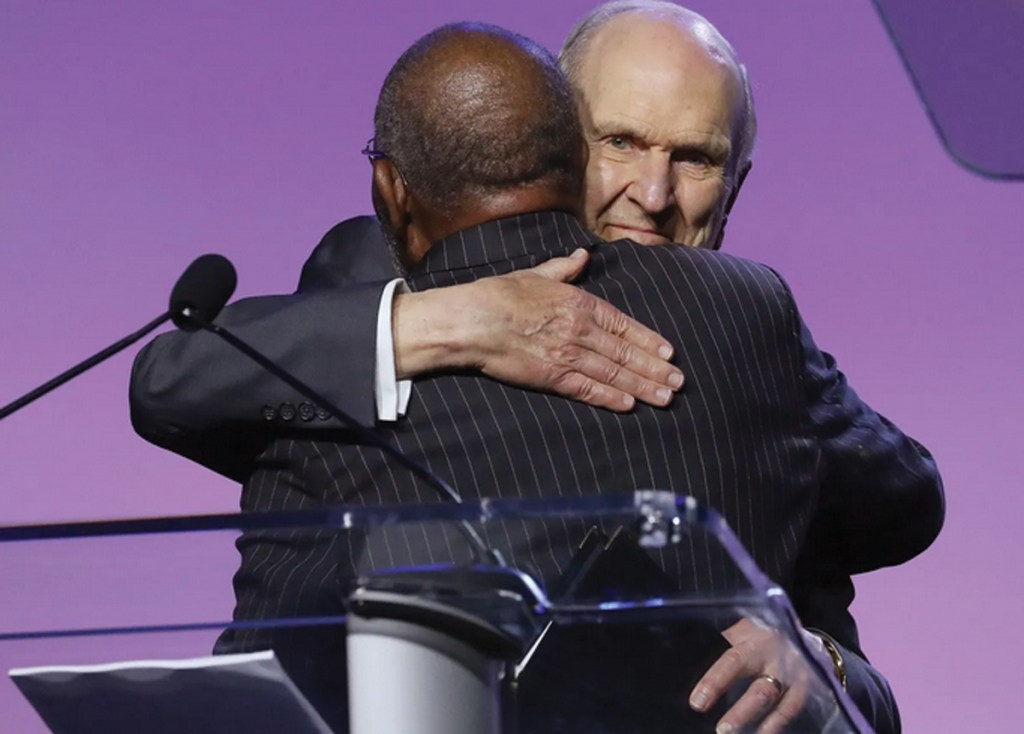
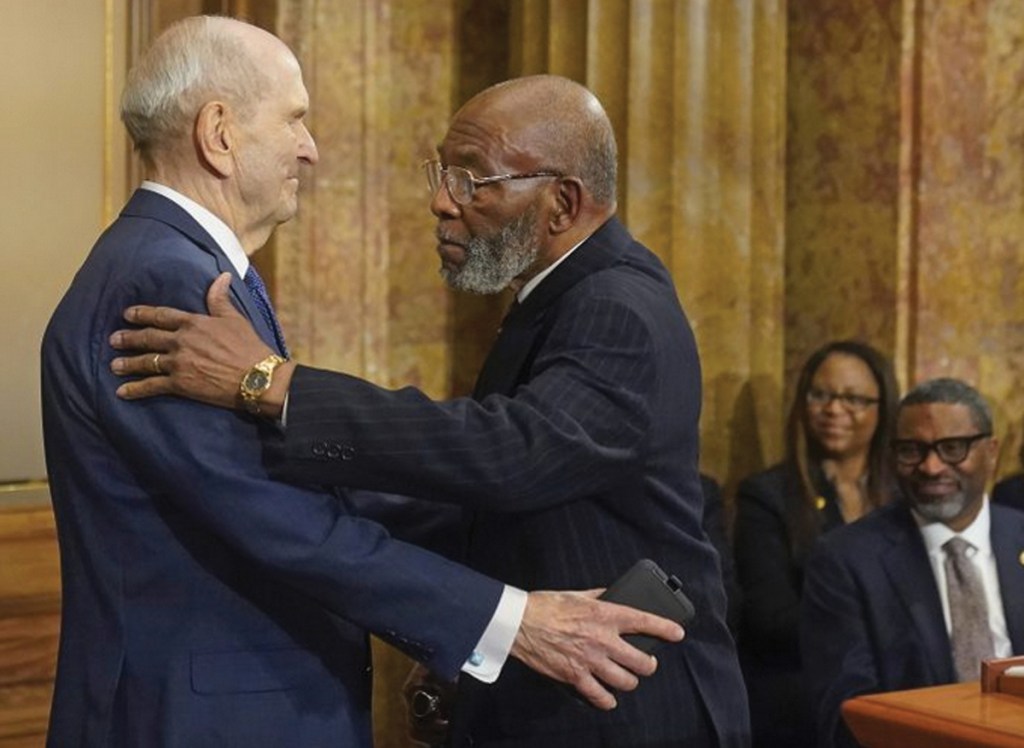
Reverend Amos C. Brown and President Russell M. Nelson, two spiritual leaders from two different faiths, embrace one another.

Jesus taught, “This is my commandment, that ye love one another, as I have loved you.” (John 15:12)

Faith, Hope & Charity, Holiday Celebrations, Jesus Christ

Why Is Easter Important To You?

Have you ever explained to someone who is not a Christian why you celebrate Easter? Have you ever thought about how you would explain the reason you believe in Jesus Christ and why He is important in your life? This is a question that most of us probably haven’t thought about before.

One day Ahmad S. Corbitt met a woman who asked him if he were a Christian. He replied that he was. He soon discovered that this Asian woman was not a Christian so he asked her, “Do you know why I as a Christian believe in Jesus Christ?”

I wondered how he would explain this personal belief to her? If someone didn’t understand who Christ was, how would I explain my beliefs? To this lady, Jesus was just a prophet that Christians believe in.

I liked how Ahmad Corbitt explained that we are all children of God and lived with our Heavenly Father before He sent us here to this earth. Then he told her that we faced “two main obstacles in this world: (1) physical death—the separation of our bodies from our spirits. And (2) spiritual death—our separation from God because our sins, mistakes, and flaws as mortals distance us from His holy presence.”

We know that God is merciful and loves all His children, so He provided a plan for us. It was a plan to help us overcome both physical and spiritual death. In the scriptures, it says: “God so loved the world, that he gave his only begotten Son, that whosoever believeth in him should not perish, but have everlasting life.” (John 3:16)

We needed a Savior, someone who could help us with these two “obstacles.” Ahmad Corbitt said: “Someone with infinite godly power to overcome all such opposition and obstacles would need to save us… Jesus Christ is that Savior. He had to suffer, die, and rise again—His infinite Atonement—to redeem all humanity from physical death and to give eternal life with God and our families to all who would follow Him.”

Ahmad was right. Jesus Christ suffered for our sins so we could be forgiven of our mistakes and wrong choices in this life. He also gave His life for us so we could be resurrected. Jesus Christ was the literal Son of God and the only one who could suffer for us. If you were approached by someone and asked why you believe in Christ, would you be able to explain your beliefs to him or her so they would understand?

Happy Easter, everyone!

A very touching video

Holiday Celebrations, Writing and Arts

A Fun Valentine’s Story

The writing of love notes to someone for Valentine’s Day has been popular since the 1700s. Many people made their own Valentines to give to a loved one. In the 1820s, special stationary was sold for Valentine greetings and was popular in the United States and Great Britain. In the 1840s, Valentine cards were finally created. They were sheets with embossed borders and illustrations that could be folded and sealed with wax.

The New York Courier in1830 wrote a humorous article about Valentine’s Day and picking a husband or wife at this time. It said: “We have ascertained the fact that the bachelors are moving around the city and actually making preparations for the celebration of St. Valentine’s Day. They have positively crawled out of their flannels, trimmed their whiskers, shaved the growth of ages, straightened the vertebrae, and bound them up in cloaks ten yards wide to keep the cold weather at a distance during the approaching festival. We give the ladies fair warning to hold themselves in readiness. The picked youth of the city, such as will make loving husbands, are to be present, if God prosper them.”

This article made me laugh. I love holidays, especially in fictional stories. One of my books is a Collection of Six Holiday Stories. Each story is fun and full of surprises. The first story is about Valentine’s Day. The Valentine Bandit has struck again. Each year he sneaks out of his hiding place and finds some poor unsuspecting widow to surprise. He is spreading happiness throughout the city of Willow Valley. Many a young girl wants to meet this bandit, but he is too sly to be caught. Reports say he has a black mask just like a bandit and is dressed all in black. Valentine’s Day is a day to show that we care about others, and this bandit is doing just that.

Check out Holidays in Willow Valley below and see what you think. Then read about other holidays, as well. Happy Valentine’s Day, everyone! I hope you have a great week.

This book is vailable as an eBook in Kindle Unlimited, as a Paperback, and as an audiobook.

Christmas, Holiday Celebrations, Jesus Christ

The Spirit of Giving at Christmastime

I read a story years ago that touched my heart like no other. I had heard of many stories about charity during Christmastime but none ever affected me like the one I read long ago. It brought tears to my eyes and I never forgot it. It was a true story that took place six years after World War II ended. This story reminds us to have compassion for our fellow man. Thomas S. Monson tells of an experience he had when he found out that someone was in need. Here is his story:

On a cold winter’s night in 1951, there was a knock at my door. A German brother from Ogden, Utah, announced himself and said, “Are you Bishop Monson?” I answered in the affirmative. He began to weep and said, “My brother, his wife, and family are coming here from Germany. They are going to live in your ward. Will you come with us to see the apartment we have rented for them?”

On the way to the apartment, he told me he had not seen his brother for many years. Through the holocaust of World War II, his brother had been faithful to the Church, once serving as a branch president before the war took him to the Russian front.

I observed the apartment. It was cold and dreary. The paint was peeling, the wallpaper soiled, the cupboards empty. A forty-watt bulb, suspended from the living room ceiling, revealed a linoleum floor covering with a large hole in the center. I was heartsick. I thought, “What a dismal welcome for a family which has endured so much.”

My thoughts were interrupted by the brother’s statement, “It isn’t much, but it’s better than they have in Germany.” With that, the key to the apartment was left with me, along with the information that the family would arrive in Salt Lake City in three weeks—just two days before Christmas.

Sleep was slow in coming to me that night. The next morning was Sunday. In our ward welfare committee meeting, one of my counselors said, “Bishop, you look worried. Is something wrong?”

I recounted to those present my experience of the night before, revealing the details of the uninviting apartment. There were a few moments of silence. Then Brother Eardley, the group leader of the High Priests, said, “Bishop, did you say that apartment was inadequately lighted and that the kitchen appliances were in need of replacement?” I answered in the affirmative. He continued, “I am an electrical contractor. Would you permit the High Priests of this ward to rewire that apartment? I would also like to invite my suppliers to contribute a new stove and a new refrigerator. Do I have your permission?”

I answered with a glad “Certainly.”

Then Brother Balmforth, the Seventies president, responded, “Bishop, as you know, I’m in the carpet business. I would like to invite my suppliers to contribute some carpet, and the Seventies can easily lay it and eliminate that worn linoleum.”

Then Brother Bowden, the president of the Elders quorum, spoke up. He was a painting contractor. He said, “I’ll furnish the paint. May the Elders paint and wallpaper that apartment?”

Sister Miller, the Relief Society president, was next to speak. “We in the Relief Society cannot stand the thought of empty cupboards. May we fill them?”

The three weeks which followed are ever to be remembered. It seemed that the entire ward joined in the project. The days passed, and at the appointed time, the family arrived from Germany. Again at my door stood the brother from Ogden. With an emotion-filled voice, he introduced to me his brother, his brother’s wife, and their family. Then he asked, “Could we go visit the apartment?” As we walked up the staircase leading to the apartment, he repeated, “It isn’t much, but it’s more than they have had in Germany.” Little did he know what a transformation had taken place and that many who had participated were inside waiting for our arrival.

The door opened to reveal a newness of life. We were greeted by the aroma of freshly painted woodwork and newly papered walls. Gone was the forty-watt bulb, along with the worn linoleum it had illuminated. We stepped on carpet deep and beautiful. A walk to the kitchen presented to our view a new stove and new refrigerator. The cupboard doors were still open; however, they now revealed every shelf filled with food. As usual, the Relief Society had done its work.

In the living room, we began to sing Christmas hymns. We sang “Silent night! Holy night! All is calm, all is bright.” We sang in English; they sang in German. At the conclusion, the father, realizing that all of this was his, took me by the hand to express his thanks. His emotion was too great. He buried his head in my shoulder and repeated the words, “Mein Bruder, mein Bruder, mein Bruder.”

It was time to leave. As we walked down the stairs and out into the night air, snow was falling. Not a word was spoken. Finally, a young girl asked, “Bishop, I feel better than I have ever felt before. Can you tell me why?” I responded with the words of the Master: “Inasmuch as ye have done it unto one of the least of these my brethren, ye have done it unto me.” (Matt. 25:40) (Thomas S. Monson, “A Provident Plan—A Precious Promise,” Ensign, May 1986, 64)

May we remember to give from our hearts during this Christmas season. Kindness and a gentle smile go a long ways and can cheer someone up. Merry Christmas, everyone!

Merry Christmas!

Holiday Celebrations, Patriotism

Why We Celebrate Veterans Day

Some people get Veterans Day mixed up with Memorial Day. There is a big difference between the two holidays. Memorial Day honors those in the Armed Services who died during service to their country or died of injuries in battle. But Veterans Day honors all American Soldiers whether living or dead. It is a time to give thanks to those who honorably served their country.

Some Americans may not know why Veterans Day is celebrated in November. The idea came from World War I. On November 11th, 1918, on the 11th hour of the day, an armistice was agreed upon with Germany. In other words a “truce” was made to end the war.

One year later, on November 1919, President Woodrow Wilson declared November 11 as a Day of Remembrance. He called it Armistice Day. It would be a day to give honor to those who valiantly served our country while defending the rights of many people throughout the world.

In Woodrow Wilson’s declaration, he said, “To us in America, the reflections of Armistice Day will be filled with solemn pride in the heroism of those who died in the country’s service and with gratitude for the victory.” 

Once again we entered another war. During World War II, Bob Hope went on tour to entertain the troops. He wanted to give them some joy during this difficult time in their lives. He wrote: “I saw your sons and your husbands, your brothers and your sweethearts. I saw how they worked, played, fought, and lived. I saw some of them die. I saw more courage, more good humor in the face of discomfort, more love in an era of hate, and more devotion to duty than could exist under tyranny.” 

Roosevelt Gubler, a neighbor and relative, served in World War II. Every evening, he would go outside and salute his flag and quote a poem that he had memorized called The Old Ragged Flag written by Johnny Cash. Every Independence Day on Sunday, he would stand up in church and quote this poem with great love in his heart for his country.

Roosevelt would stand proud before the congregation and quote: “I don’t like to brag, but we’re kinda proud of that Ragged Old Flag.” As he came to the end of the poem, I could hear the emotion in his voice as he quoted:

And she’s getting thread bare, and she’s wearing thin,
But she’s in good shape, for the shape she’s in.
Cause she’s been through the fire before
and I believe she can take a whole lot more.
So we raise her up every morning
And we bring her down slow every night.
We don’t let her touch the ground,
And we fold her up right.
On second thought I do like to brag
Cause I’m mighty proud of that Ragged Old Flag.

Armistice Day had become a federal holiday in 1938 but the name changed to Veterans Day on June 1, 1954, honoring all veterans who honorably served their country.

In 1983, President Ronald Reagan gave honor to these valiant men. He said, “Veterans know better than anyone else the price of freedom, for they’ve suffered the scars of war. We can offer them no better tribute than to protect what they have won for us.” 

Americans aren’t the only ones who celebrate this day. There were other countries involved during these World Wars. On November 11th, Canada honors the veterans of World War I and II and calls it Remembrance Day. Great Britain calls it Remembrance Sunday, which is on the second Sunday of November. These countries will also take time to observe two minutes of silence at 11 o’clock in the morning every November 11th, saying a prayer in their hearts for those who fought for freedom.

It is so important for us to thank those who have served our country. When a veteran passes you on the sidewalk, don’t forget to thank him or her for their service. Remember to show your deep gratitude. It is not easy for them to leave their family and loved ones to defend the rights of others. Please show respect for their service.

Holiday Celebrations

Why We Celebrate Juneteenth

Juneteenth is a time to celebrate. It is a time to cheer. It is a time to rejoice! It all began when President Abraham Lincoln signed the Emancipation Proclamation in September of 1862, proclaiming that slavery was to be abolished. It said that all enslaved people “shall be then, thenceforward, and forever free” and it went into effect on January 1, 1863.

This proclamation freed all people who were under involuntary servitude in the Confederate States. After General Robert E. Lee surrendered in Virginia on April 9, 1865, it was found that slavery still remained in Texas. In June of 1865, General Gordon Granger traveled to Galveston, Texas with some federal troops to enforce the law. Calling the people together, he read the “General Orders” to the people. It said: “The people of Texas are informed that, in accordance with a proclamation from the Executive of the United States, all slaves are free.” At that time, there was believed to be 250,000 enslaved people in Texas.

In December of 1865, the 13th Amendment was added to the United States Constitution, which abolished slavery in the United States. The 13th Amendment read: “Neither slavery nor involuntary servitude, except as a punishment for crime whereof the party shall have been duly convicted, shall exist within the United States, or any place subject to their jurisdiction.”

President Abraham Lincoln never got to see the final ratification of the amendment in December because he was assassinated on April 14, 1865.

The following year on June 19th, the citizens of Texas organized the first celebration and called it “Jubilee Day.” Since the federal troops arrived in Texas on June 19 to ensure that all enslaved people were freed, this holiday became popular throughout Texas and was soon called Juneteenth. It did not take long until the tradition spread throughout the United States, representing the abolishment of slavery.

In 1979, Texas made Juneteenth an official holiday. It was a day of celebrations, which included music and church services where they thanked God for the blessing of freedom. In 2021, it became a federal holiday.

As we celebrate Juneteenth, we need to realize that we are all brothers and sisters with the same Father in Heaven… no matter the difference of race, religion, or culture. We are all God’s children and we are equal in His eyes.

As Reverend Brown, a Baptist Minister, looked into President Russell M. Nelson’s eyes, he called him “my brother from another mother.”

 “Arm in arm and shoulder to shoulder, may we strive to lift our brothers and sisters everywhere, in every way we can,” Russell M. Nelson, President for the Church of Jesus Christ of Latter-day Saints, said at the NAACP Convention. “We don’t have to be alike or look alike to have love for each other. We don’t even have to agree with each other to love each other.”

Jesus taught, “This is my commandment, that ye love one another, as I have loved you.” (John 15:12)

#Juneteenth, #Equality, #Loveoneanother, #brotherlylove, #childrenofGod

Holiday Celebrations

May is a Month of Celebration

May is a time when we celebrate and rejoice for several reasons. It’s a month when our children graduate from school. Many countries have festivals at this time. It’s also a time to celebrate Cinco de Mayo, a festive time of year. Every year on the 5th of May my husband makes salsa and takes it to work. But that’s not all that we celebrate. It’s a time to remember our loved ones who have passed on and lay flowers on their graves. When was the first Memorial Day and how did it come about?

On April 9, 1865, the Civil War ended when Robert E. Lee surrendered to Ulysses S. Grant at the Appomattox Court House in Virginia. After hearing that the war had ended, a group of 1,000 formerly enslaved men and women and the regiments from the U.S. Colored Troops all gathered together in Charleston, South Carolina. They had heard that thousands of Union Soldiers had been held prisoner at the racetrack where the Confederate camp was located. More than 260 had died from exposure and were hastily buried in a mass grave behind the grandstands.

Everyone gathered at the camp to give the Union Soldiers a proper burial. After exhuming the bodies, they reinterred them in a new cemetery. Then they placed a whitewashed fence around the cemetery and wrote the words on a plaque: Martyrs of the Race Course.

On May 1, 1865, a month after the war had ended, a crowd of 10,000 people, consisting of recently freed slaves, members of the Black Union regiments including the famous 54th Massachusetts Regiment, and a few white missionaries paraded around the cemetery. It was recorded in The Charleston Courier that “Black schoolchildren carried bouquets of flowers” and placed them on the graves, ministers spoke, everyone sang hymns, and they placed flowers around the graves, honoring those who had fought for their freedom.

Sadly the Civil War claimed the lives of over 620,000 soldiers. It was a time of mourning for loved ones, and it was a time of rejoicing that the war was ended. The following year on May 5, 1866 in Waterloo, New York, the community got together and decorated the soldiers’ graves with flowers. Businesses closed down and everyone took the day off to remember their loved ones. This celebration happened in several different states.

After hearing about those who gave honor to the Union Soldiers, General John A. Logan, who was a leader of the Northern Civil War Veterans Organization, made an announcement. On May 5 1868, he said, “The 30th of May, 1868, is designated for the purpose of strewing with flowers, or otherwise decorating the graves of comrades who died in defense of their country during the late rebellion, and whose bodies now lie in almost every city, village, and hamlet churchyard in the land.”

He called it Decoration Day and it was to be a day of remembrance for those who had given their lives in the name of freedom. Why did he choose May 30th? Some historians think it may have something to do with the time of year when flowers are in bloom. After his announcement the following year, 5,000 people decorated the graves of 20,000 Civil War soldiers at Arlington National Cemetery.

Originally Decoration Day honored those soldiers who lost their lives during the Civil War. After World War I, the holiday included all veterans who were involved in any war. Memorial Day as it is known today now honors those serving in the Military during World War I and II, Vietnam War, Korean War, Afghanistan War, etc.

On Memorial Day, it was tradition to place flowers on the graves of those who lost their lives during the war, especially a red poppy. Poppies were also worn to represent support for the Military. But where did this tradition come from? Who had inspired this idea of a red poppy?

John McCrae, a poet, was a Brigade Surgeon during World War I and was impressed with the pretty red poppies that were growing in a nearby battlefield. As he gazed at the field, he felt inspired to write a poem called “In Flanders Fields.” The poem touched many hearts and the red poppy soon became a tradition as a remembrance of their loved ones.

In Flanders Fields

In Flanders fields the poppies blow
Between the crosses, row on row,
That mark our place; and in the sky
The larks, still bravely singing, fly…
Scarce heard amid the guns below.

We are the Dead. Short days ago
We lived, felt dawn, saw sunset glow,
Loved and were loved, and now we lie
In Flanders fields.

Take up our quarrel with the foe:
To you from failing hands we throw
The torch; be yours to hold it high.
If ye break faith with us who die,
We shall not sleep, though poppies grow
In Flanders fields.

~Written by John McCrae

In 1971, Memorial Day became an official federal holiday and they changed the date to the last Monday of May. The change was done to make the holiday a three-day weekend. But many felt that wasn’t a good idea because most people went on vacation during that weekend and would forget the real reason for Memorial Day. It was supposed to be a day of remembrance, to honor our loved ones who have passed on.

Holiday Celebrations, Jesus Christ

Easter is a Time to Rejoice

Easter is a time when we celebrate the Resurrection of Jesus Christ. He is the foundation upon which all Christian religions are built. Jesus taught his followers to love one another, forgive one another, and help those in need. Jesus Christ taught us a higher law… to turn the other cheek and to be kind to others. He knew we would make mistakes and was willing to suffer for our sins so we could be forgiven.

In the Gospel of John, it says: “Greater ​​​love​ hath no man than this, that a man lay down his ​​​life​ for his ​​​friends.” (John 15:13) The scriptures give us a wonderful insight to repentance and forgiveness. Isaiah wrote: “Though your sins be as scarlet, they shall be as white as snow.” (Isaiah 1:18) I am in awe when I think about this scripture. Can this really be true? Can I start again with a clean slate?

Mark E. Peterson said, “He died on the Cross to atone for the sins of all who will obey Him, and He broke the bands of death to provide a resurrection for us all. His atonement was the most important event that ever happened.”

Easter is a celebration of life. It reminds us that Jesus paid the price for our mistakes and was resurrected for all mankind. John wrote: “For God so loved the world, that he gave his only begotten Son, that whosoever believeth in him should not perish, but have everlasting life.” (John 3:16)

Jesus wants us to love one another, no matter our culture, race, or religion. He doesn’t want us to criticize one another’s opinions or religious beliefs. He wants us to respect each other and be kind. We are all God’s children and we are all equal in his eyes.

One of the most touching videos about the life of Jesus Christ comes from the Apostle John’s own account of the last events of Jesus Christ’ life. I know this video will touch your heart as it has touched mine. Have a wonderful Easter!

~~~~~~~~~~~~~~~~~~~~~~~~~~~~~~~~~~~~~~~~~~~~~~~~~~~~~~~~~~~~~~~~~~~~~~

Holiday Celebrations, Writing and Arts

Understanding Holiday Traditions: Little Known Facts

When researching certain holidays for Holidays in Willow Valley, it was intriguing to find out how different they were in the 1800s compared to how we celebrate them today. I was amazed at the differences. After completing my novel, I decided to sit down and write about all the many holidays that we love and celebrate as a family today. The origin of many holidays may surprise you. How they got started may not be what you expected.

It is interesting to find out how each holiday tradition came about. It may astound you the reasoning behind each one. Our children have fun celebrating April Fools Day as they try to fool their friends, but why do we celebrate such an interesting day? Why do we get dressed up in costumes on Halloween night and go trick or treating? What was the inspiration behind this fun holiday?

Is it really true that the Puritans actually stopped the Americans from celebrating Christmas, a beloved holiday that we all cherish and love? Was it really outlawed? How can that be? On Memorial Day, who were the first people that placed flowers on the graves of the soldiers? It just may surprise you. Have you heard of Juneteenth, a very important part of history? When and where was the first time it was actually celebrated and why?

The answers to these questions may be surprising. The beginnings of each American Holiday have an interesting story to tell. Understanding Holiday Traditions: Little Known Facts will help you to appreciate holidays with a new perspective.

Sunnie Reviews wrote: “I really enjoyed reading the old and interesting traditions and beginnings of the various holidays we celebrate each year. It’s so fun to know and come to understand the events that led up to these becoming holidays and how each has a significant historical meaning. I enjoyed reading of a holiday that, as I grew up in Minnesota, was a holiday that was always celebrated there. That was May Day. I remember little baskets on my doorstep and giving some out as well. Then when we moved to California, I was sad that there was no celebration of that particular day. I enjoyed the vintage cards and the mentions of how different countries celebrated these days as well. A nice way to share the meaning of holidays to family members and to learn of their true meanings.”

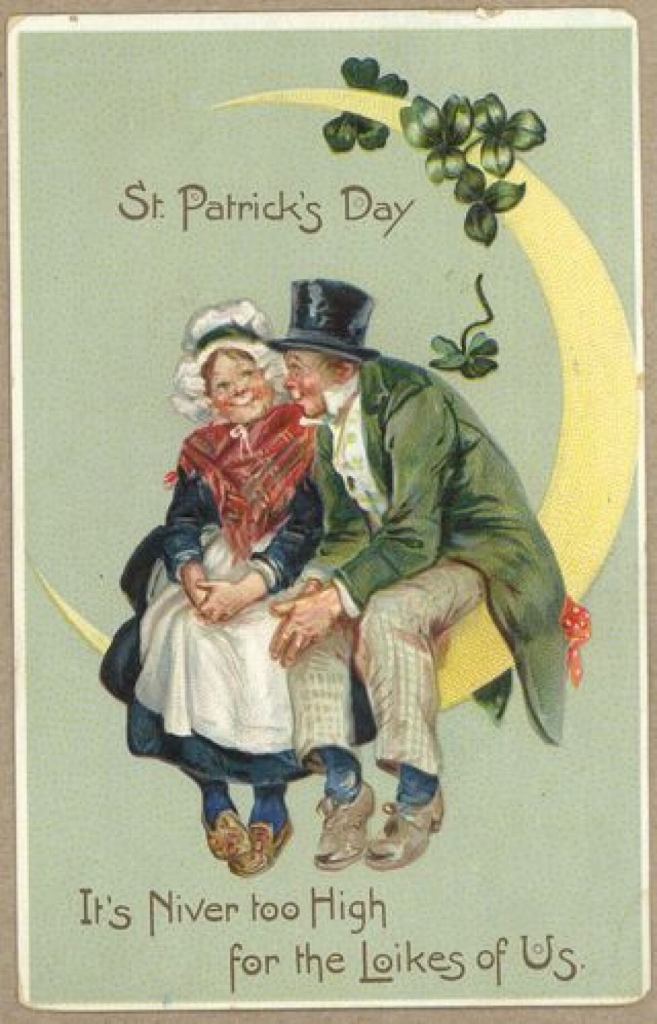
Louise Pledge enjoyed Understanding Holiday Traditions and explained how she felt as she read it: “I feel that this book belongs in every home with children. Imagine the fun it would be to tell your kids the reasons they are celebrating these holidays.  And then make every holiday a little more special than usual. What I probably liked the most, though, was the old postcards from each one.  They were priceless!”

You may find this book on Amazon in paperback and in color.

Christmas, Holiday Celebrations, Jesus Christ

Why We Celebrate Christmas

The most beloved of holidays wasn’t always celebrated in America as it is today. There was a time when celebrating Christmas was outlawed. The Puritans and English separatists believed celebrating the birth of Jesus Christ was disgraceful and disrespectful because the people would get drunk, gamble, and be riotous. A 16th-century clergyman, Hugh Latimer, wrote, “Men dishonor Christ more in the twelve days of Christmas than in all the twelve months besides.”

The Puritans had a great deal of influence in America, so celebrating Christmas became a crime and you were fined or arrested if you were found having a Christmas party. It was banned until the 1680s. For many years afterwards, the New England Puritans continued to boycott Christmas.

When Americans were finally free to celebrate the birth of Jesus Christ, they had a feast with delicious food and dancing. They didn’t have Santa Claus, Christmas trees, and mistletoe in America. Years later the Dutch brought the idea of St. Nick to America and the Germans introduced the Christmas tree to us, but we didn’t incorporate these ideas into our lives until the 1830s and 40s.

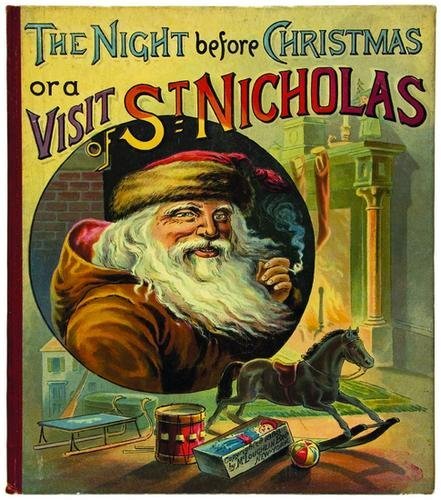
It wasn’t until Clement Moore wrote his famous poem that Americans took notice of these traditions. It changed the way Americans thought about Christmas. Twas the Night Before Christmas introduced St. Nicholas, hanging stockings on the chimney, and flying reindeer. These were ideas we hadn’t heard of before. Hanging your stocking on the chimney caught on quickly because of Clement Moore’s poem, which was published in 1837 under the name: A Visit of St. Nicholas.

A Christmas Carol was another book that had an influence on Americans, which was published in 1843. It changed the way we celebrated Christmas. Kissing under the mistletoe was mentioned in his book along with gift giving, and Christmas trees soon became part of our celebrations. Nativities were made and placed in the living room as a reminder why we celebrate Christmas. The reading of the Bible on Christmas Eve became tradition as well. Americans began celebrating the birth of Jesus Christ with new traditions, which brought great joy to the family.

In 1856, Henry Wadsworth Longfellow wrote: “The old Puritan feeling prevents it from being a cheerful, hearty holiday; though every year makes it more so.” After the introduction of these new traditions, every year became more joyful. Families started giving gifts to one another and putting up Christmas trees in their homes. They would decorate it with homemade decorations, by stringing popcorn and cranberries on a string and wrapping it around the tree. Then they attached candles to the branches with melted hot wax. After lighting the candles, they would play games, eat treats, and read from the Bible about the birth of Jesus Christ.

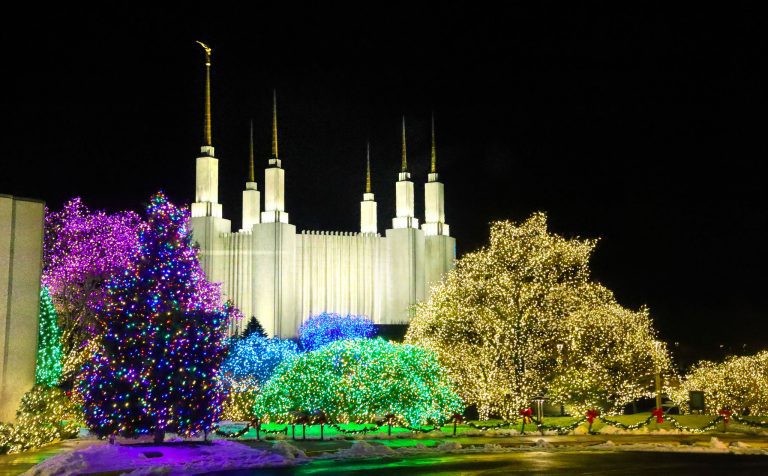
In 1870, President Grant declared Christmas a national holiday. Today lighting a Christmas tree and singing Christmas carols is a big event in most every city. The feeling of joy and good will is in the air. The celebration of the birth of Jesus Christ is a day of rejoicing.

Below is the most touching video I’ve ever watched about the birth of Jesus Christ.

Holiday Celebrations

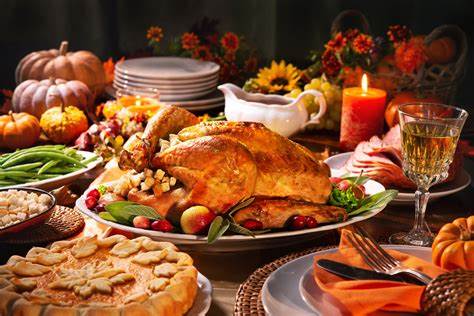
Why We Celebrate Thanksgiving

In 1620, the people from England sailed to America for religious freedom because all English citizens were required to belong to only one church… the Church of England. Many didn’t agree with the teachings of the priests and decided to build a new life in the Netherlands and in the Americas. But not everyone was searching religious freedom. Others were only seeking a better life economically.

After arriving on the Mayflower in November, they had to build homes for shelter. Hunting for food was another problem. With the cold winter and lack of food, many became ill and half of them died. When spring came, they planted crops and built up their colony. By autumn, they had built several homes and stored plenty of food for the winter.

While building their colony, they became friends with the Pokanoket people and invited them to the first Thanksgiving in America. They celebrated with seafood, porridge, cornbread, deer, and roasted fowls.

When George Washington was President, he wanted to make Thanksgiving a national holiday, but some of the congressmen were against it. Unfortunately, the idea brought a lot of discord because many felt the hardships of just a few Pilgrims did not warrant a national holiday. But…. those who thought it was important celebrated Thanksgiving intermittently.

In 1863, President Abraham Lincoln officially proclaimed the last Thursday in November as a National Day of celebration. He said it should be a day of “thanksgiving and praise” to God. He knew the importance of this day.

After he declared Thanksgiving as a national holiday, turkey became a popular tradition. Since William Bradford wrote about the colonists hunting wild turkeys during the autumn of 1621, it was only natural to choose a turkey. Did you know that turkeys are native only to the Americas? No other country has turkeys. That is something I didn’t know.

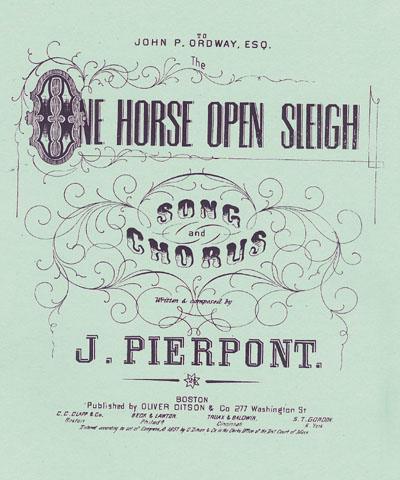
I found out something about Thanksgiving that I didn’t know before. In 1857, James Pierpoint composed a song especially for the celebration of Thanksgiving called One Horse Open Sleigh. The original words were:

Dashing thro’ the snow, In a one horse open sleigh,
O’er the hills we go, Laughing all the way;
Bells on bobtail ring, Making spirits bright,
Oh what sport to ride and sing a sleighing song tonight.

Chorus: Jingle bells, Jingle bells, Jingle all the way;
Oh! What joy it is to ride in a one horse open sleigh.
Jingle bells, Jingle bells, Jingle all the way;
Oh! What joy it is to ride in a one horse open sleigh.

It wasn’t long until everyone started singing this song for the Christmas season, and the name was changed to Jingle Bells in 1859.

Halloween Parties, Holiday Celebrations

Years Ago Versus Today

Halloween is such a fun time of year and everyone celebrates so differently. The meaning of Halloween and the way we celebrate it has changed through the years. Long ago in Ireland, young Irish beggars would go to wealthy homes on Halloween night and ask for food or money. If they refused, evil spirits would wreck havoc on their homes. Today we call it Trick or Treating. If they don’t gives us a treat then we have to play a trick on them.

Years ago, it was a time to remind people of their mortality and the importance to pray for the souls of their kindred dead. They celebrated by dancing around a bon fire, telling ghost stories, and playing games. Today we have a party, bob for apples, visit a haunted house, and prepare delicious foods.

Years ago, they celebrated from October 31st until November 1st, making their celebrations last longer. Today we just celebrate on October 31st until midnight. After Trick or Treating, our parents tell us to put away the candy and go to bed.

Years ago, it was tradition to put a candle inside a carved-out turnip and walk about town in costume. Today, we use pumpkins and put them on our doorsteps to welcome our guests.

Years ago, people dressed up in simple costumes such as saints, angels, devils, and the heads of animals. Today we go all out and dress up like you’ve never seen before. From monsters and ghosts to Cinderella and super heroes! And so new traditions have developed throughout the years!

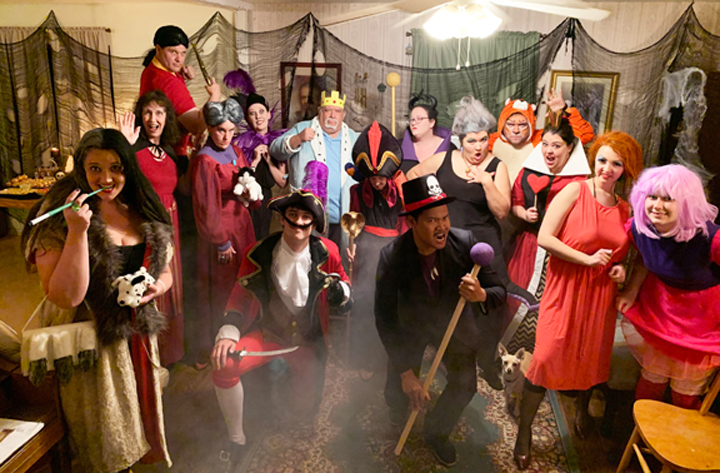
Do you want to see how our little family celebrates? These photos are of my daughters, sons-in-laws, and grandchildren. How do you celebrate?

DISNEY VILLAINS

Halloween Parties, Holiday Celebrations

Why We Celebrate Halloween

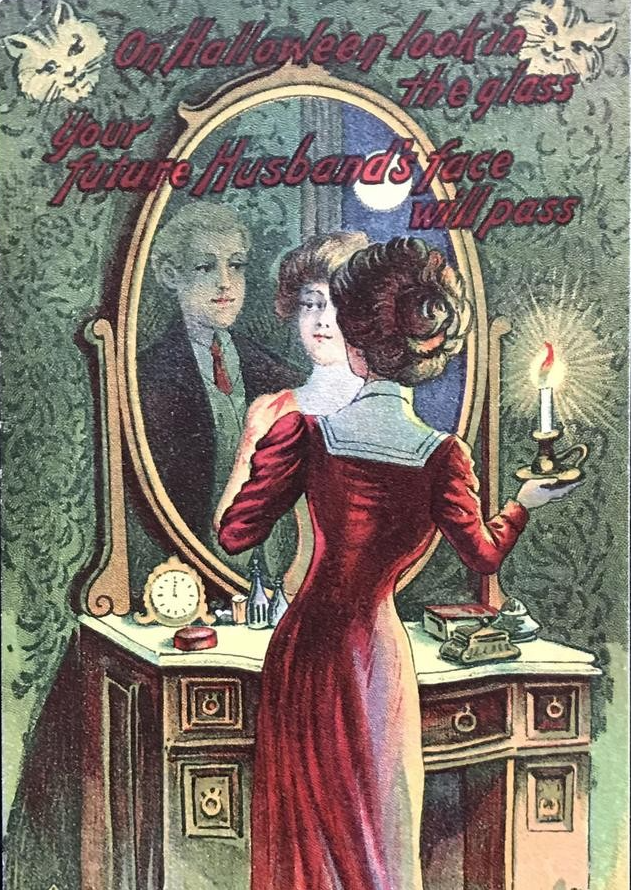
Is it possible to find your husband on Halloween?

The English, Irish, Scottish and Welsh immigrants brought this tradition to America during the mid-1800s. It was called All Souls’ Day and has deep Catholic roots. It was a time to remind people of their mortality and the importance to pray for the souls of their kindred dead who were in purgatory. The celebration began in the evening of October 31st, which gave its new name All Hallows Eve – Halloween. The festivity lasted until Nov 1st. This was a time to honor the dead. The community would meet together and have bonfires to ward off bad luck and evil spirits. The following day the ashes were spread over their gardens for good luck.

It was tradition to dress up in costumes such as saints, angels, devils, and sometimes animals. They played games, made mischief, and told ghost stories. It wouldn’t be All Hallows Eve without a scary story. Imagine sitting around a bonfire and I’ll tell you a chilling tale about being brave or cowardice.

It’s about a Scottish warrior chief who lived during the 14th century. His name is very long, so I will just call him Seath for short. He was known as a brave man with the strength that no one could match. This warrior was honored by his clan and feared by his enemies. When he passed away, he was buried in the forest of Rothiemurchus. It is said that whoever passes through the forest near his burial site, a very large and strong man will challenge the traveler. He is believed to be the spirit of the warrior chief. If the traveler is brave and accepts his challenge… if he is ready to fight and shows he is not a coward, then the warrior allows him to pass and disappears. No harm comes to him. But… if the traveler shows fear and runs away, he is never seen again. What do you suppose happens to the cowards who run away? I’m sure it is not a pretty sight.

In celebration of All Hallows Day, it was tradition to put a candle inside a carved-out turnip as a decoration. In Ireland, they would take their turnip and go to the wealthy homes, asking for food or money. If the wealthy were selfish and refused to give them something, then evil spirits would wreck havoc on their homes. That was not a happy thought. Trick or Treat!

When the immigrants came to America, they found there were not many turnips, so they carved faces in pumpkins and put candles inside them. A new tradition came about!

There is also a romantic side to Halloween. Valentine’s Day isn’t the only time that you can find your true love. Halloween is a time for finding one’s future husband and wife. If you dropped a strand of your hair into the bonfire, the identity of your spouse would be revealed to you in a dream that night.

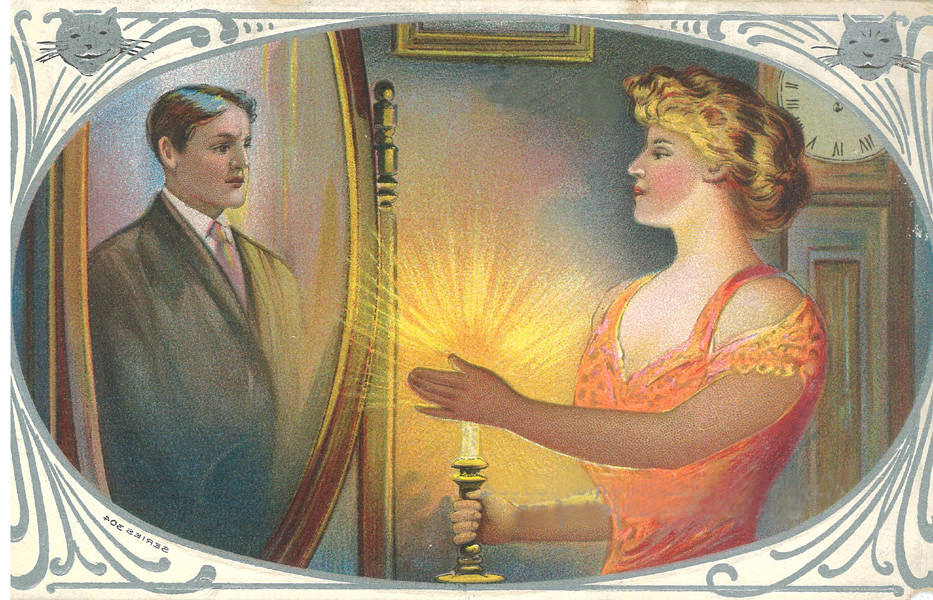
There is also another way to find your sweetheart. Hold a lighted candle up to the mirror on Halloween night and your future husband’s or wife’s face will reflect in the looking glass. To quote a poet:  “May fate reveal by candle’s gleam your own true love on Halloween.” Here’s another one: “On Halloween look in the glass. Your future husband’s face will pass.”

In Grahams’ American Monthly Magazine of Literature, Art, and Fashion of 1849, it read: “Halloween used to be observed by country maidens as a time for trying sweethearts and… to find out whether they would be married or not; and if that happy event was to crown their lives, who would be the man of their choice.”

 Have you ever thought that you just might find your true love on Halloween night?

Holiday Celebrations

Why We Celebrate Labor Day

Did you know activists celebrated Labor Day twelve years before it was declared a holiday? The origin of Labor Day came about when Unions encouraged organized strikes for better wages. With the encouragement of the Labor Union, New York City held the first Labor Day parade on September 4, 1882. It was a way to celebrate all the achievements of the American workers and to fight against oppressive working conditions.

In the late 1800s, the average American worked 12-hour shifts for seven days a week. Did you know that eight-year-old children worked in factories and coalmines? They were doing their part to earn money for the family because their parents weren’t making enough to live on.

Many factories were not safe and the working conditions were terrible. The restrooms weren’t sanitary and there was not enough fresh air. Employees were worn-ragged because they did not have enough breaks during their shift. If anyone was caught resting when it was not break time, they could lose their job. The company cared more about making money than their workers.

Realizing how bad the conditions were, labor unions were created. When negotiations didn’t work, going on strike was the next step. If the hours were too long and the wages were too low, the unions stepped in and encouraged them to go on strike. Organizing a protest was not easy on the workers because it meant not being paid while on strike. It could last from three to six months. That’s a long time to be without a paycheck.

The largest strike that made a difference in history was the Pullman Strike in Chicago. It lasted from May to July of 1894. The Pullman Palace Car Company had cut the wages of their workers by twenty-five percent because of the depression. Everyone was upset and decided to meet with the president of the company to complain about the low wages and sixteen-hour workdays. In response, George Pullman fired them. That made the rest of the employees angry, so the union stepped in and encouraged them to go on strike. There were 250,000 workers who walked off the job. When another Railway Union heard about it, they joined them in the cause and refused to run any trains that were Pullman-owned cars.

President Cleveland was not happy when he found out that the strike had stopped the mail trains from delivering the mail, so he sent troops to Chicago to stop the strike. When the governor found out about it, he was upset and quickly wired the president to pull the troops out because it wasn’t necessary. But the stubborn president ignored him. Sending the troops was a terrible idea. It promoted violence. The troops weren’t there to make peace. They were there to stop the strike in any way possible.

In response, the strikers overturned railcars and erected barricades to prevent the soldiers from reaching the yards. Hundreds of railcars were damaged in the process. Sadly, thirty people were killed and dozens wounded during the strike. How devastating that must have been to the families when they were told of the death of their loved ones. All in the cause for better wages and conditions at work. When the strike finally ended, it cost the company millions of dollars in damages.

When the company reopened, Pullman agreed to rehire the workers but on one condition. They had to sign a pledge to not join a union. Even though it was considered a victory for the labor movement, it took years before they changed the hours to an eight-hour workday.

When Senator James Kyle realized that 28 states were celebrating Labor Day, he introduced a bill, asking to make it a federal holiday. It is believed the Senate accepted the request because they wanted to appease the Labor Unions. It was signed into law on June 28, 1894.

Labor Day weekend is a time to celebrate the achievements of the workers with parties, parades, and picnics. How did you celebrate Labor Day this year?