
genealogy, Writing and Arts

WRITING A BIOGRAPHY IN SHORT STORY FORM

When writing a biography, writing in short story form can be easier than you think. Each chapter can be a short story of an amusing experience or a mischievous one. Here are some tips for creating each story. First thing to do is divide it into four sections.

1. The Hook: Introduce your ancestor in chapter 1. Tell something interesting about your ancestor that will grab the interest of your reader. If you’re writing your own autobiography, introduce yourself. I will use my great grandmother Sarah’s biography as an example:

“Sarah Eckersley was a little over a year old when her parents left England on the ship Palmyra. They were six weeks crossing the ocean. On the trip, Sarah was taken ill and her fever was so high that she lost her hearing. When they noticed something was wrong with Sarah, her father shot off a gun and she did not respond. Sarah was deaf.”

This introduction grabs your attention right off because you find out in the first paragraph that she is deaf and you found out why.

2. Develop your Ancestor: Describe your ancestor’s personality. What does he or she look like? List some interesting things about your ancestor. Here are some examples.

  1. Sarah’s mother taught her sign language and she soon was able to communicate with others.
  2. Sarah grew to be a beautiful young woman with black hair and blue eyes, and she was five foot and five inches tall.    
  3. Sarah could tell when the train was coming when it was three miles away because she could feel the vibrations of the train.
  4. Sarah was a very good swimmer and would dive into the water with such poise and grace that passersby would throw coins in the creek to watch her dive after them. 
  5. She enjoyed dancing. Even though she was deaf, Sarah could feel the beat and vibrations of the music and she danced with such grace that most every gentleman wanted to dance with her.

All of these traits tell you what kind of person Sarah was. It grabs the interest of the reader. That is why it is so important to tell what kind of person she was.

3. Construct Events: It sets the stage for what you’re about to tell your reader, leading up to the purpose or plot of the story. Here is an example:

“Sarah had to rely on women’s intuition to raise her family. She knew when her baby was awake and needed her. Her husband never had to tell her. She sensed it. At night, she would wake up even before her baby cried. When the neighbors were visiting, they were amazed when Sarah excused herself to get her baby who had just awakened from a nap.”

At this point, your reader finds out that Sarah listens to inspiration. This is one of her traits and has become part of her because she is deaf.

4. Present the Theme of Your Story: You are now ready to narrate your story. Your character should be faced with a decision to make or a problem to solve. Sarah senses that someone is in her home. What is she going to do about it? She has a “problem to solve.” This is the plot of the story.

After returning to her home one day, Sarah sensed the presence of someone in the house. Acting quickly, she grabbed her broom and began searching. She had a feeling to check her bedroom, but when she entered the room no one was in sight. She carefully stepped to her bed, lifted the ruffle, and looked under. There she found a man crouched and waiting for Sarah, but he was not prepared for a strong and determined woman with a weapon in her hands.

With all the strength she had, Sarah whacked him out from under the bed with her broom. She then pummeled him over the head again and again. Realizing what he was up against, he ran from the house. Chasing after him, she continued beating him as he ran down the street. Sarah had spirit and no doubt this wicked man thought he could take advantage of her, but he found out differently. He did not expect such courage and fled.

By narrating Sarah’s experience, her story comes to life. How would it have sounded with just the facts and no narration?

Here is an example of just the facts: Sarah sensed the presence of someone in the house. She grabbed her broom and began searching. When she looked under her bed, she found a man crouched and waiting for her. Sarah whacked him out from under the bed with her broom and chased him out of the house.

Did you feel part of the story with just the facts? Remember to write your story in narrative style. Add description. Keep it interesting. It is important to narrate your story by putting yourself in your ancestor’s shoes. Make the story come alive. Paint a picture like an artist, making the scenery and characters believable.

Now it’s your turn! Try it. You don’t have to be an author to write a story. Write it in your own words, the way you would talk to a friend when describing an experience you had. Use adjectives to describe your actions and how you felt. That brings the story to life.

genealogy, Writing and Arts

Tips For Writing a Biography

Part 2

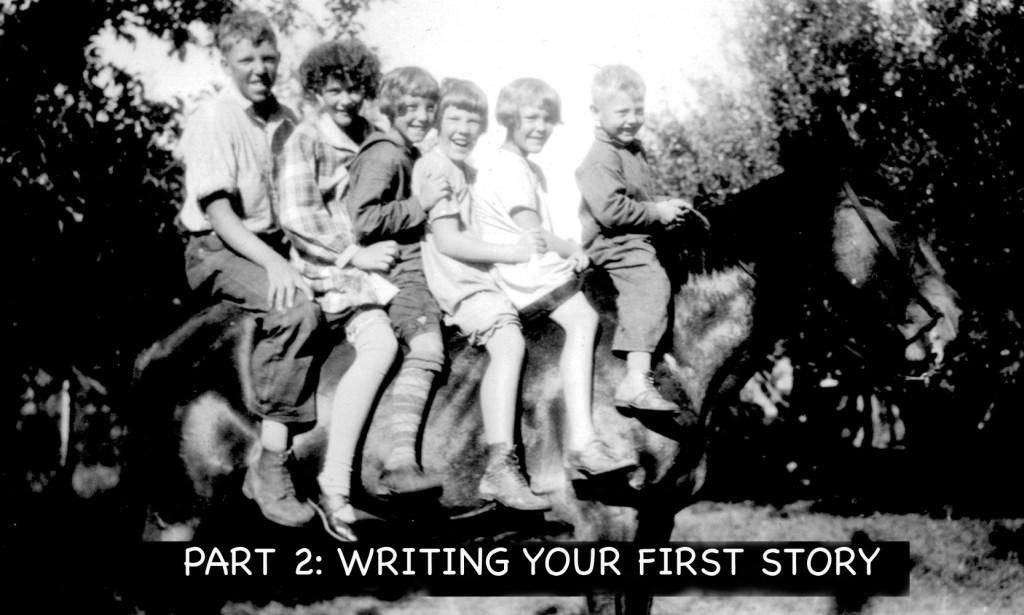
Writing Your First Story

 Your Research is done. You are now going to write your first short story. How do you organize your story to make it interesting? First thing to do is divide it into four sections.

1. The Hook: Introduce your ancestor. Tell something interesting about him or her. If you’re writing your autobiography, introduce yourself. I will use my great grandmother’s biography as an example:

“Sarah Eckersley was a little over a year old when her parents left England on the ship Palmyra. They were six weeks crossing the ocean. On the trip, Sarah was taken ill and her fever was so high that she lost her hearing. When they noticed something was wrong with Sarah, her father shot off a gun and she did not respond. Sarah was deaf.”

2. Develop your Ancestor: Describe your relative’s personality. What does he or she look like? I will now continue to give an example of Sarah.

  1. Sarah’s mother taught her sign language and she soon was able to communicate with others.
  2. Sarah grew to be a beautiful young woman with black hair and blue eyes, five foot and five inches tall.    
  3. Sarah could tell when the train was coming when it was three miles away because she could feel the vibrations of the train.
  4. Sarah was a very good swimmer and would dive into the water with such poise and grace that passersby would throw coins in the creek to watch her dive after them. 
  5. She enjoyed dancing. Even though she was deaf, Sarah could feel the beat and vibrations of the music and she danced with such grace that most every gentleman wanted to dance with her.

3. Construct Events: It sets the stage for what you’re about to tell your reader, leading up to the purpose of the story. Continuing Sarah’s story, here is another example:

“Sarah had to rely on women’s intuition to raise her family. She knew when her baby was awake and needed her. Her husband never had to tell her. She sensed it. At night, she would wake up even before her baby cried. When the neighbors were visiting, they were amazed when Sarah excused herself to get her baby who had just awakened from a nap.”

4. Present the Theme of Your Story: You are now ready to narrate your story. Your character should be faced with a decision to make or a problem to solve. This is the plot of the story. In this biography, Sarah senses that someone is in her home. What is she going to do about it? She has a decision to make and a problem to solve. Sarah’s story continues.

“After returning from town, she sensed the presence of someone in the house. Acting quickly, she grabbed her broom and began searching her home. She had a feeling to check her bedroom. But when she entered the room, no one was in sight.

 “Quietly stepping to her bed, she looked under it. There she found an evil man crouched and waiting for Sarah. But he was not prepared for a strong and determined woman with a weapon in her hands.

“With all the strength she had, Sarah whacked him out from under the bed with the broom. Hitting him over the head again and again, she chased him from the house and down the street. Sarah had spirit. This man thought he could take advantage of her since she was deaf, but he did not expect such courage and fled.”

By narrating Sarah’s experience, her story comes to life. How would it have sounded with just the facts and no narration? Here is an example: Sarah sensed the presence of someone in the house. She grabbed her broom and began searching. When she looked under her bed, she found a man crouched and waiting for her. Sarah whacked him out from under the bed with her broom and chased him out of the house.

Did you feel part of the story with just the facts? Write your story in narrative style. Keep it interesting. Add description.

Here is another example from my father’s biography with the facts only: The skunks were always trying to get into the chicken coop. So Marcus was asked to bury the skunks his father had shot. Before burying them, he would drain their scent into a bottle. When he took the “skunk oil” to school to show his friends, he accidentally dropped it and it splattered all over the floor. It smelled so bad that the teacher excused school for the rest of the day. His friends considered him a hero because he had gotten everyone out of school.

Now… taking these facts, I narrated this story and added description. This is how my father’s story turned out.

“When Marcus was thirteen, one day he closed down the school. It wasn’t on purpose, but his friends thought he was a hero. Marcus was asked to bury the skunks that his father had shot. Before he buried these skunks, he went to his bedroom and got his glass jar. Then he drained their scent glands and screwed on the lid nice and tight.

“The following day, he took the “skunk oil” to school with him to show his classmates. Marcus was so excited as he explained what he had done. His friends were listening and a few girls were peeking over his shoulder. They had never seen “skunk oil” before. With all the excitement and attention he was receiving, he felt the bottle slip from his hands and land on the floor of the schoolroom.

“The bottle broke into a million pieces and skunk oil splattered everywhere. It landed on the pant legs of his friends, the skirts of young girls standing nearby, and on his own shoes. As the oil saturated the wooden floor, the children moaned as the room filled with the most putrid, foul, disgusting, detestable odor anyone had ever breathed in. 

“The children instantly held their noses with their fingers and turned and ran out the door, stumbling over one another as they ran. Marcus was close behind. And so was the teacher! She excused school for the rest of the day and Marcus did not get into trouble. He figured the children were so excited to get out of school that no one told on him.”

It is important to narrate your story by putting yourself in your ancestor’s shoes. Make the story interesting. Paint a picture like an artist, making the scenery and characters believable.

Next week, I’ll post Part 3: Putting Yourself in Your Ancestor’s Shoes.