

The most beloved of holidays wasn’t always celebrated in America as it is today. There was a time when celebrating Christmas was outlawed. The Puritans and English separatists believed celebrating the birth of Jesus Christ was disgraceful and disrespectful because the people would get drunk, gamble, and be riotous. A 16th-century clergyman, Hugh Latimer, wrote, “Men dishonor Christ more in the twelve days of Christmas than in all the twelve months besides.”
The Puritans had a great deal of influence in America, so celebrating Christmas became a crime and you were fined or arrested if you were found having a Christmas party. It was banned until the 1680s. For many years afterwards, the New England Puritans continued to boycott Christmas.
When Americans were finally free to celebrate the birth of Jesus Christ, they had a feast with delicious food and dancing. They didn’t have Santa Claus, Christmas trees, and mistletoe in America. Years later the Dutch brought the idea of St. Nick to America and the Germans introduced the Christmas tree to us, but we didn’t incorporate these ideas into our lives until the 1830s and 40s.
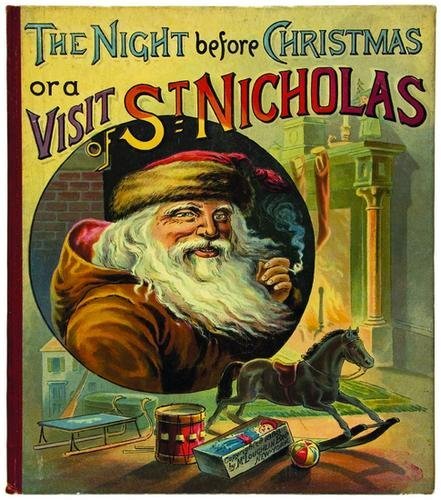
It wasn’t until Clement Moore wrote his famous poem that Americans took notice of these traditions. It changed the way Americans thought about Christmas. Twas the Night Before Christmas introduced St. Nicholas, hanging stockings on the chimney, and flying reindeer. These were ideas we hadn’t heard of before. Hanging your stocking on the chimney caught on quickly because of Clement Moore’s poem, which was published in 1837 under the name: A Visit of St. Nicholas.
A Christmas Carol was another book that had an influence on Americans, which was published in 1843. It changed the way we celebrated Christmas. Kissing under the mistletoe was mentioned in his book along with gift giving, and Christmas trees soon became part of our celebrations. Nativities were made and placed in the living room as a reminder why we celebrate Christmas. The reading of the Bible on Christmas Eve became tradition as well. Americans began celebrating the birth of Jesus Christ with new traditions, which brought great joy to the family.
In 1856, Henry Wadsworth Longfellow wrote: “The old Puritan feeling prevents it from being a cheerful, hearty holiday; though every year makes it more so.” After the introduction of these new traditions, every year became more joyful. Families started giving gifts to one another and putting up Christmas trees in their homes. They would decorate it with homemade decorations, by stringing popcorn and cranberries on a string and wrapping it around the tree. Then they attached candles to the branches with melted hot wax. After lighting the candles, they would play games, eat treats, and read from the Bible about the birth of Jesus Christ.
In 1870, President Grant declared Christmas a national holiday. Today lighting a Christmas tree and singing Christmas carols is a big event in most every city. The feeling of joy and good will is in the air. The celebration of the birth of Jesus Christ is a day of rejoicing.
Below is the most touching video I’ve ever watched about the birth of Jesus Christ.


