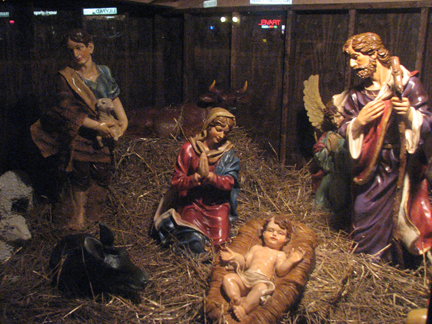
Christmas is a wonderful time of year. A feeling of love and joy are in the air as we give gifts to family members and neighbors.
As we buy gifts for our family and neighbors, and listen to Christmas music, do we think about the real reason we celebrate Christmas? Do our children understand who Jesus is? How about our teenagers? Do they comprehend what Jesus Christ did for them? Christmas is the best time of year to explain who Jesus is and why He is so important.
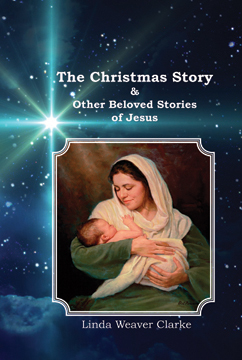
There are many children’s books about the stories of Jesus. But how about our older children who can read and would like to read something that fits their age? I wrote a book about the life of Jesus for my grandchildren in narrative style so they could get to know Him better. This style of writing brings the stories to life so readers can understand the scriptures better. These inspirational stories are for ages twelve and older. The font is larger for easier reading, especially for teenagers and grandparents who want to read to their grandchildren.
“The Christmas Story and Other beloved Stories of Jesus”will help your children learn about the birth of Jesus, the angel who told the shepherds about His birth, and the star that led wise men miles upon miles away to visit the Christ child. How about the miracles that Jesus performed? From the healing of the sick to feeding the five thousand with five barley loaves and two small fishes… from calming the wind and the waves to walking on water. These stories help our children to realize that Jesus is the Christ, the Son of God.
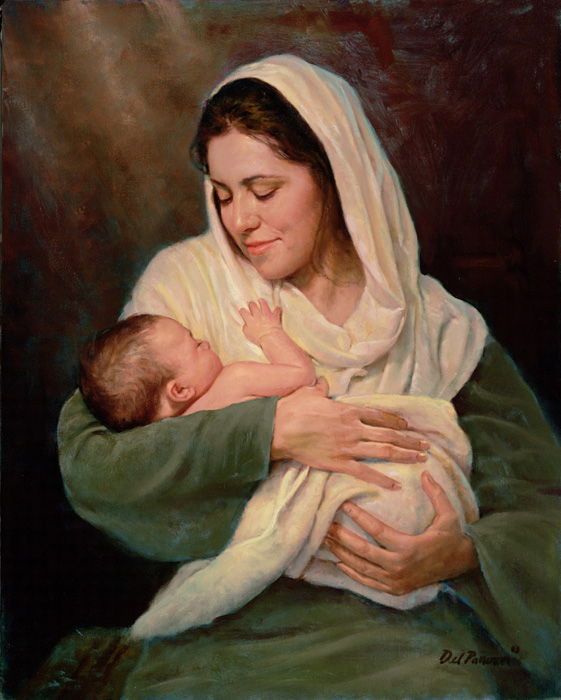
This book also includes inspirational paintings by Del Parson, the renowned artist. His paintings give us a feeling of reverence and peace. The colors are exquisite and the style of painting helps tell the stories of Jesus. You can actually feel the love that Jesus has for us as you gaze at each of the lovely paintings.
After reading The Christmas Story and Other beloved Stories of Jesus, Sunnie Reviews wrote: “A beautiful book written in an easy to understand style for adults and young people alike. The words and the artwork are amazing. The art is from a renowned artist. This is a great gift idea for younger readers to help them realize the important events that are well explained in this book.”
Author Gail Pallotta wrote: “A wonderful re-telling of Christ’s birth and the miracles he performed in modern-day story style, this book is also beautifully illustrated. It will make a lovely Christmas gift or a keepsake.”
Reviewer Ann Ferri wrote: “This book reminds me of an old Bible story book that my mother used to read to me every night. It includes the story of Jesus birth, His miracles, the Last Supper, the crucifixion and resurrection. This book would make a wonderful gift.”
Off in the distance, a group of shepherds were tending their sheep when they heard choirs of angels singing. At first, they were startled and confused, not sure what to think of it.
An angel stood before them and said, “Fear not, for behold, I bring you good tidings of great joy, which shall be to all people. For unto you is born this day in the city of David a Savior, which is Christ the Lord. And this shall be a sign unto you: Ye shall find the babe wrapped in swaddling clothes, lying in a manger.”
With that announcement, the angels sang: “Glory to God in the highest and on earth peace, good will toward men.”
After the angels left, one of the shepherds said, “Let us now go even unto Bethlehem, and see this thing which is come to pass, which the Lord hath made known unto us.”
With haste, they traveled to the city of Bethlehem. It did not take long to arrive at the stable because the shepherds felt God directing them where to go and they soon found the babe lying in a manger just as the angel had announced.
With humble hearts, they knelt in reverence before the newborn babe. The happiness they felt was indescribable. They were grateful that God had sent the angels to them with a message about the Messiah. Why had they been so privileged to know about his birth? With great joy, the shepherds went about, making it known to everyone about the spiritual experience they had seen that night.
Meanwhile, the Star of Bethlehem shone brightly in the sky, announcing to everyone that the Messiah was born. It was a star that no one had ever seen before. The brightness got everyone’s attention throughout the world. When some Wise Men from the East noticed the star, they realized what it was. They had studied the signs and were aware of what it meant.
Packing what they needed and bringing along some servants, the men followed the star. It was a long journey but they did not give up. The star guided them in the right direction as they continued on their way.
When the Wise Men saw the “young child,” they instantly knew he was the one they were seeking and knelt before him in reverence, thanking God for leading them to the Savior of the World.
Jesus Christ is the Savior of the world and gave His life for us so we could be forgiven of our mistakes. In the Gospel of John, he wrote: “For God so loved the world, that he gave his only begotten Son, that whosoever believeth in him should not perish but have everlasting life. For God sent not his Son into the world to condemn the world; but that the world through him might be saved.” (John 3: 16-17)
During this Christmas season, think about how grateful you are to Jesus Christ. Then show it with your actions. “May we give as the Savior gave. To give of oneself is a holy gift. We give as a remembrance of all the Savior has given. May we also give gifts that have eternal value, along with our gifts that eventually break or are forgotten. How much better the world would be if we all gave gifts of understanding and compassion, of service and friendship, of kindness and gentleness? As the Christmas season envelops us with all its glory, may we, as did the wise men, seek a bright particular star to guide us in our celebration of the Savior’s birth. May we all make the journey to Bethlehem in spirit, taking with us a tender caring heart as our gift to the Savior. ~ Thomas S Monson
The Christmas Story & Other Beloved Stories of Jesus is available at Amazon.
Do you believe in miracles? Some may say they have never seen a miracle before. But if you really look around and take notice, it may surprise you how many you have seen in a lifetime. Russell M. Nelson said, “Seek and expect miracles… Every book of scripture demonstrates how willing the Lord is to intervene in the lives of those who believe in Him. The Lord will bless you with miracles if you believe in Him, doubting nothing… Prayerfully ask God to help you exercise that kind of faith.”
I would like to share a Christmas story that was written by Opal H. Clarke. It is a true story of love and miracles… of faith and hope.
Don’t Let Him Die
I first became aware of my twelve year old son, George’s, illness when the choppy rendition at the piano of “Hark! The Herald Angels sing,” had stopped. Glancing at him, his head resting on the piano, I asked, “What’s wrong?”
He replied, “I don’t feel good.” As he looked up I saw his cheeks were flushed; on closer inspection it proved to be a fine rash. He had a temperature. I called our family doctor and described the symptoms. He said it sounded like the measles that were going around and he prescribed a well-known drug.
The next day, George complained of his eyes hurting. Blisters began to appear on his ears and lips, and his temperature rose. After sitting by his side for several hours, I had to leave the room momentarily. As I returned, the sight was so shocking. I rushed from the room, dropped to the floor and cried. George had rubbed all the skin from his blistered lips. His ears, neck and face were a mass of blisters, with one large blister hanging like a sac on one side of his face. George did not sleep. He kept asking us to please turn out the lights. It was frightening to hear him ask this; there was only a small night-light burning and I had a small folded towel over his eyes.
Upon our arrival at the hospital, we were taken to an isolation room. As the ambulance attendant lifted my son onto the bed, the large blister on his face, a hanging sac of sloshing fluid broke.
Now, lying naked on the sterile sheets, coughing and choking, his body a mass of blisters and skinless places, he looked like someone wearing an ugly mask. I wanted to cry out, “No! No!” But I prayed that for my son’s sake my voice would be calm.
Nothing could have torn me away from my son at this time; so I was given a hospital gown and a mask. The next few days were crucial ones. Large areas of skin that had gone dark and looked as if they were scalded, pushed off from George’s back and he stuck to the sheets. The skin, pushed up on his upper arm, looked like a wrinkled nylon stocking. George’s mouth and throat were blistered, as well as the bronchial tubes, and he was coughing constantly. I covered my face, put my head on the windowsill and fought the tears.
The eye doctor said the eyes were blistered, even on the cornea, and added, “If he comes along—we may not be able to save his eyes.” It came to me that my son might be blind!
A new nurse coming in to put drops in George’s eyes, leaned over him and said, “George, I have something to put in your eyes. Can you turn your head this way?” She leaned over, and as he turned his face with its black-rimmed hole for a mouth, one side of his face practically skinless, and skinless ears—all this was too much for this nurse. She became nauseous, gagged and hurriedly left the room.
One night, two couples were standing in the hall. One of the men looked in at George and gasped. When his wife stepped over to where he was standing, he led her away, remarking, “You do not want to see that.”
Each time the doctor entered the room, he would greet my son with, “How are you George?”
George would answer, “Pretty good.” Always pretty good.
At one time the doctor looked at him and said, “You are a game little guy!” There were tears in his eyes.
He asked me if I was praying. I assured him I was. He also asked if his name could be put in the temple so those who were there could pray for him.
One evening, the young doctor gravely told me things were not going well and that he had done all that he could. At that moment, I felt desperately alone; what could I do except go to God for help? I returned to the room and knelt beside my son’s bed and pleaded with God to let him live.
The next day, George asked, “Are they still praying for me?”
I said, “Oh, yes. We surely are, son.”
Then he asked me if I’d hold his hand. He said, “If you don’t mind holding a scratchy one.” All day I held his hand.
By evening I sensed a calmness come over him. I said, “Doctor, I think he is better!”
The doctor examined him, turned to me and with a look of almost disbelief and surprise said, “I think he is!” The crisis had passed.
The miraculous powers of the body to heal took over. New skin began to grow and the old skin sloughed off. All twenty of his fingernails and toenails came off.
Suddenly we were aware that it was Christmas Eve. Kind nurses and Santa himself came to where a brave young boy with a blotched and burned looking body sat in the bed. By tipping his head back, he saw through slits of eyes a Christmas bouquet and said, “I can see! I can see!”
At that moment I was humbled beyond words.
The young doctor came into the room and said, “George, you have made medical history.” Then he asked if we minded the case being written for the medical journals. I tried to thank our tall young doctor.
He said humbly, “I just stood by.” But I knew he had worked valiantly to save my son.
Our family doctor came into the room and said, “George, you are a walking miracle.”
The nurses, who came to say good-bye to us, said that no one in the hospital expected to see our son go out of the hospital alive.
The eye doctor said, “I feel so humble about this boy. It certainly has made me a believer.”
At this unforgettable Christmas time I realized that, to me, Christmas would forever be a time of rejoicing; rejoicing for the gift of a son.” (Written by Opal H. Clarke, “Don’t Let Him Die”)
George Amos and Linda Clarke: Celebrating Christmas
Truly this was a miracle! Yes, I believe in miracles. This young man grew to adulthood but his body isn’t the same.
His eyes are constantly red because his tear glands were destroyed, so he has to use artificial tears. He coughs frequently and has a raspy sound when he breathes because he has Chronic Bronchitis, which was caused from his illness.
George Amos Clarke, my sweetheart and husband, was grateful for a miracle.
The most beloved of holidays wasn’t always celebrated in America as it is today. There was a time when celebrating Christmas was outlawed. The Puritans and English separatists believed celebrating the birth of Jesus Christ was disgraceful and disrespectful because the people would get drunk, gamble, and be riotous. A 16th-century clergyman, Hugh Latimer, wrote, “Men dishonor Christ more in the twelve days of Christmas than in all the twelve months besides.”
The Puritans had a great deal of influence in America, so celebrating Christmas became a crime and you were fined or arrested if you were found having a Christmas party. It was banned until the 1680s. For many years afterwards, the New England Puritans continued to boycott Christmas.
When Americans were finally free to celebrate the birth of Jesus Christ, they had a feast with delicious food and dancing. They didn’t have Santa Claus, Christmas trees, and mistletoe in America. Years later the Dutch brought the idea of St. Nick to America and the Germans introduced the Christmas tree to us, but we didn’t incorporate these ideas into our lives until the 1830s and 40s.
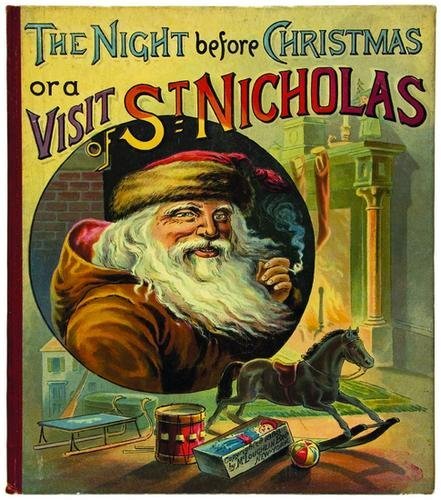
It wasn’t until Clement Moore wrote his famous poem that Americans took notice of these traditions. It changed the way Americans thought about Christmas. Twas the Night Before Christmas introduced St. Nicholas, hanging stockings on the chimney, and flying reindeer. These were ideas we hadn’t heard of before. Hanging your stocking on the chimney caught on quickly because of Clement Moore’s poem, which was published in 1837 under the name: A Visit of St. Nicholas.
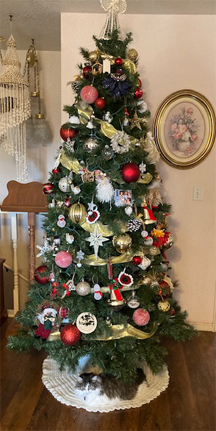
A Christmas Carol was another book that had an influence on Americans, which was published in 1843. It changed the way we celebrated Christmas. Kissing under the mistletoe was mentioned in his book along with gift giving, and Christmas trees soon became part of our celebrations. Nativities were made and placed in the living room as a reminder why we celebrate Christmas. The reading of the Bible on Christmas Eve became tradition as well. Americans began celebrating the birth of Jesus Christ with new traditions, which brought great joy to the family.
In 1856, Henry Wadsworth Longfellow wrote: “The old Puritan feeling prevents it from being a cheerful, hearty holiday; though every year makes it more so.” After the introduction of these new traditions, every year became more joyful. Families started giving gifts to one another and putting up Christmas trees in their homes. They would decorate it with homemade decorations, by stringing popcorn and cranberries on a string and wrapping it around the tree. Then they attached candles to the branches with melted hot wax. After lighting the candles, they would play games, eat treats, and read from the Bible about the birth of Jesus Christ.
In 1870, President Grant declared Christmas a national holiday. Today lighting a Christmas tree and singing Christmas carols is a big event in most every city. The feeling of joy and good will is in the air. The celebration of the birth of Jesus Christ is a day of rejoicing.
Below is the most touching video I’ve ever watched about the birth of Jesus Christ.
This is a story of love and miracles… of faith and hope.
Don’t Let Him Die
I first became aware of my twelve year old son, George’s, illness when the choppy rendition at the piano of “Hark! The Herald Angels sing,” had stopped. Glancing at him, his head resting on the piano, I asked, “What’s wrong?’
He replied, “I don’t feel good.” As he looked up I saw his cheeks were flushed; on closer inspection it proved to be a fine rash. He had a temperature. I called our family doctor and described the symptoms. He said it sounded like the measles that were going around and he prescribed a well-known drug.
The next day, George complained of his eyes hurting. Blisters began to appear on his ears and lips, and his temperature rose. After sitting by his side for several hours, I had to leave the room momentarily. As I returned, the sight was so shocking. I rushed from the room, dropped to the floor and cried. George had rubbed all the skin from his blistered lips. His ears, neck and face were a mass of blisters, with one large blister hanging like a sac on one side of his face. George did not sleep. He kept asking us to please turn out the lights. It was frightening to hear him ask this; there was only a small night-light burning and I had a small folded towel over his eyes.
Upon our arrival at the hospital, we were taken to an isolation room. As the ambulance attendant lifted my son onto the bed, the large blister on his face, a hanging sac of sloshing fluid broke.
Now, lying naked on the sterile sheets, coughing and choking, his body a mass of blisters and skinless places, he looked like someone wearing an ugly mask. I wanted to cry out, “No! No!” But I prayed that for my son’s sake my voice would be calm.
Nothing could have torn me away from my son at this time; so I was given a hospital gown and a mask. The next few days were crucial ones. Large areas of skin that had gone dark and looked as if they were scalded, pushed off from George’s back and he stuck to the sheets. The skin, pushed up on his upper arm, looked like a wrinkled nylon stocking. George’s mouth and throat were blistered, as well as the bronchial tubes, and he was coughing constantly. I covered my face, put my head on the windowsill and fought the tears.
The eye doctor said the eyes were blistered, even on the cornea, and added, “If he comes along—we may not be able to save his eyes.” It came to me that my son might be blind!
A new nurse coming in to put drops in George’s eyes, leaned over him and said, “George, I have something to put in your eyes. Can you turn your head this way?” She leaned over, and as he turned his face with its black-rimmed hole for a mouth, one side of his face practically skinless, and skinless ears—all this was too much for this nurse. She became nauseous, gagged and hurriedly left the room.
One night, two couples were standing in the hall. One of the men looked in at George and gasped. When his wife stepped over to where he was standing, he led her away, remarking, “You do not want to see that.”
Each time the doctor entered the room, he would greet my son with, “How are you George?”
George would answer, “Pretty good.” Always pretty good.
At one time the doctor looked at him and said, “You are a game little guy!” There were tears in his eyes.
He asked me if I was praying. I assured him I was. He also asked if his name could be put in the temple so those who were there could pray for him.
One evening, the young doctor gravely told me things were not going well and that he had done all that he could. At that moment, I felt desperately alone; what could I do except go to God for help? I returned to the room and knelt beside my son’s bed and pleaded with God to let him live.
The next day, George asked, “Are they still praying for me?”
I said, “Oh, yes. We surely are, son.”
Then he asked me if I’d hold his hand. He said, “If you don’t mind holding a scratchy one.” All day I held his hand.
By evening I sensed a calmness come over him. I said, “Doctor, I think he is better!”
The doctor examined him, turned to me and with a look of almost disbelief and surprise said, “I think he is!” The crisis had passed.
The miraculous powers of the body to heal took over. New skin began to grow and the old skin sloughed off. All twenty of his fingernails and toenails came off.
Suddenly we were aware that it was Christmas Eve. Kind nurses and Santa himself came to where a brave young boy with a blotched and burned looking body sat in the bed. By tipping his head back, he saw through slits of eyes a Christmas bouquet and said, “I can see! I can see!”
At that moment I was humbled beyond words.
The young doctor came into the room and said, “George, you have made medical history.” Then he asked if we minded the case being written for the medical journals. I tried to thank our tall young doctor.
He said humbly, “I just stood by.” But I knew he had worked valiantly to save my son.
Our family doctor came into the room and said, “George, you are a walking miracle.”
The nurses, who came to say good-bye to us, said that no one in the hospital expected to see our son go out of the hospital alive.
The eye doctor said, “I feel so humble about this boy. It certainly has made me a believer.”
At this unforgettable Christmas time I realized that, to me, Christmas would forever be a time of rejoicing; rejoicing for the gift of a son.” (Opal H. Clarke, “Don’t Let Him Die”)
Truly this was a miracle! This young man grew to adulthood but his body isn’t the same. His eyes are constantly red because his tear glands were destroyed, so he has to use artificial tears. He coughs frequently and has a raspy sound when he breathes because he has Chronic Bronchitis, which was caused from his illness. George Amos Clarke, my sweetheart and husband, was grateful for a miracle.
Have you ever wondered how some of our holidays came about? How about the tradition of eating a turkey, stuffing, and cranberries for Thanksgiving? Who came up with the tradition of celebrating Christmas with a tree decorated with ornaments and lights? It is very fascinating to find out.
George Washington wanted to make Thanksgiving a national holiday, but some of the congressmen were against it. Thomas Jefferson especially didn’t like the idea. Unfortunately, the idea brought a lot of discord because many felt the hardships of just a few Pilgrims did not warrant a national holiday. So Thanksgiving was only celebrated intermittently until Abraham Lincoln was president.
In 1863, Lincoln officially proclaimed the last Thursday in November as a National Holiday, saying it should be a day of “thanksgiving and praise” to God. In the past, they celebrated with seafood, porridge, cornbread, deer, and roasted fowls. After Lincoln declared Thanksgiving a national holiday, turkey became a popular tradition. Since William Bradford wrote about the colonists hunting wild turkeys during the autumn of 1621, it was only natural to choose a turkey. Did you know that turkeys are native only to the Americas?
In 1857, James Pierpoint composed a song especially for Thanksgiving called One Horse Open Sleigh. It was so popular that everyone started singing it for Christmas, and the name was changed to Jingle Bells in 1859.
Christmas wasn’t always celebrated in America as it is today. There was a time when it was actually outlawed. The Puritans and English separatists believed celebrating the birth of Jesus Christ was disgraceful and disrespectful because the people would get drunk, gamble, and be riotous. A 16th-century clergyman, Hugh Latimer, wrote, “Men dishonor Christ more in the twelve days of Christmas than in all the twelve months besides.”
The Puritans had a great deal of influence, so celebrating Christmas became a crime and you were fined or arrested if you were found celebrating. It was banned until the 1680s. For many years afterwards, the New England Puritans continued to boycott Christmas. In 1856, Henry Wadsworth Longfellow wrote about New England: “The old Puritan feeling prevents it from being a cheerful, hearty holiday; though every year makes it more so.”
Since Americans were free to celebrate Christmas, we celebrated the birth of Jesus Christ by having a feast. We didn’t have Santa Claus, Christmas trees, and mistletoe in America. So how did we get these traditions? The Dutch brought St. Nick to America and the Germans brought the Christmas tree to America, but we didn’t incorporate it into our lives until the 1830s and 1840s.
It wasn’t until Clement Moore wrote his famous poem that Americans took notice of these traditions. It changed the way Americans thought about Christmas. Twas the Night Before Christmas introduced St. Nicholas, hanging stockings on the chimney, and flying reindeer. These were ideas we hadn’t heard of before. Hanging your stocking on the chimney caught on quickly because of Clement Moore’s poem, which was published under the name: A Visit from St. Nicholas.
A Christmas Carol was another book that had an influence on Americans, which was written in 1843. It changed our way of celebrating Christmas, as well. Gift giving soon became popular and Christmas trees were becoming part of our celebrations. Nativities were made and placed in the living room as a reminder why we celebrate Christmas. The reading of the Bible on Christmas Eve became tradition as well. Americans began celebrating the birth of Jesus Christ with these new traditions, which brought much joy to the family.
In 1870, President Grant declared Christmas a national holiday.
Nativity
Is this your new site? Log in to activate admin features and dismiss this message