
Learning about your ancestors can be so much fun. As I learned about mine, it was the beginning of a marvelous journey. Each of us has a story from our ancestors or even our very own story to tell. If these stories are unwritten, how are your children going to know their heritage or family traditions from the past?
It is important to think about our ancestors and how they influenced our lives. We should be proud of them. We are the people we are because of our ancestors.
Thomas S. Monson said, “I admonish all families: search out your heritage. It is important to know those who came before us. We discover something about ourselves when we learn about our ancestors.”
This is true. It’s interesting to learn what traits we inherited from our ancestors. Why do you have an olive complexion? Why are you so tall? Where does your red hair come from? Are you as stubborn as your grandfather? Are you musically inclined? It can be fun to learn about your heritage and all the characteristics you have inherited from them.
James E. Faust said, “Begin to unlock the knowledge of who you really are by learning more about your forebearers… In many ways each of us is the sum total of what our ancestors were. The virtues they had may be our virtues, their strengths our strengths, and in a way their challenges could be our challenges. Some of their traits may be our traits.”
I asked myself. Do I have some traits of my great grandparents? In some way, would my challenges be similar to my ancestor’s challenges? Could his or her strengths be my strengths?
When I found out how courageous my great grandmother was, I became intrigued and wanted to learn more about Frances Davies. I wondered if I could be as brave as she was.
One day a band of thieves came to her home and started gathering her grapes into bags. The grapes were bearing for the first year and it broke her heart because Frances wanted to make grape jelly. She could not allow them to steal her grapes.
As she searched her home for a weapon to defend herself, an inspiration came to her. She quickly donned her husband’s military suit, cap, and long cape. If she looked like a man, she could scare them off.
Grasping the sword, she bravely marched out of the house onto the porch and into full view of the thieves, brandishing the gleaming weapon in a threatening manner.
“Leave or perish,” she demanded in a loud voice.
Terrified by her appearance, the thieves dropped their sacks of grapes and fled. After they disappeared, she gathered up the grapes and made grape jelly.
One day a neighbor frantically rushed to Frances’ home, begging her to help her husband who had been gored by a bull. His abdomen had been torn open. There were no telephones and only two doctors in town. Not only were they too far away, but there was no one to go for them.
Frances, with courage and a prayer, followed her neighbor home. When she saw the terrible condition he was in, she went to work washing away the blood and gently pushing the intestines back into place the best she could. Then she sewed up his abdomen with a violin gut string that she had soaked in hot water and placed cloths over the wound that were saturated with a liniment she had made herself. It was made of arnica burrs steeped in alcohol.
Each day she washed the wound with carbolic water and applied fresh boiled cloths and liniment. Frances wanted the farmer to have a doctor look him over, but he said he was doing fine and never called one. He lived for more than twenty years.
I asked myself: could my ancestors’ strengths be my strengths? Could their challenges be my challenges? Would I ever have to be as brave as she was?
Gerrit W. Gong said, “Connecting with our ancestors can change our lives in surprising ways. From their trials and accomplishments, we gain faith and strength. From their love and sacrifices, we learn to forgive and move forward.”
Could he be right? Will their sacrifices teach us to forgive those who have hurt us? Will their trials and accomplishments help us to gain faith because of their example? Will their trials and sacrifices strengthen us? I would like to tell you a story about a courageous woman who did not back down and stood up for what she believed.
While living in Illinois in 1844, a mob pounded on the door of Martha’s home. Standing before her, the leader demanded that if she denounced her religion then they would not burn down her home.
Martha had every reason to fear for her life but her strength and faith in Jesus Christ was strong. How could she deny her faith? She would not deny it. Martha faced this large burly man and his mob with dignity. With spunk, she told him that he could burn it to the ground because she would not deny what she believed to be true.
When the leader realized he could not intimidate her, he said, “I’ll give you twenty minutes to pack up and get out.”
With the help of her seven children, Martha gathered all she could into the back of a buckboard. She only had one ox and a cow, so the boys yoked them to the wagon. As they drove away, the mob threw a torch to the roof and burned the house to the ground.
Would I ever have the strength to do what she did? Would I be too afraid to even speak? Would I stand up for my rights as she did? This courageous woman, Martha Raymer Weaver, was my great, great, great grandmother. Her son Gilbert wrote his autobiography and told about this incident.
Did your ancestors struggle at times and have trials to bear? If so, did it make them stronger? Has it made you stronger?
Dennis Neuenschwander said, “A life that is not documented is a life that, within a generation or two, will largely be lost to memory. What a tragedy this can be in the history of a family. Knowledge of our ancestors shapes us and instills within us values that give direction and meaning to our lives.”
Think about who you are. Were your ancestors musically inclined and was that handed down to you? How about mannerisms and the way we express ourselves? Or the way we walk or even talk? These are questions you may have about your heritage.
Russell M. Nelson said, “We have a natural yearning to connect with our ancestors. This desire dwells in our hearts, regardless of age… When our hearts turn to our ancestors, something changes inside us. We feel part of something greater than ourselves.”
I believe this to be true. Something changed inside me. I learned to feel part of something greater than myself. I’ll tell you how this happened. My grandmother died when I was 15 years old. I didn’t know her very well and didn’t know much about her life. One day I sat down and read her autobiography. At that moment, my grandmother’s experiences drew me closer to her and I’m excited to meet her some day in the hereafter.
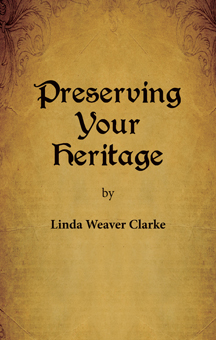
I have recently published a book called: Preserving Your Heritage: Tips For Writing Biographies and Autobiographies—Each of us has a story from our ancestors or our own story to tell. It’s up to us to write these experiences down. In Preserving Your Heritage, you will learn the most important elements of writing. These ideas will help you to write the stories of your heritage in a way that will bring them to life.


