genealogy, Writing and Arts

PRESERVING YOUR HERITAGE

Learning about your ancestors can be so much fun. As I learned about mine, it was the beginning of a marvelous journey. Each of us has a story from our ancestors or even our very own story to tell. If these stories are unwritten, how are your children going to know their heritage or family traditions from the past?

It is important to think about our ancestors and how they influenced our lives. We should be proud of them. We are the people we are because of our ancestors.

Thomas S. Monson said, “I admonish all families: search out your heritage. It is important to know those who came before us. We discover something about ourselves when we learn about our ancestors.”

This is true. It’s interesting to learn what traits we inherited from our ancestors. Why do you have an olive complexion? Why are you so tall? Where does your red hair come from? Are you as stubborn as your grandfather? Are you musically inclined? It can be fun to learn about your heritage and all the characteristics you have inherited from them.

James E. Faust said, “Begin to unlock the knowledge of who you really are by learning more about your forebearers… In many ways each of us is the sum total of what our ancestors were. The virtues they had may be our virtues, their strengths our strengths, and in a way their challenges could be our challenges. Some of their traits may be our traits.”

I asked myself. Do I have some traits of my great grandparents? In some way, would my challenges be similar to my ancestor’s challenges? Could his or her strengths be my strengths?

When I found out how courageous my great grandmother was, I became intrigued and wanted to learn more about Frances Davies. I wondered if I could be as brave as she was.

One day a band of thieves came to her home and started gathering her grapes into bags. The grapes were bearing for the first year and it broke her heart because Frances wanted to make grape jelly. She could not allow them to steal her grapes.

As she searched her home for a weapon to defend herself, an inspiration came to her. She quickly donned her husband’s military suit, cap, and long cape. If she looked like a man, she could scare them off. 

Grasping the sword, she bravely marched out of the house onto the porch and into full view of the thieves, brandishing the gleaming weapon in a threatening manner.

“Leave or perish,” she demanded in a loud voice.

Terrified by her appearance, the thieves dropped their sacks of grapes and fled. After they disappeared, she gathered up the grapes and made grape jelly.

One day a neighbor frantically rushed to Frances’ home, begging her to help her husband who had been gored by a bull. His abdomen had been torn open. There were no telephones and only two doctors in town. Not only were they too far away, but there was no one to go for them.

Frances, with courage and a prayer, followed her neighbor home. When she saw the terrible condition he was in, she went to work washing away the blood and gently pushing the intestines back into place the best she could. Then she sewed up his abdomen with a violin gut string that she had soaked in hot water and placed cloths over the wound that were saturated with a liniment she had made herself. It was made of arnica burrs steeped in alcohol.

Each day she washed the wound with carbolic water and applied fresh boiled cloths and liniment. Frances wanted the farmer to have a doctor look him over, but he said he was doing fine and never called one. He lived for more than twenty years.

I asked myself: could my ancestors’ strengths be my strengths? Could their challenges be my challenges? Would I ever have to be as brave as she was?

Gerrit W. Gong said, “Connecting with our ancestors can change our lives in surprising ways. From their trials and accomplishments, we gain faith and strength. From their love and sacrifices, we learn to forgive and move forward.”

Could he be right? Will their sacrifices teach us to forgive those who have hurt us? Will their trials and accomplishments help us to gain faith because of their example? Will their trials and sacrifices strengthen us? I would like to tell you a story about a courageous woman who did not back down and stood up for what she believed.

While living in Illinois in 1844, a mob pounded on the door of Martha’s home. Standing before her, the leader demanded that if she denounced her religion then they would not burn down her home.

Martha had every reason to fear for her life but her strength and faith in Jesus Christ was strong. How could she deny her faith? She would not deny it. Martha faced this large burly man and his mob with dignity. With spunk, she told him that he could burn it to the ground because she would not deny what she believed to be true.

When the leader realized he could not intimidate her, he said, “I’ll give you twenty minutes to pack up and get out.”

With the help of her seven children, Martha gathered all she could into the back of a buckboard. She only had one ox and a cow, so the boys yoked them to the wagon. As they drove away, the mob threw a torch to the roof and burned the house to the ground.

Would I ever have the strength to do what she did? Would I be too afraid to even speak? Would I stand up for my rights as she did? This courageous woman, Martha Raymer Weaver, was my great, great, great grandmother. Her son Gilbert wrote his autobiography and told about this incident.

Did your ancestors struggle at times and have trials to bear? If so, did it make them stronger? Has it made you stronger?

Dennis Neuenschwander said, “A life that is not documented is a life that, within a generation or two, will largely be lost to memory. What a tragedy this can be in the history of a family. Knowledge of our ancestors shapes us and instills within us values that give direction and meaning to our lives.”

Think about who you are. Were your ancestors musically inclined and was that handed down to you? How about mannerisms and the way we express ourselves? Or the way we walk or even talk? These are questions you may have about your heritage.

Russell M. Nelson said, “We have a natural yearning to connect with our ancestors. This desire dwells in our hearts, regardless of age… When our hearts turn to our ancestors, something changes inside us. We feel part of something greater than ourselves.”

I believe this to be true. Something changed inside me. I learned to feel part of something greater than myself. I’ll tell you how this happened. My grandmother died when I was 15 years old. I didn’t know her very well and didn’t know much about her life. One day I sat down and read her autobiography. At that moment, my grandmother’s experiences drew me closer to her and I’m excited to meet her some day in the hereafter.

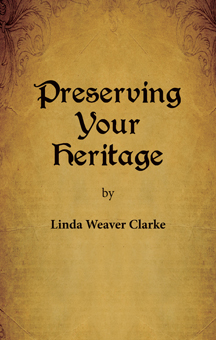
I have recently published a book called: Preserving Your Heritage: Tips For Writing Biographies and Autobiographies—Each of us has a story from our ancestors or our own story to tell. It’s up to us to write these experiences down. In Preserving Your Heritage, you will learn the most important elements of writing. These ideas will help you to write the stories of your heritage in a way that will bring them to life.

genealogy, Writing and Arts

Is it Important to Write Your Parent’s Biography?

Since 2006, I have taught hundreds of classes across the United States, helping those in attendance to write a biography of their father, mother, grandparents or their own autobiography. Many aren’t sure how to go about it so they attend my 2-hour writing class. Some have already written their family stories but wanted to know what more they could add to the story.

While teaching at the Cholla Branch Library in Phoenix, Arizona, a woman raised her hand and said, “I’m a professor at the University and I want you to know…”

I gulped. “Wow!” I interrupted with humor in my voice. “I’m so glad you didn’t tell me that before I began teaching. I would have been very nervous.”

The audience chuckled and the woman continued, “I want you to know that I have attended many writing classes at the university, but I learned more at this two-hour workshop than any class I’ve attended. I want to thank you.”

I was so humbled by what she said. It was something I did not expect, especially from a professor. I asked my husband why she gave me such a wonderful compliment and he said, “I think it’s because you always give examples of what you’re teaching. That really helps.”

One year as I taught my class in Colorado, a gentleman told me that he was a holocaust victim in Poland and his children wanted him to write about his experiences during World War II as a child. He said he wasn’t sure how to begin and what to include. After taking my class, he was so excited to go home and begin writing.

While in California, I met a woman before class began. She said her mother left Germany just before World War II broke out, leaving her parents and nine brothers and sisters behind. Some of them joined the underground to fight against Hitler. As we talked, she said their story was too sad to write about, and she didn’t want to do it.

I knew I had to speak to her about her dilemma but class was about to begin. Hopefully I would be able to answer her question in my lecture. When I finally came to the subject of conflict, I told the audience that this was a very important subject.

I explained, “We must tell about the trials in our ancestors’ lives. If they fought in the underground during World War II, tell about it. These were brave, valiant people who fought for freedom, who fought against tyranny. They fought against the evil powers of Hitler. Your children will be proud of their efforts. Yes, the death of a loved one is sad, but the story must be told.”

The woman smiled as I gazed down at her and she nodded. She had gotten the message and understood what I was saying.

While I was teaching at the Idaho State Historical Society Library in Boise, Idaho, a lady leaned over to my daughter towards the end of class and said: “I felt as if I had handcuffs on my wrists and your mother has just unlocked them.”

As I walk into each library to teach a class, a thrill enters my soul and I know I will be teaching someone who needs my help. Sometimes when I look down into the faces of the people I’m teaching, I’ll see a tear in someone’s eyes as they realize the importance of writing their parent’s stories.

Many times I receive very kind messages from the people who attend my class. Mike Kausch, from St. Louis, Missouri, wrote: “My wife and I received so much information last night at the Kirkwood Library. I believe you have motivated me to finally start writing my family history. We thoroughly enjoyed your presentation.”

At the Stockton County Public Library in California, Mary Jo Gohlke, from Adult Programming, wrote about my class: “I was terribly impressed! She instructs for two hours; the people were genuinely attuned to what she presents. She just impressed the heck out of me. She KNOWS her subject and can present it wonderfully. As I say, she is terrific, thorough, professional, yet strikes just the right chord with her audience.”

Each compliment I received throughout the years really touched my heart. I have had many people ask me to publish a book with my tips on writing a biography or autobiography as a reminder of what they learned. I have recently put one together and named it: Preserving Your Heritage. Below is a description of the book.

Preserving Your Heritage: Tips For Writing Biographies and Autobiographies—Each of us has a story from our ancestors or our own story to tell. It’s up to us to write these experiences down. In Preserving Your Heritage, you will learn the most important elements of writing. These ideas will help you to write the stories of your heritage in a way that will bring them to life. This book is available on Amazon as a paperback and ebook.
Happy Writing, everyone!

genealogy, Writing and Arts

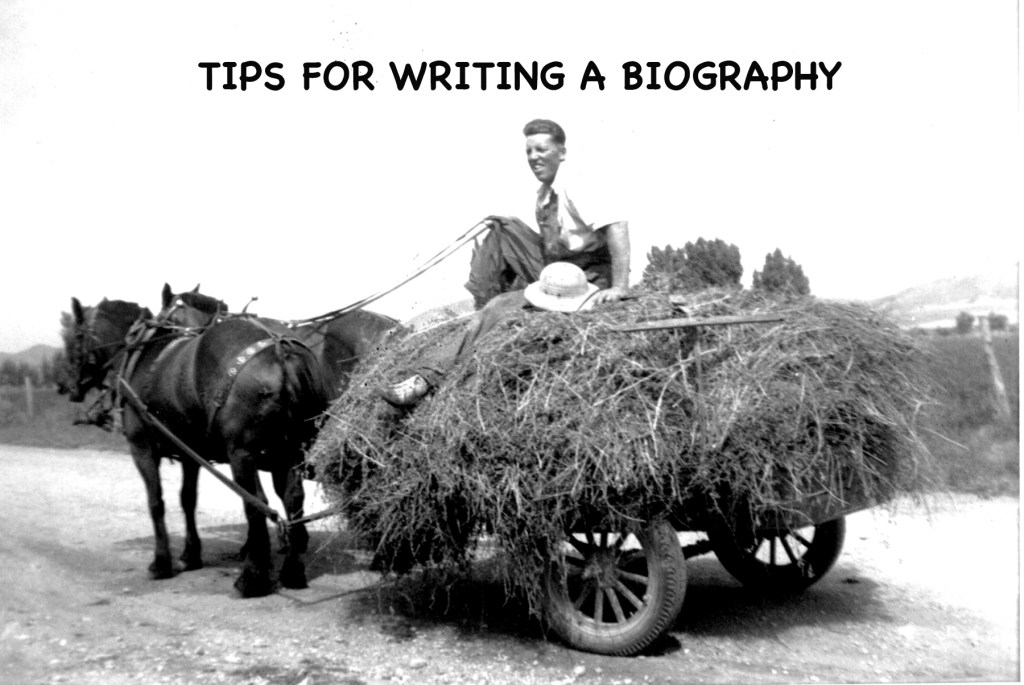
Tips for Writing a Biography

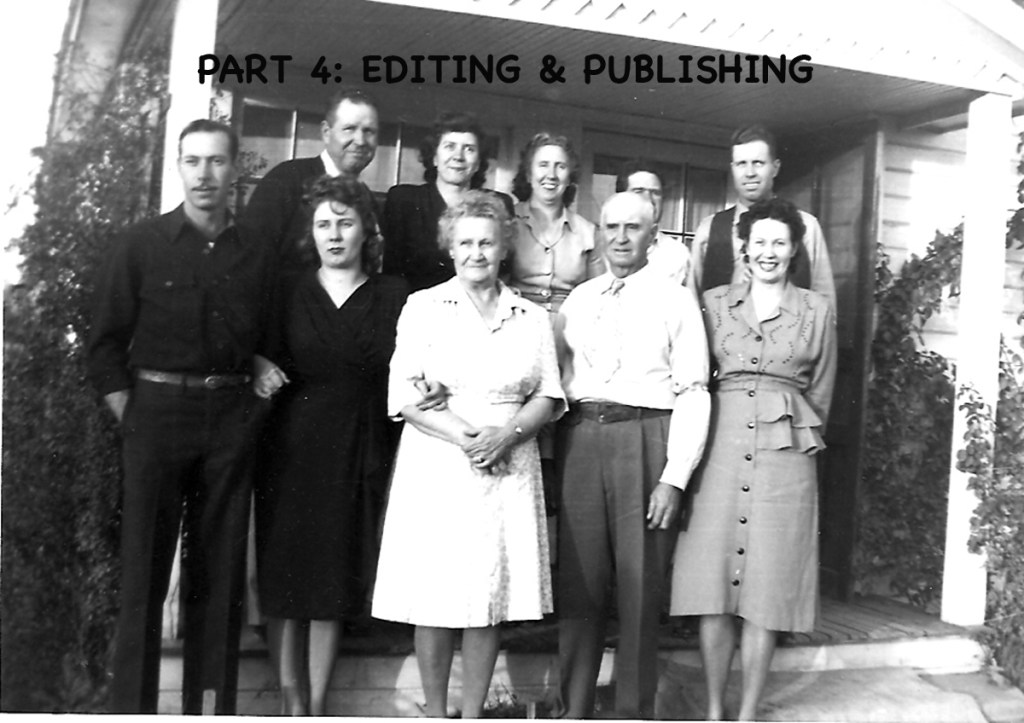
Part 4

Editing & Publishing Your Biography

First thing to do before publishing your book is to edit your story a few times to make sure there are no mistakes or spelling errors. As you edit your story, watch for repetition.

  1. Delete clarifying details. You want to keep the reader’s interest. The reader is smart, so you don’t need to re-emphasize a situation.
  2. Learn to recognize repetition. Most readers will skip over a paragraph that is repeated. Even though it’s said differently, it’s still repetitive.

Next on the list! Don’t forget the Title Page and don’t forget the Copyright Page! Some people are worried about copyrights. The United States backs up the “Berne Convention for the Protection of Literary and Artistic Works,” which means your work is protected from the moment you create it. You own the copyright to any work you create when you put it in a readable form. By placing the copyright symbol © on your work, you are saying that you own the rights.

Give a date of the original publication with your name, such as: Copyright © YEAR, Your Name. All rights reserved. No part of this book may be reproduced or transmitted in any form without permission in writing from the author.

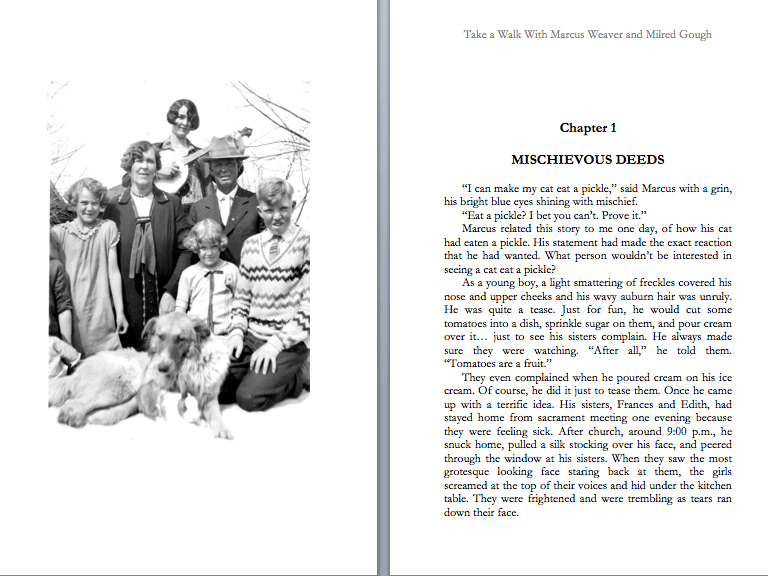
You want your book to look professional. Check every page and make sure the “chapter page,” which says Chapter One, etc., is on the right side. The right side is always the odd numbered pages. If you need to, you can have a blank page or a photo on the left side.

Example

Add photos! They help in telling a story. Remember to scan your pictures at 300 dpi for the best resolution. You don’t need to scan it any higher. When inserting your photo, I wouldn’t choose “wrap around” because the photo tends to move about. I would click “insert” at the top of the Word Document and insert it either above or below your paragraph. Or you can put them on the left side of the page, separate from your writing, like the example above.

There are many places to publish your book but my favorite is KDP. Kindle Direct Publishing is an “Independent Publisher” and the quality is excellent. You don’t have to pay anything upfront or buy a certain amount of books. It is absolutely free. All you have to do is upload your manuscript in the correct size you prefer. If you need any help with a book cover, they have a place on the KDP website where you can create your own book cover.

KDP will make your book available on Amazon and at Barnes and Nobles. Also, you get to set the retail price. Remember! You only have to pay the printing cost when ordering your books. Not the retail price. You can buy them on the KDP website where you uploaded your book. You are not limited to how many books you can buy. You can buy as many as you want at any time and as many times as you like.

Here are some examples. For a 5.25 X 8 inch black and white paperback, 241 pages, I pay $3.79. For an 8X10 paperback in color, 72 pages, I pay $3.44. The quality is excellent. KDP allows you to publish your book as a paperback, an eBook, and as a hard copy.

If you have any questions, let me know your concerns and I’ll try to answer them.

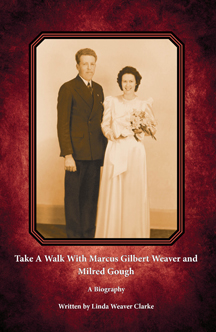
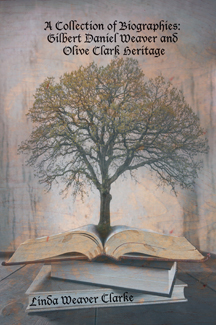
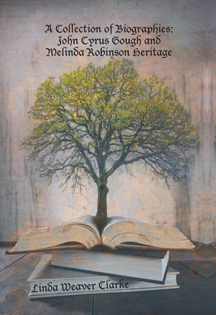
Here are some examples of book covers that my husband created for the biographies that I published.

genealogy, Writing and Arts

Tips For Writing a Biography

Part 3

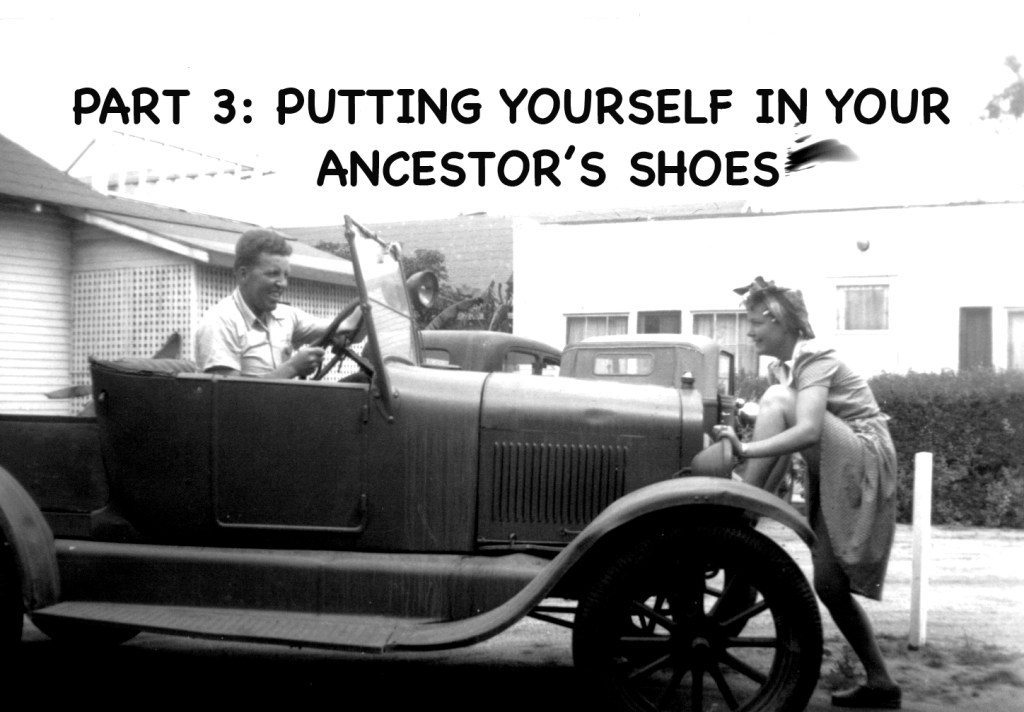
Putting Yourself in Your Ancestor’s Shoes

Adding emotion to your story is very important. If you don’t weep while telling a tragic story, then begin again. If you don’t laugh during a hilarious incident, then write it again. You need to touch the hearts of your readers. How do you do that? By adding emotion and describing how you or your ancestors must have felt. It’s important to add feelings of fear, frustration, anger, etc. If you’re writing your own story, tell how you felt.

Fear: My knees shook, my heart beat rapidly, I trembled.

Anger: My face turned red, I clenched my jaw, I stomped my foot.

Frustration: I threw my hands in the air, I shook my head with frustration and said…

Love: Your children would love to find out how you felt about their father when you first met.

 Here is an example of showing fear in my father’s biography. “Once Marcus came up with a terrific idea. His sisters, Frances and Edith, stayed home from church one evening because they were feeling sick. Around 9:00 pm, he snuck home, pulled a silk stocking over his face, and peered through the window at his sisters. When they saw the most grotesque looking face staring back at them, the girls screamed at the top of their voices and hid under the kitchen table. They were frightened and were trembling as tears ran down their face. When Marcus heard them, he opened the door and walked into the house with the stocking still over his head and gently said, “Don’t cry little girls. I won’t hurt you.” When they recognized his voice, they became angry and told their parents what he had done. Needless to say, he got into trouble over this little incident.”

When I asked my aunt about this experience, she said it was the most “grotesque looking face” she had ever seen, so I used her very words. She said they were scared and began crying. Instead of saying they were scared, I wrote: They were frightened and were trembling as tears ran down their face. By describing fear, it brings the reader into the story and they understand how the girls felt. You must put yourself in your ancestor’s shoes.

When my grandmother wrote about some experiences she had in her journal, I was impressed with how she described fear. This is what she wrote:

“I knocked at the door of a wealthy home. The man came out, took my tract, tore it into bits and called his large dog out of the house. I left with that dog pursuing me. With my hair rising and a terrible fear attacking me, I silently prayed and something told me to whirl about and thrust my open umbrella at him. I did so and that huge dog retreated. Then I told his inhuman master a few things.”

It was easy to feel what my grandmother felt when I read: “with my hair rising and a terrible fear attacking me.” That was a perfect description. Here’s another example from her journal.

“I took to the center of the road as it was darker on the walks and I didn’t like to get too near those weird looking factory buildings and alleys on both sides of the silent streets. Presently I heard footsteps. I saw a man following me. As I hurried, he also did. My tongue became dry and fear seized me. I prayed as I ran. I not only ran but I flew. How I crossed that tiny footbridge, I never knew! But I couldn’t feel the touch of the ground under my feet as I sped onward. With my Bible clutched tightly under my arm, I had left the man, downs, and everything behind, and was soon on the lighted highway and home.”

That was a great description of fear. If you have written your own autobiography or an ancestor’s account of a fearful experience, read it again and notice if you added “emotion” to your story. It will be hard for the reader to put down the book.

How would you describe feelings of love? My parents had been writing to one another for about a year before they met one another. When I asked my mother what it was like when they first met, this is what she told me. “When our eyes met, my heart leapt within me and a warm glow filled my soul, telling me that he was the man I was going to marry.”

I am so grateful that she told me how she felt. It was the perfect description. But how did my father feel? This is my father’s account: “All I remember is a wonderful perfect dream that goes through my mind like a marathon night and day. I dreamed I met a girl Saturday night, a perfect girl whom I had been thinking of, who far surpassed my imagination. As we swept over the floor to the rhythm of the music I was in love with her from that moment.”

It really touched my heart to read his description. As I was writing my own autobiography for my children, I thought about my feelings for my husband. We were good friends in college and we hung out together with our friends. When he invited me on a date, I thought nothing of it. But as we got to know one another, my feelings for him began to change. This is how I described how I felt in my autobiography:

“Looking into his eyes, I knew I’d fallen in love with my friend. I couldn’t deny it. My heart fluttered each time he held my hand or smiled at me. If that wasn’t love, I was fooling myself.”

Remember! Emotions, feelings, moods, and describing how you felt are very important. It brings a story to life. It helps the reader to become part of the story and want to read on. What is the secret? You must put yourself in your ancestor’s shoes.

Next week, I’ll post Part 4: Editing & Publishing Your Biography.

genealogy, Writing and Arts

Tips For Writing a Biography

Part 1

Reasons you should write the stories of your parents, grandparents, and ancestors: Learning about your ancestors can be so much fun. As I learned more and more about my ancestors, it was the beginning of a marvelous experience.

The importance of writing your family history can never be over emphasized. Each of us has a story from our ancestors or even our very own story to tell. If these stories are unwritten, how are your children going to know their heritage or family traditions from the past? Are these stories and traditions going to be lost to your children because you failed to put them down on paper? It’s up to you to write down these experiences.

Why should you write their stories? The memory of your parents, grandparents, and great grandparents will live on if you write them down. Secondly, did you know that their lives were and are an influence on us? Who do you take after? What genetics were passed on to you? Lastly, if you don’t write their stories down, future generations won’t know about them. It’s time to get busy! Take the time to write the stories that have been passed down to you. Or you can write your own autobiography.

Whether you’re writing about a loved one or your own story, you might feel that it is overwhelming and aren’t sure how to begin. If you have an inspiring story to tell or intriguing incident to describe, perhaps writing each experience as short stories would be easier for you, rather than beginning at birth and listing everything they did or you did chronologically. Each chapter could be a short story.

In this four-part series, I will explain how to write each experience as a short story so it’s easy to understand and you won’t feel overwhelmed.

You Must Research 3 Things Before Writing Your Story

1. The area your story takes place: Find out everything you can about the area to educate your readers and make the setting feel real. Describe what the area looks like. If you can’t go there in person, do research online.

2. Your parents or grandparents: Find out what they were like, their strengths and weaknesses, their hobbies, their failures and victories. What was their occupation? Ask friends, neighbors, and family about them. Get them together with friends who like to reminisce. That works every time. It would be good to take along a recorder. If you don’t know much about them, don’t worry. You will get to know them as you write their stories.

3. The time period: What were the hairstyles or clothes styles like? During the roaring twenties, women raised their hemlines and bobbed their hair, but the new style created a lot of trouble. Some women were fired from their jobs. A New Jersey schoolteacher was told that if she grew her hair back then the school board wouldn’t fire her. In a 1925 newspaper, a preacher warned his congregation that a “bobbed woman was a disgraced woman.” Did your mother bob her hair?

What kind of games did they play? Men played games that challenged their strength such as: wrestling and stick-pull. Did your grandmother play with paper dolls? They have been around for over 200 years. You can find paper dolls online that date back to the 1800s to add to your story.

How about jump rope rhymes? A guest at one of my classes told me that she wanted to teach her grandchildren the jump rope rhymes that she grew up with but couldn’t remember them. So she searched online and found them. Don’t you think your children would get a big kick out of the rhymes you grew up with? Add them to your story. Here are two that you might remember:

Cinderella dressed in yella,
Went downstairs to kiss a fella,
Made a mistake and kissed a snake.
How many doctors did it take
1, 2, 3, . . .

I eat my peas with honey,
I’ve done it all my life.
It looks a little funny.
But it keeps them on my knife.
How many peas can I get on my knife?
1, 2, 3, . . .

Put a bit of history in your story to let your family know what it was like to live at that time period. Did you know that they rationed gas to 3 gallons per week during World War II? In my father’s letters to my mother, he said he couldn’t drive up to see her very often because of the rationing of gas and tires. They even rationed silk stockings. How did the women react to the rationing of silk stockings? My mother told me that she put leg makeup on her legs and drew a line down the back of her leg with an eyebrow pencil so it would look like the seam of a silk stocking.

In one of my classes, a woman told me that her little brother had lost his shoe. It fell in a canal and floated away. When they went to town to buy some shoes, they found that they were being rationed and had to be on a waiting list. A gentleman in one of my classes told me that his mother was on a waiting list for a washing machine because the metal was being used for the war. But that wasn’t all. Sugar, meat, and other foods were being rationed. Spam became very popular during that time period. World War II affected everyone’s lives.

When your research is done, you will be ready to write your story. Next week I’ll post Part 2: Writing Your First Story.