

Part 1
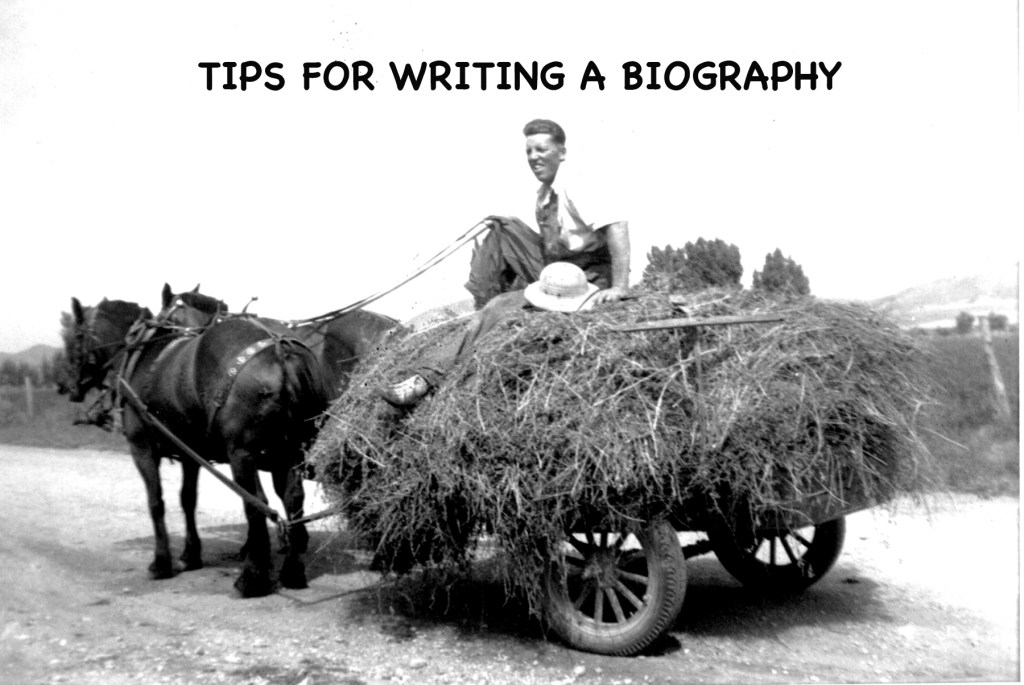
Reasons you should write the stories of your parents, grandparents, and ancestors: Learning about your ancestors can be so much fun. As I learned more and more about my ancestors, it was the beginning of a marvelous experience.
The importance of writing your family history can never be over emphasized. Each of us has a story from our ancestors or even our very own story to tell. If these stories are unwritten, how are your children going to know their heritage or family traditions from the past? Are these stories and traditions going to be lost to your children because you failed to put them down on paper? It’s up to you to write down these experiences.
Why should you write their stories? The memory of your parents, grandparents, and great grandparents will live on if you write them down. Secondly, did you know that their lives were and are an influence on us? Who do you take after? What genetics were passed on to you? Lastly, if you don’t write their stories down, future generations won’t know about them. It’s time to get busy! Take the time to write the stories that have been passed down to you. Or you can write your own autobiography.
Whether you’re writing about a loved one or your own story, you might feel that it is overwhelming and aren’t sure how to begin. If you have an inspiring story to tell or intriguing incident to describe, perhaps writing each experience as short stories would be easier for you, rather than beginning at birth and listing everything they did or you did chronologically. Each chapter could be a short story.
In this four-part series, I will explain how to write each experience as a short story so it’s easy to understand and you won’t feel overwhelmed.
You Must Research 3 Things Before Writing Your Story
1. The area your story takes place: Find out everything you can about the area to educate your readers and make the setting feel real. Describe what the area looks like. If you can’t go there in person, do research online.
2. Your parents or grandparents: Find out what they were like, their strengths and weaknesses, their hobbies, their failures and victories. What was their occupation? Ask friends, neighbors, and family about them. Get them together with friends who like to reminisce. That works every time. It would be good to take along a recorder. If you don’t know much about them, don’t worry. You will get to know them as you write their stories.
3. The time period: What were the hairstyles or clothes styles like? During the roaring twenties, women raised their hemlines and bobbed their hair, but the new style created a lot of trouble. Some women were fired from their jobs. A New Jersey schoolteacher was told that if she grew her hair back then the school board wouldn’t fire her. In a 1925 newspaper, a preacher warned his congregation that a “bobbed woman was a disgraced woman.” Did your mother bob her hair?
What kind of games did they play? Men played games that challenged their strength such as: wrestling and stick-pull. Did your grandmother play with paper dolls? They have been around for over 200 years. You can find paper dolls online that date back to the 1800s to add to your story.
How about jump rope rhymes? A guest at one of my classes told me that she wanted to teach her grandchildren the jump rope rhymes that she grew up with but couldn’t remember them. So she searched online and found them. Don’t you think your children would get a big kick out of the rhymes you grew up with? Add them to your story. Here are two that you might remember:
Cinderella dressed in yella,
Went downstairs to kiss a fella,
Made a mistake and kissed a snake.
How many doctors did it take
1, 2, 3, . . .
I eat my peas with honey,
I’ve done it all my life.
It looks a little funny.
But it keeps them on my knife.
How many peas can I get on my knife?
1, 2, 3, . . .
Put a bit of history in your story to let your family know what it was like to live at that time period. Did you know that they rationed gas to 3 gallons per week during World War II? In my father’s letters to my mother, he said he couldn’t drive up to see her very often because of the rationing of gas and tires. They even rationed silk stockings. How did the women react to the rationing of silk stockings? My mother told me that she put leg makeup on her legs and drew a line down the back of her leg with an eyebrow pencil so it would look like the seam of a silk stocking.
In one of my classes, a woman told me that her little brother had lost his shoe. It fell in a canal and floated away. When they went to town to buy some shoes, they found that they were being rationed and had to be on a waiting list. A gentleman in one of my classes told me that his mother was on a waiting list for a washing machine because the metal was being used for the war. But that wasn’t all. Sugar, meat, and other foods were being rationed. Spam became very popular during that time period. World War II affected everyone’s lives.
When your research is done, you will be ready to write your story. Next week I’ll post Part 2: Writing Your First Story.


