Faith, Hope & Charity

What is Charity

One day I came upon an article that described the real meaning of charity. I always thought charity was to give to those in need but I discovered it’s much more than that. Silvia H. Allred said, “When we have charity, we are willing to serve and help others when it is inconvenient and with no thought of recognition or reciprocation. We don’t wait to be assigned to help, because it becomes our very nature. As we choose to be kind, caring, generous, patient, accepting, forgiving, and selfless, we discover we are abounding in charity.”

When I read this description, I realized charity is not only being generous or serving others but it’s being patient and forgiving. How many times do I lose my patience when I’m frustrated? Do I forgive those who have hurt my feelings? Do I set aside my daily chores when someone needs me, even when it’s inconvenient? I discovered that charity is more than giving to those in need.

Thomas S. Monson said, “I consider charity, or the pure love of Christ, to be the opposite of criticism and judging… I have in mind the charity that manifests itself when we are tolerant of others and lenient toward their actions, the kind of charity that forgives, the kind of charity that is patient. I have in mind the charity that impels us to be sympathetic, compassionate, and merciful… True charity is love in action.” 

I never thought about criticism and judging others as being the opposite of charity. This opened my eyes and I decided to examine my attitude. Am I tolerant of those who have different beliefs than I have? Am I patient to those who have different opinions? Do I criticize others rather than understand them? Am I sympathetic to those who need understanding?

When you consider the pure love of Christ, shouldn’t we be kinder or more caring? Thomas S. Monson said, “It is accepting weaknesses and shortcomings. It is accepting people as they truly are. It is looking beyond physical appearances to attributes that will not dim through time.”

I’ve been working on charity lately and trying to be a more patient and caring person toward those I meet. I work at the FamilySearch Center where I help people to find their ancestors. One day at work, a woman pointed to a young lady and said, “She is so loud when she talks. It’s annoying me and I’m having a hard time concentrating on my work. Can’t someone talk to her about her volume?”

With a gentle smile, I said, “I understand. But you see, she has autism. She doesn’t know how to lower her voice. Even though she lacks social skills, she is very intelligent and knows more about doing genealogy work than most anyone in this place.”

The lady nodded and said, “I see. But can’t anyone tell her to lower her voice?”

I laughed. “Yes. But she forgets shortly after being told. I have a grandson who has autism so I understand her. I’m grateful that she can help people at this place because it gives her self-worth.”

Charity is all about accepting and loving others for who they are. If you get to know that person and learn more about him or her, then you’ll be more understanding and appreciate that person.

“True charity is love in action. The need for charity is everywhere.” ~ Thomas S Monson

Faith, Hope & Charity

Forgiveness is Essential for a Happy Life

Asking forgiveness

When we have been deeply hurt, it is hard to forgive those who have been rude and unkind. For some reason we tend to hold on to it. During this time in our life, we’re unhappy and just want the hurt to go away. Carrying a grudge can be a heavy burden and we tend to blame others for the way we feel.

Dieter F. Uchtdorf said, “We are not perfect. The people around us are not perfect. People do things that annoy, disappoint, and anger. In this mortal life it will always be that way. Nevertheless, we must let go of our grievances. Part of the purpose of mortality is to learn how to let go of such things. That is the Lord’s way.”

It is said that to forgive is divine but if the person who hurt us isn’t asking forgiveness, we feel that we don’t have the strength to forgive them. We want to teach them a lesson by not being part of their lives any longer. Or… if they have apologized, we won’t forget what they said or did and we won’t have anything to do with them. Is that right? There is one problem with that sort of thinking. The hurt inside us still remains with us. It won’t go away. The only way for us to be happy again is to forgive those who have hurt us.

We all make mistakes and we’re not perfect. It’s important to forgive and be forgiven. The Lord wants us to be compassionate and forgive those who have done us wrong.

Jeffrey R. Holland said, “Let people repent. Let people grow. Believe that people can change and improve. Is that faith? Yes! Is that hope? Yes! Is it charity? Yes! Above all, it is charity, the pure love of Christ. If something is buried in the past, leave it buried. Don’t keep going back with your little sand pail and beach shovel to dig it up, wave it around, and then throw it at someone, saying: Hey! Do you remember this? Splat!”

If you’re not sure how to begin because the hurt is too deep, the best way is on your knees. As you talk to a loving Father in Heaven, list all the things you are grateful for and don’t stop until your heart is filled with love. He hears our prayers and responds to our gratitude. I have done it and it works. During this time on your knees, talk to him about forgiving those who have hurt you. It is amazing how happy you will feel by the end of your prayers.

Let me tell you a true story, a personal experience that happened to me. In my youth, I was bullied by those who were popular in school. Many years later after I was married, I received an anonymous card one day. The return address said: “A Walk to Remember.” This was the name of a novel written by Nicholas Sparks, which had been made into a movie about a young girl who was bullied by her peers in high school. As a popular young man gets to know her, he finally realizes that she has wonderful qualities and regrets having been rude and judgmental towards her.

Curious about the interesting return address, I opened the envelope and pulled the card out. On the outside of the card, it said, “Thank you and God bless you.”

I opened the card and found these amazing words printed inside: “You are a beautiful woman and I’m sure a very good mom. Just as this card says, thank you… for putting up with all the crap everyone dished out at you in high school. Especially me. We could have been friends. I thought I was someone and have realized I’m really no one special or important. At least, not better than you, by no means. Thank you for letting me ease a guilty conscience! May God bless you.”

Tears filled my eyes as I read these beautiful words. Why was I the recipient of such a wonderful message? I realized that, as time passes, we tend to look at life differently than we did in our youth. Our opinions change and we see our faults and wish we could change our past if we had the chance. But since we can’t, then we try to make up to those we have wronged. The movie, A Walk to Remember, now has a special meaning to me.

When I told my brother about the card I received, he said, “I think I know who he might be. As I remember, he was so mean to you.”

I instantly stopped him and said, “I don’t want to know. I need to forgive everyone. It’s better this way. Besides, I know I wasn’t the only one being bullied at school.”

John H. Groberg said, “When filled with God‘s love… we can endure pain, quell fear, forgive freely, avoid contention, renew strength, and bless and help others in ways surprising even to us.”

May we always try to forgive those who have wronged us! May we always reach out to those we were unkind to and beg their forgiveness!

As Dieter F. Uchtdorf said, “We are not perfect. The people around us are not perfect.” But we can learn to forgive. Don’t you think?

Realizing forgiveness is an important subject, I sat down and wrote Jenny’s Dream, a historical romance. In Jenny’s Dream, Jenny is an aspiring author. She has a dream to fulfill, but the only thing standing in her way is an unpleasant memory, which has haunted her since childhood. She must learn to forgive before she can follow her dream.

Watch the Book Trailer below. 

This book can be purchased at Amazon and Audible audiobooks.

Find the audiobook at Audible: https://www.audible.com/pd/Jennys-Dream-Audiobook/B07D9VP476

A paperback or eBook at Amazon is below.

Faith, Hope & Charity

The Future Belongs to Us

Ralph Waldo Emerson (1803 – 1882) wrote: “The future belongs to those who prepare for it.”

Life is full of choices. What we do with those choices decides our future. We must develop our talents and acquire skills, gain knowledge and learn the lessons of life … no matter what age we are. To achieve our goals, we must work hard by studying and learning all we can. Our goal is to take one step at a time until our dream is fulfilled. We should not compare ourselves to others, noticing their achievements and how quickly they obtained them. We should be concerned with our own growth.

Hugh B. Brown (1883 – 1975) said, “We are not endeavoring to get ahead of others, but to surpass ourselves.”

We must decide what our goal is, work hard, pay the price, and never give up. Helen Keller (1880 – 1968) said, “We can do anything we want to if we stick to it long enough.”

Helen Keller is a good example to us all. She was deaf and blind but never let that stop her progress. She didn’t want to be ignorant or live a life of mediocrity. She wanted to rise above her circumstances.

Elizabeth Stanton is another example of perseverance. She spoke out for women’s rights. She said that women should have the right to vote and receive equal education. Elizabeth had received a higher education at Troy Seminary in New York and felt all women deserved the right to be educated.

When she gave lectures on the subject, it was frowned upon. A pastoral letter from a minister in Massachusetts said a woman who speaks publicly is “unwomanly and unchristian.” The pastor also mentioned that it would “threaten the female character with widespread and permanent injury.” Why were women being held back? Even though it was not proper, she still gave her opinions.

Elizabeth was also an abolitionist and fought adamantly against slavery, prejudice, and inequality but it was not readily accepted. When Elizabeth Stanton went with her husband to a convention in England that was against slavery, she tried to give her opinion but was put down and told that women were not permitted to give speeches. It was solely a man’s place to speak publicly. She didn’t let that stop her. She fought for Women’s Rights for years.

Life is full of choices. When we have challenges in our lives, we wonder if we made the right choice, if we should have done something different. How would life have turned out if we had chosen another direction?

It touched my heart when I read my great grandmother’s experiences. Hannah and her husband came here to America in the mid-1800s for a better life. On the ship from England, Hannah’s one-year-old daughter became very ill, which resulted in deafness. One year after arriving in America, Hannah gave birth to a baby boy but she was not meant to have him long. He died six weeks later. The following year, the sheriff came to her door and announced that her husband had been murdered on the streets of St. Louis, Missouri. Realizing she had to make a living for her children, Hannah took a job as a maid at the largest hotel in St. Louis, hoping to earn enough money to move on.

When her family heard the news, they volunteered to pay for her passage if she returned. But she made the choice to stay. What a courageous woman! If I were Hannah, would I have doubted my decision to go to America? Would I have turned around and headed back to my family in England?

After five years, Hannah had earned enough money to board a riverboat and head northward, far away from St. Louis. That was when she met a wonderful man who fell in love with her. My great grandmother is an example to me. If I were in her shoes, I wonder if I would have had that much courage. Life is full of choices.

Spencer W. Kimball said, “Life gives to all the choice. You can satisfy yourself with mediocrity if you wish. You can be common, ordinary, dull, colorless; or you can channel your life so that it will be clean, vibrant, progressive, useful, colorful, rich.” (“Lesson 35: Wise Choices,” Young Women Manual, 1993, 134)

As we study and learn, we build character, qualities that make us distinctive. We must find out what kind of person we truly are. We might even find hidden talents we didn’t even know we had.

William James O´Shea said, “Character development is the great, if not the sole, aim of education.” (Richard Evan’s Quote Book, Publishers Press, 1971, p. 76.)

Character development is an important part of life. That’s when we learn integrity, wisdom, responsibility, discipline, and to overcome prejudice. Our intellectual growth is as important as our spiritual growth.

David O. McKay said, “True education does not consist merely in the acquiring of a few facts of science, history, literature, or art; but in the development of character.” (Conference Report, April 1928, 102)

While hard work is important, attitude makes a person successful. If we have a deep belief in our cause, then we can accomplish anything. Men aren’t great by accident. It takes hard work and a belief in yourself. If we trip a few times along the way and feel foolish, don’t let it bother you.

Dieter F. Uchtdorf said, “Our destiny is not determined by the number of times we stumble but by the number of times we rise up, dust ourselves off, and move forward.”

Our life is full of choices. What we make of our life is up to us. The important thing is to do the best we can with what we’ve got. Remember that intellectual learning is as valuable as character development.

“Our business in life is not to get ahead of others but to get ahead of ourselves. To break our own record, to outstrip our yesterdays by today, to bear our trials more beautifully than we ever dreamed we could, to give as we never have given, to do our work with more force and a finer finish than ever. This is the true objective. And to accomplish this task, our attitude is reflected in a determination to make the most of our opportunities.” ~ Thomas S Monson (1927 – 2018)

In Reflections of the Heart, I give inspirational advice for all ages. You will learn the secret of happiness and how to deal with the trials in your life. Does music really soothe the soul and help you when you’re frustrated? Does it matter what kind of music you listen to? Is laughter really the best medicine? If so, how does it make a difference in your life? How important is it to develop your spirituality? These are the subjects discussed in this book.

Christmas, Faith, Hope & Charity

A Christmas Miracle

Do you believe in miracles? Some may say they have never seen a miracle before. But if you really look around and take notice, it may surprise you how many you have seen in a lifetime. Russell M. Nelson said, “Seek and expect miracles… Every book of scripture demonstrates how willing the Lord is to intervene in the lives of those who believe in Him. The Lord will bless you with miracles if you believe in Him, doubting nothing… Prayerfully ask God to help you exercise that kind of faith.”

I would like to share a Christmas story that was written by Opal H. Clarke. It is a true story of love and miracles… of faith and hope.

Don’t Let Him Die

I first became aware of my twelve year old son, George’s, illness when the choppy rendition at the piano of “Hark! The Herald Angels sing,” had stopped. Glancing at him, his head resting on the piano, I asked, “What’s wrong?”

He replied, “I don’t feel good.” As he looked up I saw his cheeks were flushed; on closer inspection it proved to be a fine rash. He had a temperature. I called our family doctor and described the symptoms. He said it sounded like the measles that were going around and he prescribed a well-known drug.

The next day, George complained of his eyes hurting. Blisters began to appear on his ears and lips, and his temperature rose. After sitting by his side for several hours, I had to leave the room momentarily. As I returned, the sight was so shocking. I rushed from the room, dropped to the floor and cried. George had rubbed all the skin from his blistered lips. His ears, neck and face were a mass of blisters, with one large blister hanging like a sac on one side of his face. George did not sleep. He kept asking us to please turn out the lights. It was frightening to hear him ask this; there was only a small night-light burning and I had a small folded towel over his eyes.

Upon our arrival at the hospital, we were taken to an isolation room. As the ambulance attendant lifted my son onto the bed, the large blister on his face, a hanging sac of sloshing fluid broke.

Now, lying naked on the sterile sheets, coughing and choking, his body a mass of blisters and skinless places, he looked like someone wearing an ugly mask. I wanted to cry out, “No! No!” But I prayed that for my son’s sake my voice would be calm.

Nothing could have torn me away from my son at this time; so I was given a hospital gown and a mask. The next few days were crucial ones. Large areas of skin that had gone dark and looked as if they were scalded, pushed off from George’s back and he stuck to the sheets. The skin, pushed up on his upper arm, looked like a wrinkled nylon stocking. George’s mouth and throat were blistered, as well as the bronchial tubes, and he was coughing constantly. I covered my face, put my head on the windowsill and fought the tears.

The eye doctor said the eyes were blistered, even on the cornea, and added, “If he comes along—we may not be able to save his eyes.” It came to me that my son might be blind!

A new nurse coming in to put drops in George’s eyes, leaned over him and said, “George, I have something to put in your eyes. Can you turn your head this way?” She leaned over, and as he turned his face with its black-rimmed hole for a mouth, one side of his face practically skinless, and skinless ears—all this was too much for this nurse. She became nauseous, gagged and hurriedly left the room.

One night, two couples were standing in the hall. One of the men looked in at George and gasped. When his wife stepped over to where he was standing, he led her away, remarking, “You do not want to see that.”

Each time the doctor entered the room, he would greet my son with, “How are you George?”

George would answer, “Pretty good.” Always pretty good.

At one time the doctor looked at him and said, “You are a game little guy!” There were tears in his eyes.

He asked me if I was praying. I assured him I was. He also asked if his name could be put in the temple so those who were there could pray for him.

One evening, the young doctor gravely told me things were not going well and that he had done all that he could. At that moment, I felt desperately alone; what could I do except go to God for help? I returned to the room and knelt beside my son’s bed and pleaded with God to let him live.

The next day, George asked, “Are they still praying for me?”

I said, “Oh, yes. We surely are, son.”

Then he asked me if I’d hold his hand. He said, “If you don’t mind holding a scratchy one.” All day I held his hand.

By evening I sensed a calmness come over him. I said, “Doctor, I think he is better!”

The doctor examined him, turned to me and with a look of almost disbelief and surprise said, “I think he is!” The crisis had passed.

The miraculous powers of the body to heal took over. New skin began to grow and the old skin sloughed off. All twenty of his fingernails and toenails came off.

Suddenly we were aware that it was Christmas Eve. Kind nurses and Santa himself came to where a brave young boy with a blotched and burned looking body sat in the bed. By tipping his head back, he saw through slits of eyes a Christmas bouquet and said, “I can see! I can see!”

At that moment I was humbled beyond words.

The young doctor came into the room and said, “George, you have made medical history.” Then he asked if we minded the case being written for the medical journals. I tried to thank our tall young doctor.

He said humbly, “I just stood by.” But I knew he had worked valiantly to save my son.

Our family doctor came into the room and said, “George, you are a walking miracle.”

The nurses, who came to say good-bye to us, said that no one in the hospital expected to see our son go out of the hospital alive.

The eye doctor said, “I feel so humble about this boy. It certainly has made me a believer.”

At this unforgettable Christmas time I realized that, to me, Christmas would forever be a time of rejoicing; rejoicing for the gift of a son.” (Written by Opal H. Clarke, “Don’t Let Him Die”)

George Amos and Linda Clarke: Celebrating Christmas

Truly this was a miracle! Yes, I believe in miracles. This young man grew to adulthood but his body isn’t the same.

His eyes are constantly red because his tear glands were destroyed, so he has to use artificial tears. He coughs frequently and has a raspy sound when he breathes because he has Chronic Bronchitis, which was caused from his illness.

George Amos Clarke, my sweetheart and husband, was grateful for a miracle.

Faith, Hope & Charity, Life and Dreams

Understanding Problem Children

As parents, we have a great responsibility. We are not only teaching young minds, but shaping the future. The sad thing is that some of us don’t take the time to understand difficult or rebellious children. Why are they acting this way? We just assume they are misbehaving because of lack of discipline.

A young fifteen-year-old boy received excellent grades, but his teacher didn’t understand him. He felt the young man was a troublemaker. Because the teacher was not interested in getting to know his student, he demanded the boy leave school because his presence disturbed the other students. Albert Einstein, a great physicist, quit school because a teacher did not take the time to understand him. Many believe that he had Asperger Syndrome, which is a form of autism.

When my young grandson was diagnosed with Asperger Syndrome, my daughter read one book after another to find out more information. Diana wanted to know how to deal with her son. When she learned something new, she would call me and tell me about it. Her dedication in learning about her son’s behavior was impressive but she didn’t realize how difficult it would be to help others understand his condition. Even his teachers didn’t take the time to understand his behavior. They figured he was not paying attention or being difficult.

What is Asperger Syndrome? Individuals with Aspergers lack social skills, have a hard time reading nonverbal cues such as body language, and have difficulty understanding proper body space. They desire interaction with other children but many times don’t understand the sense of humor of their friends and take the things they say literally. They have a tough time with changes and are sensitive to new sounds, tastes, smells, and sights. They like sameness and perceive the world differently from us, so we must be patient.

These young children are intelligent and are usually preoccupied with one subject such as science. At bedtime, when my daughter asks her son which story he would like her to read, he usually picks a children’s science book. In fact, their vocabulary usually sounds like “young professors.”

The behavior of an Asperger child is caused from neurological differences, which has to do with the structure and function of the nervous system. The behavior of an Asperger child is many times judged as being intentionally rude or having bad behavior. That is not true. It is not intentional and not a result of improper parenting.

Labeling or demeaning a child only holds them back from a greater future. Once a child is labeled, it’s a stigma that stays with him until something changes.

I remember when my own daughter was labeled as a troublemaker, simply because she was an active child. Her teacher didn’t know how to cope with a lively child and had given her a negative label. This broke my heart and I didn’t know what to say or do. I realized that her self-esteem was being hurt.

The following year, my daughter’s new teacher was an elderly woman who adored my little girl. She said that she realized my daughter was active and had a tough time sitting still, so she allowed her to stand at her desk as she did her work. She said that it was working out wonderfully. Because of the love of a teacher, my daughter wanted to try harder. This sweet elderly teacher helped to boost my little girl’s self-esteem.

Once I had a heartrending experience that I never forgot. I was a substitute teacher for an elementary teacher. I had subbed for him before, but this day was different. Something was definitely wrong and I was not sure what it was. As I moved toward the back of the room, I noticed a desk that was hidden behind a bookshelf. I peered around the corner and saw an eight-year-old girl resting her head against her arms.

I was surprised. Why was this student separated from the rest of the children? Why was she hidden behind this bookshelf…alone?

One of the students volunteered, “Because she’s a trouble-maker, doesn’t do her schoolwork, and fights with the boys at recess.”

After excusing the children, I talked to the young girl. It took quite a while to soften her angry eyes and her rebellious attitude. I asked her what her favorite color was, told her what a pretty dress she wore and that she had pretty eyes. After a while, I had the young girl smiling. I moved her desk up front beside my own so she could be near me. As the day wore on, I spent much time with this young girl, helping her, talking to her, having her pass out papers to the students.

By the end of the day, I had grown to love this young student and my heart went out to her. She had been abused by her peers and was misunderstood, simply because a teacher had labeled her as a “troublemaker.” Therefore, her fellow-students incessantly reminded her of this fact. No one seemed to befriend her or cared about her.

When school ended, I was supposed to write a note about the young girl’s behavior so she could give it to her parents. After the class was empty, I packed up and walked out the door. To my surprise, the girl’s mother walked up to me with the note in her hand and asked, “Did you write this?”

After acknowledging that I had, the young mother’s eyes welled up with tears as she said, “I want to thank you very much. Her teacher has never written anything positive about my daughter.”

As a mother, I am not perfect by any means and I have had days of impatience just like everyone else, blurting out something in frustration. A teacher’s job is a difficult one and I know it. I appreciate what teachers do to educate our youth, but many times we have to remind ourselves that when we do blurt out something unkind, then we must humble ourselves and ask forgiveness. Children tend to forgive so easily.

This experience affected me quite a bit and I never forgot it, remembering that one of my own children had been misunderstood, also. I asked my husband if this was something he was familiar with and he said, “Oh, yes. Our teacher labeled one of my classmates as a ´dummy´ and he had to live with that for years. I felt sorry for him.”

I realized that negative labeling was something not only from the past, but was going on today. Where does it stop? We can begin at home.

Reflections of the Heart is a book I wrote that has inspirational advice for all ages. You will learn the secret of happiness and how to deal with the trials in your life. Does music really soothe the soul and help you when you’re frustrated? Does it matter what kind of music you listen to? Is laughter really the best medicine? If so, how does it make a difference in your life? How about problem children? It is so important to understand them. How important is it to develop your spirituality? Equal partners in marriage is a subject that can help a marriage grow stronger. These are the subjects discussed in this book.

Faith, Hope & Charity

Equal Partners in Marriage

“Friends, companions, and lovers … are closest to us who best understand what life means to us, who feel for us as we feel for ourselves, who are bound to us in triumph and disaster, who break the spell of our loneliness.” – Henry Alonzo Myers

Marriage is a sacred bond between man and woman, but it must be an equal partnership. Husband and wife must share in the responsibilities of the home and family, although each family is different and has extenuating circumstances. A marriage partnership should achieve equality by supporting the other. This way both may be able to have the time to work on existing or new talents.

When I married my husband, I thought life was grand and I was going to make this marriage the best on earth. After having my third child, I noticed that I did not have time for myself. My responsibilities consisted of cleaning the house, doing the dishes, washing the laundry, sewing clothes, crocheting sweaters, mowing the lawn, weeding, planting flowers, paying the bills, getting the groceries, and taking care of my children’s needs. Not to mention preparing three meals a day! Whew! Just thinking about those responsibilities can make one tired.

I found very little time to sit at the piano and sing like I used to. When ten o’clock p.m. came around, I was exhausted and was ready for bed. I noticed that I was losing the talents I had worked so hard for before I was married.

It was different for my husband. When he came home from work, he had plenty of energy. He always found time to go fishing, practice his target shooting, or go to a Mountain Man Rendezvous dressed in his regalia with his tomahawk hanging from his weapons belt and holding his black-powder rifle in hand.

After a few years of marriage, we sat down and talked about our marriage responsibilities. We needed to make a change in our lives so I could work on my talents. He encouraged me to take singing lessons again and get back what I had lost. He told me that he would help by cooking in the evening when he got home from work. When he volunteered to wash clothes for me, I said I could do that, but it was folding that took so much time. He hated washing dishes so he never volunteered for that duty. But that was okay with me. He was taking a great weight off my shoulders.

Everything changed from that day on. With our new routine, I was able to take singing lessons, do genealogy research on my ancestors and write their biographies. I even had energy left over in the evening to do something fun with my husband. I found time to prepare a recital each year and even found time to go back to college and get my degree, which I had longed to do for many years. I was able to feel that I was an individual with talents of my own.

Dennis Lythgoe, a columnist for Deseret News and professor of history at the University of Utah, has written several books, including “A Marriage of Equals.” He said that a marriage should be 50/50 and that partners should share the responsibilities of cooking, laundry, cleaning, and parental responsibilities. Dennis calls this an “equal partnership.” He spoke at a conference and said, “Sharing the load has made me a more productive person domestically. It has eased Marti’s fatigue considerably and given us a lot more time for each other. It has taught our children that men and women should spend equal time acting as parents.” (Women and the Power Within, “Equal Partners,” Dennis Lythgoe, p. 98.)

When Dennis counseled married couples, he said, “Sharing in marriage is an inherently controversial topic among men. I often brought up the possibility of sharing to the men. I never suggested my own 50/50 arrangement but only a fraction of the load to ease the wife’s burden. In most cases, these men were not anxious to hear such suggestions. In fact, they were worried that a comfortable status quo was being invaded. When I wrote articles about sharing, both in Boston and Salt Lake City newspapers, I received some angry responses from men—even from colleagues who did not appreciate my introducing this concept to their wives. So I realize that women do not find it easy to convince men that this is a good idea—but in my opinion it is eminently worth doing.” (Equal Partners, p.99)

A lot of the problem is lack of communication. Most women just figure that their husbands will notice how hard they are working and will want to pitch in and help. They expect their husbands to notice they have had a big day and are exhausted. Husbands don’t realize all the work their wives are doing. When they come home, they might make a comment about the toys being strewed along the floor or the unwashed dishes still in the sink. Many times their wives will either feel like a failure or they will get upset at their husbands for criticizing or not noticing all the work they did do.

There is a secret to preventing this misunderstanding. What is it? It’s simple. Wives should ask for help. Women shouldn’t expect men to just volunteer or to read their minds. Most husbands, because of their love for their wives, will want to help if you just communicate.

Dennis Lythgoe wrote, “Chores should be divided on the basis of who does what best. … A great way to encourage husbands to do more around the house is to list and divide chores according to interests and abilities.” (Equal Partners, p. 104)

We shouldn’t criticize how our husband helps, but allow him to do it his own way. We must give our husbands free reign in whatever they do. When my husband cooks, the kitchen looks like a disaster area…like a windstorm came through…but I don’t have to cook. When he folds the laundry, it isn’t as neat as I would do…but I don’t have to fold the clothes. We should be grateful for the help.

When a husband and wife communicate and share the household responsibilities, this helps the wife to grow in many areas and to have time for herself. This gives her enough energy, physically and emotionally, to be more creative, to develop her talents, and to have energy to do things with her husband in the evenings.

A woman needs to feel content in her marriage. Just remember that no two marriages are the same and can’t be compared. We should have mutual respect for one another and care about the other’s needs. Remember to communicate. That makes all the difference in the world.

Robert Browning wrote this message to his beloved wife:

Grow old along with me!

The best is yet to be,

The last of life, for which the first was made:

Our times are in His hand

Who saith, “A whole I planned,

Youth shows but half; trust God; see all nor be afraid!”

Reflections of the Heart has inspirational advice for all ages. You will learn the secret of happiness and how to deal with the trials in your life. Does music really soothe the soul and help you when you’re frustrated? Does it matter what kind of music you listen to? Is laughter really the best medicine? If so, how does it make a difference in your life? How important is it to develop your spirituality? Equal partners in marriage is a subject that can help a marriage grow stronger. These are the subjects discussed in this book.

Faith, Hope & Charity

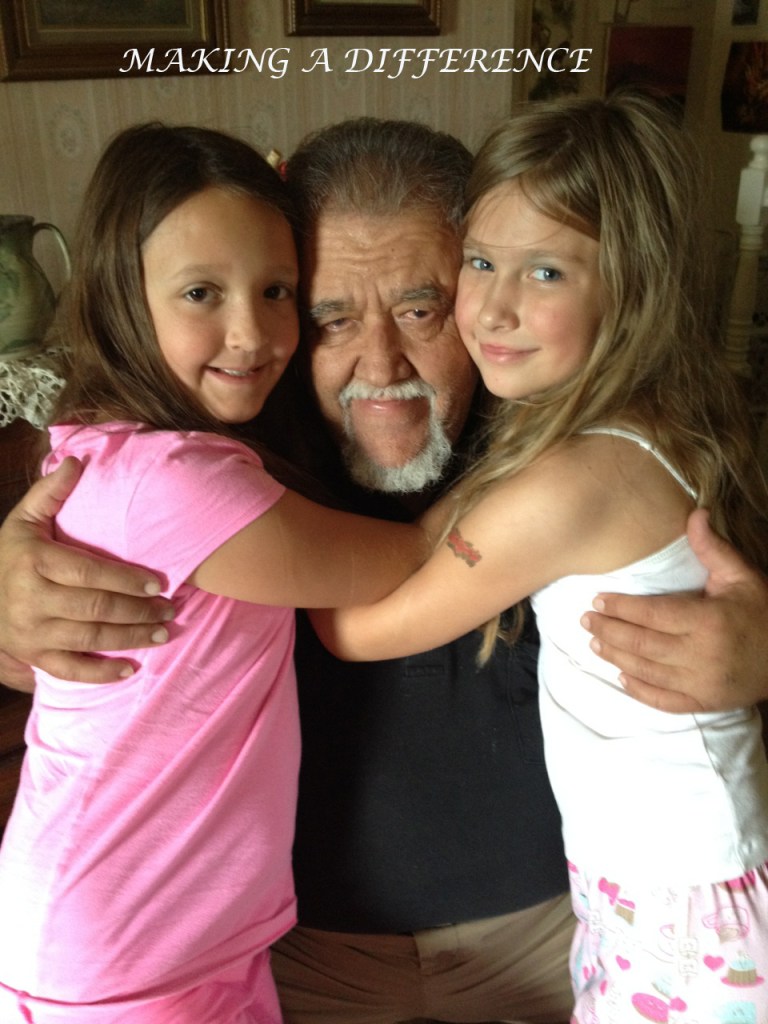
Making a Difference

“I shall pass through this world but once. If, therefore, there be any kindness I can show, or any good thing I can do, let me do it now; Let me not defer or neglect it, for I shall not pass this way again.” (Stephen Grellet 1773 – 1855)

Is it possible to make the community where we live just a little better place? What can we do to make a difference in the lives of others? As Grellet suggested, is there any kindness we can show or any good thing we can do to help our community? Each of us has something to share, whether it is our talents or helping others.

When my children were young, I made a point to take them to the nursing homes at Christmas time and we would sing familiar songs to them. The eyes of the elderly would light up and they would tap their toes to the rhythm, and some would even sing along with us.

Afterwards, it was inevitable that at least one sweet woman would ask our littlest daughter to sit upon her lap. My little Alaina was timid and shy when it came to being held by a stranger, but she always gave in, seeing the joy in the elderly woman’s eyes. The woman would hug Alaina and talk to her. The joy that filled this woman’s countenance was overwhelming and made our visit worthwhile.

Years later, my daughters told me that they remembered those days and were glad they had done it. By using our talents, we can uplift others. Just hugging a young child uplifted a lonely woman.

We are here upon this earth to lift the burdens of others, to bring joy to those who need it, to give a hand to those who are struggling.

One day I was feeling overwhelmed with life. My new baby was only a month old, my house was clean but toys were strewn across the floor. I had dishes in the sink, I needed to feed my two children, and we had run out of bread. I didn’t have a car to run to the grocery store. What was I to do? I usually fixed peanut butter sandwiches for lunch. Why hadn’t I told my husband that we needed bread before we ran out?

A knock at the door awoke me from my discouragement. I cuddled my baby in my arms and went to the door. There stood a cheerful woman with steaming hot bread in her hands. With a smile on her face, she handed it to me and said, “I was baking bread today and thought about you.”

Tears welled up in my eyes as I thanked her, telling her that she couldn’t have come at a better time. She wanted to see my new baby so I invited her in and allowed our neighbor to hold my little treasure. After cooing over her for a while, she then excused herself and went home. I have never forgotten this act of charity, this kind gesture of friendship. To this day I have a fond remembrance of that wonderful woman.

Are we here to make one another’s burdens a little lighter? Do we have certain gifts that we can share with others?

I once listened to a talk about the most selfless act of charity that really touched my heart. A man was expecting his brother’s family to arrive in America from Germany. He had not seen his brother for many years. They had endured many trials, had been taken to the Russian front, and survived the holocaust of World War II. Now he was arriving in three weeks, two days before Christmas.

Without hesitation, he quickly rented an affordable apartment for them to live in. Then he knocked at the door of the Bishop and told him that his brother was coming to America to live and invited him to take a look at the apartment to see what he thought.

After arriving at the apartment, the man said, “It isn’t much, but it’s better than what they have in Germany.”

The Bishop was disheartened as he saw how dreary the place looked. The paint on the walls was peeling, the linoleum floor had a large hole, and the only light in the room was a forty-watt bulb.

“What kind of welcome would this be to a family who had endured so much,” the Bishop thought to himself.

He couldn’t sleep all night, thinking about the condition of the apartment. The following day was Sunday and he could not keep his mind on the meeting. When someone inquired what was bothering him, the bishop told everyone about the family.

The story of this family touched the hearts of many and one by one each person came up to him and asked if they could help by giving of their services. Before the bishop realized what was happening, he had a bunch of men volunteering to help make this apartment livable.

One person said he was an electrical contractor and would like to rewire the apartment and put in adequate lighting. Then he would ask his suppliers to contribute a new stove and refrigerator in the spirit of Christmas. The excitement grew as everyone thought of ways they could help. A man was in the carpet business and would provide carpet for the living room. Another man was in the paint business and would furnish the paint. Then several women volunteered to fill the cupboards with food.

Many people went in and out of that apartment during the next three weeks, with joy in their hearts and with the Christmas spirit. When the family arrived from Germany, the man took his brother and family to meet the Bishop. From there everyone went to the apartment. It was a joyous occasion.

As they walked up the stairs, the man said once again, “It isn’t much, but it’s more than they had in Germany.”

Little did they know what was behind those doors! As they walked into the apartment, the family’s eyes widened as they saw their beautiful surroundings. The once dim room was now lit up. Beneath their feet was a lovely carpet. The cupboard doors were open, displaying cans of food. And before them were the people who had volunteered their services.

As everyone sang Silent Night, the spirit of love radiated throughout the room. They had wide smiles on their faces, knowing they had made a difference in someone’s life.

When the song ended, the man’s brother stood in front of everyone, with emotion and gratitude. Tuning to the Bishop, he hugged him and said, “Mein Bruder, mein Bruder, mein Bruder.” With tears in his eyes, he had said: My brother, my brother, my brother! (Thomas S. Monson, A Provident Plan—A Precious Promise, Ensign, May 1986.)

“What do we live for, if it is not to make life less difficult for each other.” ~George Eliot, also known as Mary Ann Evans (1819 – 1880)

Can we make a difference in the lives of others and in our community? Each one of us can definitely make a difference by showing unselfish love to the elderly or just listening to someone who needs to talk.

Reflections of the Heart has inspirational advice for all ages. You will learn the secret of happiness and how to deal with the trials in your life. Does music really soothe the soul and help you when you’re frustrated? Does it matter what kind of music you listen to? Is laughter really the best medicine? If so, how does it make a difference in your life? How important is it to develop your spirituality? Equal partners in marriage is a subject that can help a marriage grow stronger. These are the subjects discussed in this book.

Faith, Hope & Charity

The Joy of Helping and Serving Others

The importance of serving others can never be over emphasized. What are we here on earth for if not to serve our friends and loved ones?

Dieter F. Uchtdorf said: “As we lose ourselves in the services of others, we discover our own lives and our own happiness.”

How many of us think of others who need help but we feel that we are too busy? If we know someone is feeling down or depressed, do we stop what we’re doing and give a call to see how he or she is doing? I would like to relate an unusual and touching story. It’s a story of compassion.

The Seattle Special Olympics only had nine contestants that were ready to run a 100-yard dash. All of them were children that had physical or mental disabilities. When the gun sounded, they took off, each one hoping to win the race. Joy filled their hearts as they thought about the reward at the finish line and how proud their parents would be if they were the one to win. Every parent and relative cheered them on, calling out their names and encouraging them. One of them would be able to display their son or daughter’s trophy in their living room for everyone to see.

As they ran, nearing the finish line, one small boy stumbled and fell to the ground. Upon hearing the boy weep, the eight contestants slowed down and looked back. Their hearts went out to him and each one of them turned around and went back and helped the young boy to his feet. All thoughts of winning had left their minds because a friend was in trouble.

A young girl with Down’s Syndrome kissed him on the cheek and said, “This will make it better.”

All nine contestants linked arms and walked together to the finish line. There was not a dry eye in the congregation when they saw this one act of compassion for another. Everyone in the Stadium stood and cheered and clapped with tears in their eyes.

What really matters in our lives is helping others. It is not where we serve, but how we serve, and we must serve with love. We have our rewards when we serve, rewards that bring us great joy.

During a time of combat, a young soldier asked his commanding officer if he could rescue one of his comrades who was severely wounded. The officer narrowed his eyes and stood a while in thought, and then said, “I’ll give you permission, but it’s not worth it. Your friend is probably dead, and you’ll be putting your own life at risk.”

Feeling the responsibility for his friend, the young soldier saluted and then proceeded on his way. He went from bush to bush, dodging bullets as he ran, and finally managed to get to his friend. He hoisted him over his shoulder, and quickly brought him back to the trench.

The officer inspected the wounded soldier and shook his head with grief. “Your friend’s dead.” When he noticed a red stain on the young man’s shirt, he added, “And you’re wounded. I told you it wouldn’t be worth it.”

The young soldier looked into his officer’s eyes and answered, “It was worth it, Sir.”

“What do you mean worth it? You’re wounded and it was all for nothing.”

“No, sir. It was worth it. When I knelt down beside my friend, he said to me, ‘I knew you’d come.’”

He had comforted his friend in his time of need.

Jacob de Jager explained the importance of serving others and how it has its own rewards. He told a story about one of his great grandparents who lived in a small village named Scheveningen near the seashore in Holland. Many times fishing boats would have difficulties with storms and many lost their lives at sea.

One evening when a fishing boat was in distress during a storm, a rowboat was sent out to rescue the sailors. The winds were fierce and the waves were high. It took all their strength to row towards the fishing boat as the rain pounded upon the rescue team who risked their lives to save these men. The trip was successful but the rowboat was too small to rescue everyone. They would have to make a second trip back to the wrecked fishing boat.

When they arrived on shore, the rescue team was exhausted from fighting the strong winds. They had no energy to make a second trip. The captain of the coastguard asked for volunteers. He needed men of strength and perseverance.

A young nineteen-year-old named Hans stepped forward. He knew he had the strength to endure the trip.

His mother gasped in fear and said to her son, “Hans, please don’t go. Your father died at sea when you were four years old, and your older brother Pete has been reported missing at sea for more than three months now. You are the only son left to me!”

Hans understood his mother’s fears but he was one of few men who could make the trip. He knew that the lives of the last men on the boat were in his hands.

He looked into his mother’s eyes and said, “Mother, I feel I have to do it. It is my duty.”

Can you imagine how his mother felt? The fear, the anguish of possibly losing another son? Realizing the men in the fishing boat needed help or they would drown, she allowed her son to take part in this rescue mission. The storm was powerful and it took a while to get back to the ship. When an hour passed, Han’s mother became concerned about her son’s safety. Why was it taking so long? As the rowboat came into sight, she breathed a sigh of relief.

The people on shore yelled out to Hans, asking if he had gotten the last man from the boat. Hearing their anxious voices, Hans called back, “Yes! And tell mother he is my brother Pete!” (Jacob de Jager, “You Never Know Who You May Save”, Ensign, Nov. 1976, p. 56)

This act of selfless service turned out as a great reward and blessing.

“Serving others need not come from spectacular events. Often it is the simple daily act that gives comfort, uplifts, encourages, sustains, and brings a smile to others.” –Michael J. Teh

I like the way Henry D. Taylor described service. He said, “This would be a wonderful world in which to live if all of us would forget ourselves, if we would eliminate selfishness from our lives and think in terms of the good we could do in serving others. Unselfishness contributes to happiness.”

Reflections of the Heart has inspirational advice for all ages. You will learn the secret of happiness and how to deal with the trials in your life. Does music really soothe the soul and help you when you’re frustrated? Does it matter what kind of music you listen to? Is laughter really the best medicine? If so, how does it make a difference in your life? How important is it to develop your spirituality? Equal partners in marriage is a subject that can help a marriage grow stronger. These are the subjects discussed in this book.

Faith, Hope & Charity

The Trials in our Life

Harry Ward Beecher (1813 – 1887) said, “Difficulties are God’s errands and when we are sent upon them, we should esteem it as proof of God’s confidence…as a compliment from Him.”

My mother always told me that our trials made us better people. She insinuated that I was growing from each experience I had. She would tell me that God must really love me to give me trials to bear. I remember telling her, “Mom, I wish He didn’t love me so much.” She would laugh and then hold me in her arms as she comforted me.

Monte J. Brough said, “Many of the most important principles of intelligence cannot be taught at universities, from books, or through other temporal learning processes. Often these great principles are learned from afflictions, tribulations, and other mortal experiences.” (Monte J. Brough, “Lessons from the Old Testament: Adversity, the Great Teacher”, Ensign, Aug. 2006, 9–11)

Difficulties make us stronger people. Life was not easy for those who were prominent in history. Helen Keller was a deaf-blind American suffragist, activist, author, and lecturer. She graduated from Radcliffe College magna cum laude, the first deaf-blind person to graduate. She eventually became a world-famous speaker. She had everything against her from birth, but she fought to come out of her quiet and lonely world. She succeeded.

Martin Luther King was a Baptist Minister and a leader of the American Civil Rights Union. He was a peacemaker, campaigning for racial equality and did not condone violence. He had to struggle for equality, for human rights that were held back unlawfully. Because of his efforts, King received the Nobel Peace Prize. After his assassination, he was awarded the Presidential Medal of Freedom.

Thomas Edison was sixty-seven years old when he had one of the greatest trials of his life, but he didn’t let it get him down. He was an optimistic man. One evening his film plant caught fire. Spontaneous combustion had ignited some of the chemicals and exploded. Within seconds, all of the celluloid for records, film, packing compounds, and anything flammable went up in flames. Fire trucks from eight towns arrived as fast as they could, but the intense heat was so powerful that the water from the fire hose had no effect whatsoever.

When Edison’s daughter arrived, she was frantic with worry. As she saw her father running toward her, she was ready to comfort him, knowing that he must be upset. Before she could say a word, he called out to her, “Where’s your mother?” Her eyes widened at such a question as he added, “Go get her and tell her to bring her friends. They’ll never see another fire like this as long as they live.”

The following morning, when the building was only rubble and ashes, he called his employees together and announced with confidence, “We’re building again. By the way, does anybody know where we can get some money?”

Practically everything we recognize as an Edison invention came after that devastating disaster. Many times difficulties make us stronger people. If we don’t let it get us down, we will end up successful.

Marion G. Romney (1897 – 1988) said, “If we bear our afflictions with understanding, faith and courage…we shall be strengthened and comforted in many ways.”

When a blacksmith takes a piece of raw iron ore and plunges it into hot coals, he burns off impurities and infuses carbon to make it stronger. He then hammers it on an anvil to forge and shape and strengthen it into something useable, something of value. This process is repeated over and over again. This can be compared to the trials we go through. We’re like this piece of ore. We’re gradually being strengthened and will eventually end up victorious.

There is an old saying, “Storms make oaks take deeper roots.” If the oak never had to fight for sun and water, but had everything given to it, it wouldn’t amount to much. In other words, the stronger the storm, the stronger the tree. These trials help us mature and grow.

The greater the storm, the more we tend to struggle and seek protection from the wind and rain. It’s only natural. But we must rise above our problems, become humble, and continue on. That’s where the line is drawn between those who give up and decide that it’s not really worth it and those who have faith in themselves and in a loving God.

Storms cause us to struggle, to fight for our survival, but we have to look beyond our troubles and stumbling blocks. Every time we fall, we must get back on our feet and start again. Life was not meant to be easy. If it were, then we would never grow and become a better person.

Spencer W. Kimball said: “The Lord has all power to control our lives, save us pain, prevent all accidents, drive all planes and cars, feed us, protect us, save us from labor, effort, sickness, even from death, if He will. But He will not. We should be able to understand this, because we can realize how unwise it would be for us to shield our children from all effort, from disappointments, temptations, sorrows, and suffering. Suffering can make saints of people as they learn patience, long-suffering, and self-mastery.” (Spencer W. Kimball, Faith Precedes the Miracle. 1972.)

We must realize that when we are faced with trials, the Lord is there to help us through them. He does not want us to face our trials alone. George MacDonald (1824 – 1905) said, “How often we look upon God as our last and feeblest resource! We go to Him because we have nowhere else to go. And then we learn that the storms of life have driven us, not upon the rocks but into the desired haven.”

The Lord loves us a great deal and wants to mold us into better people. There is a story about a currant bush that helps us to understand this principle more clearly.

A gardener was pruning his shrubs and among them was a currant bush. He worried that it would not produce much fruit so he decided to prune it and cut it back. When he finished trimming it, there wasn’t much left of the little currant bush. He examined it thoroughly and noticed that each small stump had a drip of sap on it where he had pruned it, as if it were a tear.

The gardener considered what he had done and thought he heard the little bush say:  “Did you say you were my friend? How could you do this to me? You planted me and took care of me. You made sure I had plenty of water and nurtured me so I would grow. Didn’t you notice that I was growing tall and bushy from all your care? I could have been as tall as those trees across the way. Now look at me! My branches are cut away. My beautiful green leaves are no more. No one will take notice of me now.”

The gardener looked at the forlorn currant bush with understanding and said, “Please don’t cry, little one. What I did was necessary so you would be a prize currant bush and give us much fruit. You were not supposed to be like the trees, giving shade to others. You need to understand that if I had not cut you back, you would have gone to wood and given me very little fruit…if any. This is your soul purpose in life. So please don’t cry, little one. This is for your own good. One day you will understand why I had to do this. Before long, you will have delicious fruit loaded on every branch. Then you will realize that what I have done was for the best and you will thank me. You will then know that I was wise as I lovingly cut away the woody growth. You will understand that I was your friend, that I loved you and cared for you.” (Hugh B. Brown, Eternal Quest, Salt Lake City: Bookcraft, 1956, pp. 243-245)

We can compare this story to our life. The gardener is the Lord and we are the currant bushes. He is pruning us so we can be a better person. Sometimes we feel that our trials are unbearable and we don’t realize that the Lord understands how we feel and that He is here to help us through it. But, we must have faith in His pruning.

I have a question for you to ponder. If we haven’t experienced trials in our lives and haven’t shed any tears, is it possible to fully understand another person’s grief? How can we comfort another person if we don’t experience a few sorrows in our life? Many times our sorrows and problems help us to understand another person’s sorrow. When we go through similar trials, then we are more sympathetic toward others. We can tell them that we truly understand and this helps a great deal. We can cry with them as the Savior cried with Mary and Martha when He saw their sorrow because they had lost their beloved brother, Lazarus.

Spencer W. Kimball once said, “Is there not wisdom in God giving us trials that we might rise above them, responsibilities that we might achieve, work to harden our muscles, sorrow to try our souls? Are we not exposed to temptations to test our strength, sickness that we might learn patience?” (“Tragedy or Destiny?”, Spencer W. Kimball, 2006, p. 11–21)

At thirteen years of age, the doctors found out that I had scoliosis of the spine. I was then operated on, fusing eleven vertebrae, from my neck to my hips, and then put into a body cast. I would not be able to have a normal life for the next three years. I wouldn’t be able to climb another tree, ride a bike, or do any active sports. I was a tomboy so this was hard on me.

In the summer, when it was hot, I would sprinkle baby powder under my cast so I would smell sweet, plus it helped the many itches go away which a cast seems to provide. Many months passed and I was finally put into a rigid brace, which I had to wear at all times. There was only one good thing about this brace. I was able to take a “real” bath and not just a sponge bath.

With great joy, we went back to the Hospital to take off my brace forever. I felt this was the happiest day of my life. Little did I know this day of joy would not last long! As the doctors checked me, they found that I had a crack in my spine. Dr. Hess told me this was unusual and that I had to have another operation. My heart sank. I wanted to cry in front of the doctors, assistants, and my parents. I could not believe this was happening to me. Why couldn’t I live a normal life of a teen-ager? Why did I have to go through these trials?

“Why?” I asked my Father in Heaven. “Why do I have to go through this again? Why me?”

My parents and I went home and agreed to pray every day for the next four months to help me gain enough strength, mentally and emotionally, to have this operation. But each time I prayed, I asked God for a miracle. I did not want to have another operation and more casts. I begged, “Please, Heavenly Father! I want to be a normal teen-ager. Please let me have a miracle.” But it was not meant to be. I had to have the operation.

As time passed, my strength and faith grew until I had enough strength emotionally to have the operation. I realized this was a trial I had to bear. I grew spiritually at this time because I needed to lean on the Lord. I could not do this alone. I needed to know what faith was and how it worked. I needed to talk with God.

It was a beautiful summer day, when we arrived at the doctor’s office to have my last brace removed. I was sixteen years of age, almost seventeen, when my ordeal came to an end. I had become very close to my Father in Heaven during this time of trial. Three whole years!

I grew from this experience. I changed for the better. I look back at this conflict and I wouldn’t change a thing. I’m a different person. I overcame my weaknesses and turned to God as a young teenager.

We grow from the many experiences we have in life. The hard-knocks teach us patience. It helps to mold us into better people. We can compare it to a rough stone that tumbles in a streambed and gradually becomes smooth and beautiful. All the jagged edges have been worn off. The result is a beautiful polished stone or agate.

Disappointments are part of life and we grow as we learn to endure them. Sometimes we have physical or mental stress put upon us at the most inconvenient time of our lives. We just want life to go smoothly, as it was before, with no conflict. If we could find a way out, then we would take it.

“Adversities are temporary. What is permanent is what we become by the way we react to them.” ~ Dallin H. Oaks

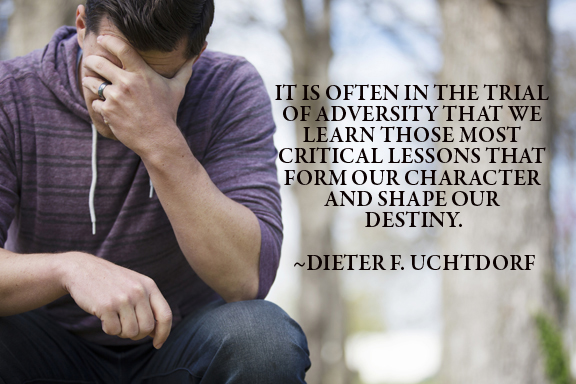
I love what Dieter F. Uchtdorf said about our trials in life. He said, “It is often in the trial of adversity that we learn those most critical lessons that form our character and shape our destiny.”

Reflections of the Heart has inspirational advice for all ages. You will learn the secret of happiness and how to deal with the trials in your life. Does music really soothe the soul and help you when you’re frustrated? Does it matter what kind of music you listen to? Is laughter really the best medicine? If so, how does it make a difference in your life? How important is it to develop your spirituality? Equal partners in marriage is a subject that can help a marriage grow stronger. These are the subjects discussed in this book.

Faith, Hope & Charity, Life and Dreams

Friendship, The Footprints In Your Heart

“Each friend represents a world in us, a world possibly not born until they arrive, and it is only by this meeting that a new world is born.” – Anais Nin (1903-1977)

Best Friends

Friendship is a most precious gift that will endure the eternities. Cicero (106-43 BC) said, “Life is nothing without friendship.” To have a friend that you can share your innermost thoughts with is worth more than wealth or material objects. To have a friend that you can laugh and cry with, to have someone make us feel wanted and accepted for who we are…this makes life worth living.

Eleanor Roosevelt (1884 – 1962) expressed her feelings about friendship in a completely differently way when she said: “Many people will walk in and out of your life. But only true friends will leave footprints in your heart.”

Friends can cheer us on when we need encouragement and help us when we’re depressed. They can embrace us when we weep and laugh at a lame joke that we’ve told. We should uplift one another. We should be able to say that, because of our association with one another, “I’m a better person having known you.”

Elizabeth Mauske told a story about an unusual and sweet friendship between her mother and an old native Indian woman from Central America. The Indian woman would visit their home often. With each visit, she would give her mother some partridge eggs and berries as a gift. The lovely colorful clothing and coin necklaces the woman wore fascinated Elizabeth. She noticed her copper bracelets as they softly jingled on her arm and her sweet sincere smile.

The Indian woman only spoke Araucanian and her mother only spoke Spanish. Their conversation was minimal, but they would sit at the table, drinking tea and eating cake together with a smile and a laugh. They enjoyed one another’s company.

Elizabeth noticed each time the Indian woman would rise to leave that she would say the exact same words. With great curiosity, Elizabeth and her sisters memorized the phrase and quickly found someone who could translate Araucanian for them. When she found out what the Indian woman had said, she was greatly touched and said it was one of the nicest compliments anyone could have given her mother.

The Indian woman would rise from the table with a smile and say: “I shall come again, for I like myself when I am near you.”

Wouldn’t it be wonderful if we could say this about our friendships? After spending the day with a dear friend, we could actually say, “I can’t wait until our next visit because you make me feel good about myself.”

Sydney Smith (1771-1845) said, “Life is to be fortified by many friendships. To love, and to be loved, is the greatest happiness of existence.”

Have you had a friend that made a difference in your life? Have you had a friend who left footprints in your heart? Remember one thing! Friendships last longer when you are kind and understanding. One does not criticize a friend but has a listening ear whenever it is needed.

 Austrian poet Erich Fried, wrote a poem titled Ich liebe Dich (I Love You) that I really love.

I love you, not only for what you are,

But for what I am when I am with you.

I love you, not only for what

You have made of yourself,

But for what you are making of me.

I love you because you have done

More than any creed could have done

To make me good, and more than any fate

Could have done to make me happy.

You have done it without a touch,

Without a word, without a sign.

You have done it by being yourself.

Perhaps that is what being a friend means,

After all.

Reflections of the Heart has inspirational advice for all ages. You will learn the secret of happiness and how to deal with the trials in your life. Does music really soothe the soul and help you when you’re frustrated? Does it matter what kind of music you listen to? Is laughter really the best medicine? If so, how does it make a difference in your life? How important is it to develop your spirituality? Equal partners in marriage is a subject that can help a marriage grow stronger. These are the subjects discussed in this book.

Faith, Hope & Charity, Writing and Arts

The Secret of Happiness

The secret of happiness is a great mystery to many people, constantly searching for joy in everyday life. Do we believe the grass is greener on the other side of the hill? I’ve heard people say: When I finally graduate from college, then my life will be better and I’ll be happier. I’ll truly be happy when I get a better job. As soon as my new home is built, I know I’ll be more content. I know I’ll be happier if I move and have new experiences.

When we’re feeling discontent, we tend to think a change in our lives is the answer to happiness. But after landing that new job or moving into a new home, are we truly happy? That may not be the answer we hoped for. We need to make our own happiness and enjoy what we have.

Does “love” have anything to do with joy? Victor Hugo (1802 – 1885) seems to think so. He said, “The supreme happiness of life is the conviction that we are loved; loved for ourselves, or rather, loved in spite of ourselves.”

Our lifestyle can also be a factor, whether we’re content or miserable. If we live a good and righteous life, chances are that our lives will be happier and we’ll feel more satisfaction.

What is the secret of happiness? Rabindranath Tagore (1861 – 1941) wrote, “I slept and dreamt that life was joy. I awoke and saw that life was duty. I acted, and behold—Duty was joy.”

Royden G. Derrick said it differently: “Happiness is a by-product of helping others. No man ever finds happiness by thinking of himself. True happiness comes when we lose ourselves in the service of others—when we are merciful to our fellowmen.” (Royden G. Derrick, “The Beatitudes and Our Perfection”, Ensign, May 1977, 57)

Is joy all about duty? Are we happier when we help others? “To find real happiness,” said Thomas S. Monson. “We must seek for it in a focus outside ourselves. No one has learned the meaning of living until he has surrendered his ego to the service of his fellowmen. Service to others is akin to duty, the fulfillment of which brings true joy.” (Thomas S. Monson, “The Joy of Service,” New Era, Oct. 2009, p. 4)

Is true joy thinking of others and their happiness? How about a simple and sincere smile or greeting? I’ve noticed it’s quite effective. I suspect it’s because friendliness uplifts us, makes us feel warm inside. When someone goes out of his way to greet us, it feels good. Smiles are contagious. They tend to spread from person to person. If you smile at a baby, he automatically smiles back. Did you know that a frown uses eighty-seven muscles? To smile, we use thirteen muscles. With those thirteen muscles we can uplift others.

The secret of happiness has puzzled many people. Whether joy can be found in righteous living, a belief that we are loved, or a by-product of serving others, you can’t deny the fact that a simple smile or greeting can make a difference in our lives. Perhaps one of the secrets of happiness is smiling.

Remember: “Those who bring sunshine into the life of others cannot keep it from themselves.” ~ James Matthew Barrie (1860 – 1937)

David O. McKay (1873 – 1970) said: “Seek to share joy with others, or to make somebody else happy, and you will find your own soul radiant with the joy you wished for another.”

Man’s search for happiness is part of life. We not only want it but we have an inner need to spread joy to others. I notice that when I tell a funny story and make someone laugh, I wish I could tell another one. Laughter and smiles are contagious and spread from person to person.

I’ve always heard that laughter is the best medicine. Is it really true? The Reader’s Digest wrote, “Scientific evidence has shown that laughter helps people breathe easier and it massages the heart and other vital organs.” (The Healing Power of Laughter, Reader’s Digest, 2010)

Some scientists believe that it can even guard against illness. If this is true, then laughter is definitely the best medicine. The Reader’s Digest went on to say, “In experiments, students who watched funny movies were found to have an increased flow of infection-fighting proteins in their saliva.”

Isn’t this amazing? Scientists have found that positive thinking is the secret. They did some research and found that optimistic people have less health problems and live longer compared to pessimistic people.

Kersten Campbell, author of Confessions of a Completely InSane Mother, told me when I interviewed her, “It has always been my belief that we, as women, need to laugh more. Mothers experience some of the most stressful working conditions on the planet, and stress can be dangerous to women’s overall health and longevity. Humor can reduce stress.”

The secret to happiness has puzzled many people. Perhaps the real secret of happiness is a bit of laughter. Think about it. Isn’t that the time that you feel on top of the world…when someone is making you laugh? So is laughter the best medicine after all? I believe it is!

Reflections of the Heart has inspirational advice for all ages. You will learn the secret of happiness and how to deal with the trials in your life. Does music really soothe the soul and help you when you’re frustrated? Does it matter what kind of music you listen to? Is laughter really the best medicine? If so, how does it make a difference in your life? How important is it to develop your spirituality? Equal partners in marriage is a subject that can help a marriage grow stronger. These are the subjects discussed in this book.

Faith, Hope & Charity

Faith in God During Covid – 19 Pandemic

I walked into the Time Machine at the Family Search Center so I could learn about all the things that were invented during my grandparents’ day. It was interesting to find out what they had seen during their lifetime, such as the invention of the light bulb, telephone, automobile and airplane. The Time Machine said that my grandfather was 40 years old in 1918, during the time of the Spanish flu pandemic that swept the world. Church meetings were cancelled and schools were closed down to stop the spreading of the virus. I was shocked to learn there were 50,000,000 deaths throughout the world because of the virus. I remember thinking how difficult that must have been for everyone.


Lo and behold, I am now experiencing what my grandparents had gone through… something I had not expected in my day. At first, when we were told to stay home, I thought: “I can do this. That’s simple. If we have to go grocery shopping, we can stay six feet away from people and wear face-masks and wash our hands afterward. This will be over soon if we all obey the rules.” Little did I know that would be just a small part of this pandemic.

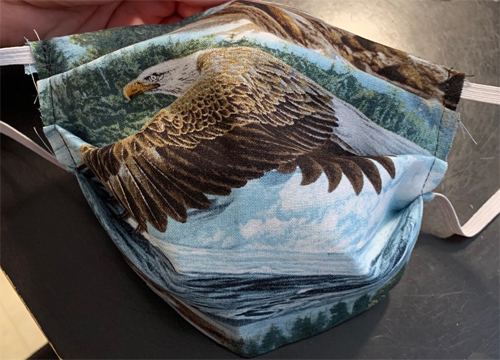
facemask

This is a face-mask my daughter made for her father. She is making a different design for me. Well, I soon found out that it was affecting people’s jobs. Three of my son’s in law and my daughter were relieved of their jobs because of the virus. Now what? How were they going to support their families? Would unemployment be enough? With these labor shortages and people being relieved of their jobs, how would this affect our food supply? That was when I finally realized all of this was not as simple as I thought. 


As I learn about the deaths throughout the world, my heart goes out to those who have lost loved ones, and I pray the Lord will comfort those who are grieving. I soon realized I needed to have faith in a caring and loving Father in Heaven who is watching over us. We need His help. The scriptures say: “Be of good cheer, and do not fear, for I the Lord am with you, and will stand by you.”


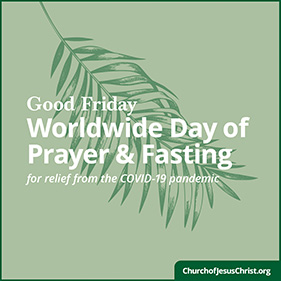
President Russell M. Nelson, the prophet of The Church of Jesus Christ of Latter Day Saints, has asked the members of the church for a world wide fast on Good Friday, April 10th, asking for the Lord’s help. 


My dear friends, those who are of all faiths, please join us in this time of prayer and fasting. I know the Lord will hear our prayers and guide us. We just need to have faith and hope. These are the things we should pray for:


1. Plead for relief from this global pandemic
2. Pray that the caregivers will be protected
3. Plead for healing throughout the world
4. Pray that our economy will be strengthened


The scriptures say: ” For I do know that whosoever shall put their trust in God shall be supported in their trials, and their troubles, and their afflictions. ” Alma 36:3


Never give up hope. It is important to have faith that the Lord will help us. Please know I care and pray that you are well.

Worldwide-Fasting-Meme-L2_281