Writing and Arts

The Inspiration Behind A Historical Romance Series

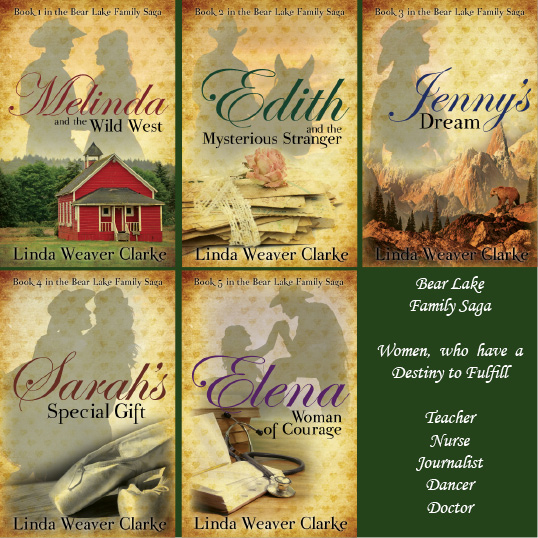
The Bear Lake Family Saga

I enjoy reading the inspiration behind a story. It makes it more personal. An article in the paper can give a bit of inspiration or even a fairytale. As for me, each book in A Family Saga in Bear Lake, Idaho was inspired from something that happened in my life or the life of a loved one.

When I began writing Book One, Melinda and the Wild West, the inspiration came from an experience I had as a substitute teacher. While the children were doing their assignments, I moved about the room and noticed a desk hidden behind a bookshelf with an eight-year-old girl resting her head against her arms. I was curious why she was separated from the others. One of the students explained, “She’s a trouble-maker. She doesn’t do her schoolwork and fights with the boys.”

After excusing the children for recess, I talked to her but she didn’t respond. So I told her how pretty her dress was and how nicely her hair was braided. The rebellious look in her eyes gradually faded and she smiled at me. With that, I asked if I could move her desk beside mine up front and she nodded. As the students entered class, they were not happy with what I had done but I reassured them that I knew what I was doing.

I helped her with her assignments and gave her jobs to do like passing out papers to the students. By the end of the day, I had grown to love this sweet girl and my heart went out to her. She had been bullied by her peers and misunderstood by her teacher. As a result, she was labeled as a troublemaker. At the end of the day, I was supposed to write a note to her parents about the young girl’s behavior. I wrote what a wonderful young girl she was and how helpful she was throughout the day and all her positive qualities. Being bullied is hard to overcome and we must try to make this world a little better for our youth.

In Melinda and the Wild West, Melinda Gamble wants to make a difference in the world. As a school teacher in the small town of Paris, Idaho, she has many challenges as she tries to help a student who is bullied, coming face-to-face with a notorious bank robber, startling a grizzly bear, and finding herself in a terrible blizzard that leaves her clinging to her life. No matter the trial that comes her way, she is ready to fight for what she believes in. But it’s a rugged rancher who challenges Melinda with the one thing for which she was least prepared—love.

When I began writing Book Two, Edith and the Mysterious Stranger, the inspiration came from my parents’ courtship. My mother’s girlfriend told her that she was being way too picky and her expectations were much too high. My mother had certain standards for a husband and first impressions were important to her. Her girlfriend said that she knew a good-looking twenty-nine year old farmer and recommended they write to each other. To help create this story, I actually used some of my father’s letters that he wrote. They were so romantic and I couldn’t help it.

The inspiration for the main character came from two people: my mother’s personality and my grandmother’s nursing experiences. Taking both, I created Edith’s character. My grandmother saved many lives and I tried to include those experiences in my story. She also had a beautiful contralto voice. Between 1904 and 1910, she sang in the famous Tabernacle Choir in Salt Lake City, Utah. As she picked her raspberries, my grandmother sang and her voice rang in the air. Thus, Edith came alive on paper and I called my story: Edith and the Mysterious Stranger. Why? Edith knows several men in Paris, Idaho but which one is the mysterious stranger who is writing to her? As the story unfolds, the reader tries to figure out who he is, as well.

In Edith and the Mysterious Stranger, Edith is a nurse and moves to Idaho to care for her cousin. Edith has wonderful qualities but never gives a man a second chance because her expectations are so high. However, all that changes when a mysterious stranger starts writing to her. For the first time, she gets to know a man’s inner soul before making any harsh judgments. Whoever he is, this man is a mystery and the best thing that has ever happened to her. The question that puzzles her is whether or not he is as wonderful in person as he is in his letters.

When I began writing Book Three, Jenny’s Dream, I centered my story around nineteen-year-old Jenny who dreams of being an author some day. But amidst her dreams, she finds it hard to forgive those who bullied her in her youth. Jenny, from book one, has to learn to forgive before she can be completely happy. Holding a grudge isn’t good and she needs to forgive those who treated her badly. But how? Is it possible? She is surprised when something most unexpected happens and turns her life around so she is able to forgive. This story is one of healing and came from a true experience.

In Jenny’s Dream, Jenny is an aspiring author. She has a dream to fulfill, but the only thing standing in her way is an unpleasant memory, which has haunted her since childhood. She must learn to forgive before she can follow her dream. Meanwhile, a legendary ten-foot grizzly is seen in the area and its boldness has frightened the community. How about Jenny’s neighbor? Is he more than a friend? After she realizes her friend means more to her than she thought, she must now choose between a career and romance. 

When I began writing Book Four, Sarah’s Special Gift, my great grandmother, Sarah Eckersley Robinson, was my inspiration for this novel. She became deaf at the age of one from a high fever. Sarah was known as one of the most graceful dancers in town. She never sat on the sidelines at dances because of her natural ability to dance. She was known for gliding across the floor with ease, with just a touch of her partner’s hand. Sarah had such agility and gracefulness, not only on the dance floor, but also while swimming and diving. People would actually throw coins in the water so they could watch her dive after them.

She was such a courageous woman. When an intruder hid in her home, he must have thought she was an easy victim but was sadly mistaken. With a broom in hand, she swatted him out of the house, and down the street. She was a spunky woman! This book was such a joy to write because it helped me to get to know her better.

In talking to a dear friend who became deaf in her youth, I learned of the struggles the deaf have to bear such as self-esteem and the fear of darkness. I didn’t realize that some might be able to hear musical instruments but not voices. And concentrating on reading lips for long periods of time can be such a strain, resulting in a headache. After all my research, I have more respect for my great grandmother and her disability.

In Sarah’s Special Gift, Sarah is a beautiful and successful dance teacher. But she is not like other young ladies. She is deaf, but this does not stop her from living life to its fullest. And it does not stop her from falling in love with a man who needs her help. While visiting the Roberts family, David finds himself entranced with this very special lady and ends up defending her honor several times. He finds that Sarah has gone through many trials as she teaches him how to love life.

The last book in this series is Elena, Woman of Courage. The Roaring ’20s was a time of great change. Women raised their hemlines and bobbed their hair. When Elena settles in Paris, Idaho as the newest doctor, a few problems arise. The town is not ready for a female doctor, let alone one so strong and independent. She must struggle against the prejudice to establish her new practice. As she fights to prove herself, the town’s most eligible bachelor finds it a challenge to see if he can win her heart.

Check out each book on Amazon at A Family Saga in Bear Lake, Idaho.

Holiday Celebrations, Writing and Arts

A Fun Valentine’s Story

The writing of love notes to someone for Valentine’s Day has been popular since the 1700s. Many people made their own Valentines to give to a loved one. In the 1820s, special stationary was sold for Valentine greetings and was popular in the United States and Great Britain. In the 1840s, Valentine cards were finally created. They were sheets with embossed borders and illustrations that could be folded and sealed with wax.

The New York Courier in1830 wrote a humorous article about Valentine’s Day and picking a husband or wife at this time. It said: “We have ascertained the fact that the bachelors are moving around the city and actually making preparations for the celebration of St. Valentine’s Day. They have positively crawled out of their flannels, trimmed their whiskers, shaved the growth of ages, straightened the vertebrae, and bound them up in cloaks ten yards wide to keep the cold weather at a distance during the approaching festival. We give the ladies fair warning to hold themselves in readiness. The picked youth of the city, such as will make loving husbands, are to be present, if God prosper them.”

This article made me laugh. I love holidays, especially in fictional stories. One of my books is a Collection of Six Holiday Stories. Each story is fun and full of surprises. The first story is about Valentine’s Day. The Valentine Bandit has struck again. Each year he sneaks out of his hiding place and finds some poor unsuspecting widow to surprise. He is spreading happiness throughout the city of Willow Valley. Many a young girl wants to meet this bandit, but he is too sly to be caught. Reports say he has a black mask just like a bandit and is dressed all in black. Valentine’s Day is a day to show that we care about others, and this bandit is doing just that.

Check out Holidays in Willow Valley below and see what you think. Then read about other holidays, as well. Happy Valentine’s Day, everyone! I hope you have a great week.

This book is vailable as an eBook in Kindle Unlimited, as a Paperback, and as an audiobook.

Delicious Recipes

Delicious 1800s Ginger Cookies

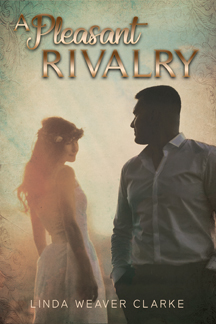
Every time I write a book and include some food from that time period or country, I can’t add it to my story until I bake it and eat it myself. It would not be right for my hero to praise something that isn’t delicious. Right? While writing A Pleasant Rivalry, a historical mystery/romance, I wanted Angelica to make some cookies for a specific scene. Not any cookies! It had to be from that time period. So I did some research online and typed in “pioneer cookies” and “cookies made in the 1800s.” When I discovered that Ginger Cookies were quite popular, I did more research and found a recipe that was originally from that era. Next thing I did was to make and bake those cookies. Wow! Double wow! It was the best recipe ever. Did my great grandmother make this recipe in her day? I bet she did. I’d like to share it with you. Happy baking!

Ginger Cookies

2 cups Flour

1 tsp Baking Soda

1/2 tsp Salt

1/2 tsp ground Ginger

1/2 tsp ground Cloves

1 1/2 tsp ground Cinnamon

Mix together. In a separate bowl, beat together following ingredients.

3/4 cups (1 ½ sticks) Butter, softened

3/4 cups Granulated Sugar

1/4 cup Brown Sugar

After it’s blended, add:

1/4 cup Molasses

1 Egg

Slowly add flour mixture. Roll dough into 1-inch balls then roll them in some granulated sugar. Place on cookie sheet 1-inch apart. Bake for 8 minutes at 375˚. If the cookies are hard, you baked them too long. This type of cookie should be soft and melt in your mouth.

A Pleasant Rivalry from A Willow Valley Historical Mystery/Romance Series: Angelica Davis is surprised when she finds out that an old school chum has returned to Willow Valley to take over his grandfather’s business. Since she writes articles for the Chronicle and Simon Morgan owns the Willow Valley News, they just happen to be rivals. The competition is on. Who will be the first to discover the identity of the jewel thief or the arsonist? Will it be Angelica or Simon? Gradually the feelings she once had for him return as they both search for the same stories. To her surprise, Angelica realizes she is losing her heart to her rival.

A Pleasant Rivalry is available on Audible and Amazon as an ebook and paperback.

A Pleasant Rivalry Book Trailer:

Writing and Arts

Are Courageous Women in Stories More Intriguing to Read About?

Courageous women in stories seem to draw readers’ attention and grab their interest. The bravery and strength of character easily draws them into the story. It takes courage to stick up for one’s rights and defend one’s beliefs. During the 1840s, there were many brave women who fought against injustice and inequality. Many wanted to have a better education. These women made a difference and influenced others to make a better life for themselves.

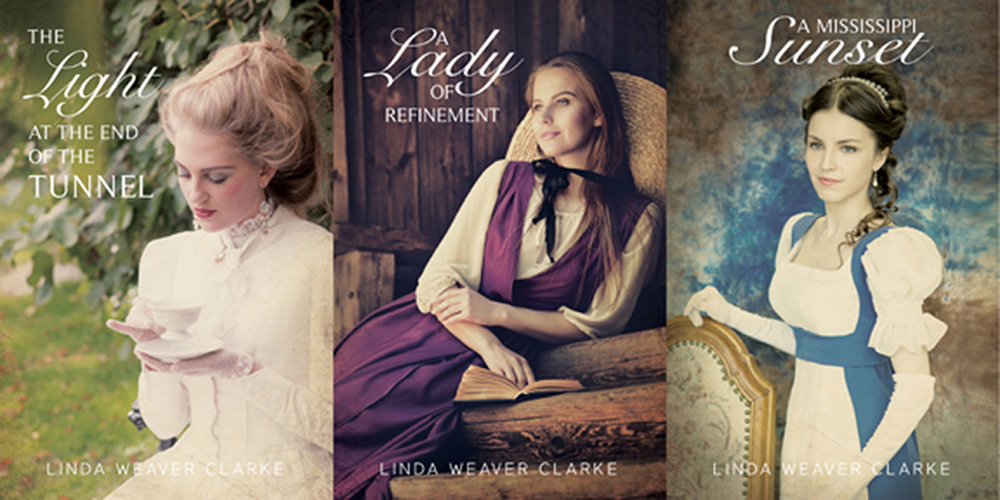
A fairly new historical romance series was released that has received outstanding reviews on Amazon and Audible Audiobooks. It is called “Women of Courage.” In these novellas, the spunk and courage of these women seem to draw the readers into a world of adventure.

In The Light at the end of the Tunnel, Hannah is a young single mother who has had a few hardships since arriving in America. But the trials in her life only make her stronger. Hannah realizes she can make something of her life by opening a hot chocolate shop. She soon finds that starting her own business isn’t as easy as she thought. But she will not give up. When Thomas learns that she has spirit, he is intrigued with her.

“This romance wrapped around my heart as it took me into the struggles of Hannah, such a brave woman… The characters come to life on the page as Thomas falls for Hannah and adores her child. However, Hannah is caught up in her day-to-day trials and with her independent streak, she only thinks of making a life for her and her daughter. Can Thomas get her attention and change her mind?” ~ Author Gail Pallotta

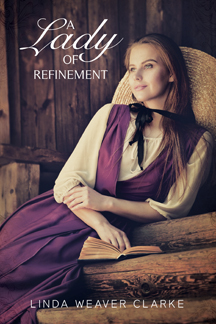
Hannah isn’t the only one who shows her independent nature. Serenity has just as much courage. Chasing thieves off her property and entering a horse race are just a few things that describe this young Welshwoman’s spunk. In A Lady of Refinement, Serenity teaches an evening class for adults and helps them to read and write and have a better education. Reading is Serenity’s favorite pastime, where she can go on one adventure after another. She wonders if anyone can measure up to the heroes in her books. But the adventures soon become real after arriving in America. When Jonathan meets Serenity, a refined woman from Wales, he wonders how he can win her heart.

“How I enjoy finding a book that will not let me put it down until I’m done!  This was the case with A Lady of Refinement.  Linda Weaver Clarke used a true story of her ancestor’s as a base, and it rang familiar to me, as my ancestors also migrated to America during the same time period. The main character, Serenity, is the refined lady and it was such a delight when she bested a few arrogant males.  My favorite character, however, was Jonathan, who was very taken with Serenity.  Time will tell if he is successful at capturing her attention.” ~ Louise Pledge Reviews

There is one more independent woman in this series. The third novella is about a young woman who stands before an audience and fights against involuntary servitude and slavery. Frederick Douglass, an abolitionist, wrote: “When the true history of the antislavery cause shall be written, women will occupy a large space in its pages; for the cause of the slave has been peculiarly a woman’s cause.”

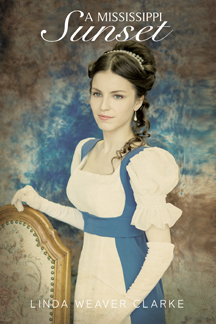
In A Mississippi Sunset, Laura McBride is a liberated and courageous young lady who is convinced that she can help others in her crusade for equality. She encourages women to fight for their beliefs and be heard. But she soon finds out that women who speak publicly are looked down upon. When Deputy William Davies meets Laura, he admires her spunk and determination to fight against slavery.

“I really enjoyed this sweet and clean historical fiction and romance. A Mississippi Sunset is part of a series of brave women who were not afraid to take a stand in what they believe needed to be changed and you will see some historical figures that appear in this book!  Loved that. This is a very enjoyable book and it is well worth a read!” ~ Sunnie Reviews

Taking true experiences from the author’s ancestors, this series of novellas was created. These young ladies were considered “women of courage.”

Watch these book trailers below to peak your interest.

Watch A Lady of Refinement video below.

About Author: Author Linda Weaver Clarke is the author of 35 books. All her books are family friendly. Linda works at the FamilySearch Center where she helps people find their ancestors. She also teaches a free class at FamilySearch and on Zoom about writing biographies and publishing it.

The Light at the End of the Tunnel is available  on Amazon and on Audible narrated by BreAnne Okoren.

A Lady of Refinement is available  on Amazon and on Audible narrated by BreAnne Okoren.

A Mississippi Sunset is available  on Amazon and on Audible narrated by Elizabeth Schmidt.

I hope you enjoyed this article. If you are an audio lover, check out my Audible Audiobooks Blog.

Newsy Articles, Writing and Arts

Medicines and Healing Ointments of the Past

It is interesting to learn what our grandparents and great grandparents did when they were sick or just had a bug bite. The remedies were quite ingenious… ideas I never thought about doing when I felt miserable. Today we just grab a bottle of aspirin for pain, fever, or muscle aches. Although, if you take too much aspirin, it’s hard on your stomach and can cause ulcers. So what did our ancestors use instead of aspirin?

If they had a fever or a terrible migraine headache, Feverfew was recommended. It is commonly known as Cornflower. This lacy daisy-like flower could be seen in anyone’s yard. Many refer to it as “Bachelor’s Buttons.” Why was it given this nickname? Young men would tuck this dainty flower in the buttonhole of their jacket as a symbol that he was single and available to the young ladies.

If your child came home crying because he had an insect bite, there was a remedy. Just smear honey onto the wound every hour to help bring down the swelling and ease the pain. It’s sort of a sticky way of relieving pain but it’s oh-so sweet!

Those who had trouble sleeping would take Chamomile Tea before going to bed. It helps with anxiety and to fall asleep easier. It also reduces inflammation related to arthritis or menstrual cramping. I’ve tried it for arthritis and it works. I’m quite impressed. Just recently they found that it prevents osteoporosis.

How about colds and a sore throat? If someone had a sore throat, a salt-water gargle was recommended. My favorite, though, is what my mother always did. She would put a tablespoon of honey and a tablespoon of vinegar in a glass of warm water for me to sip slowly. It did the job and relieved my sore throat.

If a person was congested, it was common to place a Castor Oil compress on the person’s chest to help them breathe easier. If a child had a hard time breathing or was struggling for breath, they used Ipecac to clear the airways of phlegm.

Indigestion or a sour stomach was easy to cure. They didn’t use Tums. My mother would give me a glass of milk to drink. It worked every time. Another cure is a teaspoon of baking soda in water.

If the patient had an ailment the doctor couldn’t figure out or didn’t have an answer, he would say: “A hot bath always works wonders. I would recommend soaking for a half hour every day until you feel better.”

Deep wounds are something to be worried about because infection can set in so easily. That can be very dangerous for the patient. My great grandmother was quite knowledgeable when it came to herbs and “doctoring” her own children. Once a neighbor begged her to help her husband because a bull had gored him in the abdomen. She instantly went to his aid. After cleaning the wound, she made a liniment of arnica burrs steeped in alcohol. Then she saturated a cloth with the ointment and applied it to the wound. For the next few weeks, she rewrapped his wound with fresh ointment until he was healed. It worked and he never got infection.

After learning about all these wonderful medicines of the past, I wanted to create a historical romance with the main character as a doctor and use all these remedies. In my research, I found that the Kentucky’s Medical Department of Transylvania University was a popular school to attend for an education in medicine. It was perfect because my story was to take place in southern Illinois, not far from Kentucky.

In Angel’s Serenade, Emmeline Scott is raising her sister’s two children and is surprised when she finds out the new doctor in town is helping her nephew adapt to his surroundings. It is not easy to be uprooted and have to start a new life. Each day when Emmeline practices the piano, she doesn’t know the doctor secretly sits on his porch to listen to her music. As Emmeline gets to know the charming doctor, Lucas Golden, they become intrigued by her neighbor’s mysterious behavior. Will they discover his secret? And who is the leader of the River Pirates, who is causing so much havoc?

Watch a sweet romance blossom before your eyes in Angel’s Serenade.

This book is available on Amazon and Audible Audiobooks.

Faith, Hope & Charity

Forgiveness is Essential for a Happy Life

Asking forgiveness

When we have been deeply hurt, it is hard to forgive those who have been rude and unkind. For some reason we tend to hold on to it. During this time in our life, we’re unhappy and just want the hurt to go away. Carrying a grudge can be a heavy burden and we tend to blame others for the way we feel.

Dieter F. Uchtdorf said, “We are not perfect. The people around us are not perfect. People do things that annoy, disappoint, and anger. In this mortal life it will always be that way. Nevertheless, we must let go of our grievances. Part of the purpose of mortality is to learn how to let go of such things. That is the Lord’s way.”

It is said that to forgive is divine but if the person who hurt us isn’t asking forgiveness, we feel that we don’t have the strength to forgive them. We want to teach them a lesson by not being part of their lives any longer. Or… if they have apologized, we won’t forget what they said or did and we won’t have anything to do with them. Is that right? There is one problem with that sort of thinking. The hurt inside us still remains with us. It won’t go away. The only way for us to be happy again is to forgive those who have hurt us.

We all make mistakes and we’re not perfect. It’s important to forgive and be forgiven. The Lord wants us to be compassionate and forgive those who have done us wrong.

Jeffrey R. Holland said, “Let people repent. Let people grow. Believe that people can change and improve. Is that faith? Yes! Is that hope? Yes! Is it charity? Yes! Above all, it is charity, the pure love of Christ. If something is buried in the past, leave it buried. Don’t keep going back with your little sand pail and beach shovel to dig it up, wave it around, and then throw it at someone, saying: Hey! Do you remember this? Splat!”

If you’re not sure how to begin because the hurt is too deep, the best way is on your knees. As you talk to a loving Father in Heaven, list all the things you are grateful for and don’t stop until your heart is filled with love. He hears our prayers and responds to our gratitude. I have done it and it works. During this time on your knees, talk to him about forgiving those who have hurt you. It is amazing how happy you will feel by the end of your prayers.

Let me tell you a true story, a personal experience that happened to me. In my youth, I was bullied by those who were popular in school. Many years later after I was married, I received an anonymous card one day. The return address said: “A Walk to Remember.” This was the name of a novel written by Nicholas Sparks, which had been made into a movie about a young girl who was bullied by her peers in high school. As a popular young man gets to know her, he finally realizes that she has wonderful qualities and regrets having been rude and judgmental towards her.

Curious about the interesting return address, I opened the envelope and pulled the card out. On the outside of the card, it said, “Thank you and God bless you.”

I opened the card and found these amazing words printed inside: “You are a beautiful woman and I’m sure a very good mom. Just as this card says, thank you… for putting up with all the crap everyone dished out at you in high school. Especially me. We could have been friends. I thought I was someone and have realized I’m really no one special or important. At least, not better than you, by no means. Thank you for letting me ease a guilty conscience! May God bless you.”

Tears filled my eyes as I read these beautiful words. Why was I the recipient of such a wonderful message? I realized that, as time passes, we tend to look at life differently than we did in our youth. Our opinions change and we see our faults and wish we could change our past if we had the chance. But since we can’t, then we try to make up to those we have wronged. The movie, A Walk to Remember, now has a special meaning to me.

When I told my brother about the card I received, he said, “I think I know who he might be. As I remember, he was so mean to you.”

I instantly stopped him and said, “I don’t want to know. I need to forgive everyone. It’s better this way. Besides, I know I wasn’t the only one being bullied at school.”

John H. Groberg said, “When filled with God‘s love… we can endure pain, quell fear, forgive freely, avoid contention, renew strength, and bless and help others in ways surprising even to us.”

May we always try to forgive those who have wronged us! May we always reach out to those we were unkind to and beg their forgiveness!

As Dieter F. Uchtdorf said, “We are not perfect. The people around us are not perfect.” But we can learn to forgive. Don’t you think?

Realizing forgiveness is an important subject, I sat down and wrote Jenny’s Dream, a historical romance. In Jenny’s Dream, Jenny is an aspiring author. She has a dream to fulfill, but the only thing standing in her way is an unpleasant memory, which has haunted her since childhood. She must learn to forgive before she can follow her dream.

Watch the Book Trailer below. 

This book can be purchased at Amazon and Audible audiobooks.

Find the audiobook at Audible: https://www.audible.com/pd/Jennys-Dream-Audiobook/B07D9VP476

A paperback or eBook at Amazon is below.

genealogy, Writing and Arts

Love and Courtship

It is so interesting to learn how people fall in love. Everyone’s courtship is so different. Some people marry their childhood sweetheart. Others meet over the Internet. And there are those who go on a blind date, not knowing what to expect. Some say it was love at first sight. Another admits that she didn’t much care for her future husband at first. After getting to know one another better, all that changed.

In my case, my husband and I met at college but it was nothing more than friendship. He dated my girlfriend and we ran around with the same group of friends. The following year I moved to another college and then served the Lord for 18 months in Colorado and Texas. After being away for three years, I moved back home and we renewed our friendship.

When my mother asked me if he was the right one, I quickly answered, “Of course not. We’re just friends, Mom. Nothing more. Besides, we don’t have that much in common.”

Little did I know that was going to change! As we got to know one another, his humor and charm pulled me into his world. Gradually my feelings of friendship changed to romance, something I did not expect.

How did you meet your spouse? Was it a long-term relationship or was it love at first sight? Did a friend introduce you and tell you that he or she was perfect for you? That was the case with my mother. Her friend introduced her to my father but it was not the conventional way. It was through letters.

Doris accused Mom of being too picky. No man seemed to match up to the standards she wanted. After dating for a month or two, she would stop dating the young man because he just wasn’t the right one. One fellow actually proposed to her but she kindly turned him down.

One day Doris asked her what she was looking for so she could help her find the right man. Mom replied, “I will only marry a righteous man, a man who is musically talented, and a red head.” Mom’s reply made her friend laugh. Was she trying to make her job of searching for the “right one” harder? Apparently she was partial to redheads.

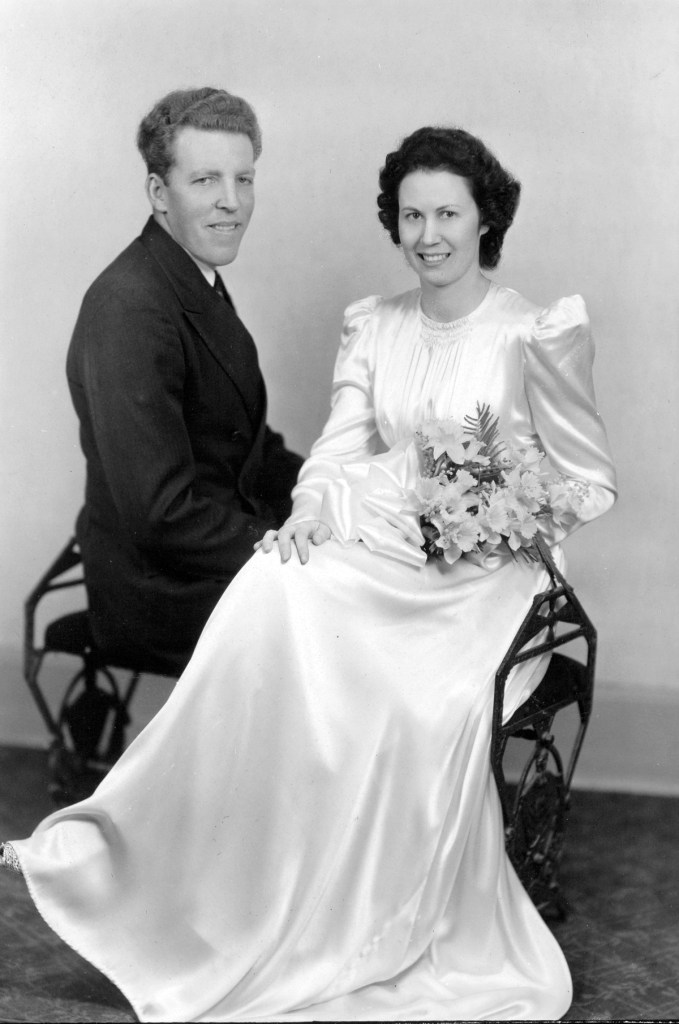
At that time, Doris was teaching school in southern Idaho, a day’s journey by car. After much thought, she decided that the custodian of the school might be the right catch for her friend. Doris had gotten to know Marcus quite well and liked him. He was a good man and owned his own farm. He played the guitar and had a beautiful deep bass voice. As for the color of his hair, it was auburn. That was close enough! To Doris, he was the perfect match for her friend. The year was 1941 and there was no such thing as the Internet back then.

As they wrote to one another, Mom learned more about him than a person would by dating because it was easier to express oneself and talk about one’s innermost feelings about life. It was a different way of communicating than she was used to. They never sent a photo of themselves to one another, but that didn’t make a difference. What was said in their letters was what really mattered.

With each letter he wrote, she found herself entranced by his beautiful words. Without a doubt she was falling for this mysterious man, someone she had never met. Finally it was agreed upon that they meet, so Mom hopped on the train and headed to southern Idaho. Doris picked her up at the train station and that night they went to the old Persiana Dance Hall so she could meet the man she had been writing to for about a year.

When they arrived at the Dance Hall, Mom waited anxiously with butterflies in her stomach and great anticipation. What did he look like? Would he be as romantic in person as his letters? Her heart would not slow down as she waited for his arrival.

When Marcus finally walked through the doors of the building, their eyes met. She wrote: “I didn’t know what he looked like, but when he came across the dance floor, my heart jumped and a warm glow filled my soul. He introduced himself and I knew he was the right one.”

As for my father, he stood gazing at her, feeling nervous and excited. He had never expected her to look so lovely. Dad expressed how he felt about Mom as he wrote: “I dreamed I met a girl Saturday night, a perfect girl whom I had been thinking of, who far surpassed my imagination. (In plain words, she was just much better than I thought she could be.) As we swept over the floor to the rhythm of the music I was in love with her from that moment.”

Mom was very picky and didn’t give many men a chance. But she finally found the man she was searching for… through letters.

After learning about their courtship, I decided to write a story about a couple who met through letters that was just as romantic, giving her the same feelings that my mother once had while searching for the right man. Although in my story, the young man just happens to live in the same town.

In Edith and the Mysterious Stranger, Edith has wonderful qualities but never gives a man a second chance because her expectations are so high. However, all that changes when a mysterious stranger starts writing to her. For the first time, she gets to know a man’s inner soul before making any harsh judgments. Whoever he is, this man is a mystery and the best thing that has ever happened to her. The question that puzzles her is whether or not he is as wonderful in person as he is in his letters.

To give my story authenticity, I decided to borrow some of my father’s letters and use them in my story. They were so romantic that I just couldn’t help it. I only used just a few of them… my favorites. Will writing letters to Edith work? Read the book and find out.

Watch the Book Trailer.

This book can be purchased at Amazon and Audible audiobooks.

Audible: https://www.audible.com/pd/Edith-and-the-Mysterious-Stranger-Audiobook/B07BN2MJT3

genealogy, Writing and Arts

Can Our Ancestors Teach Us To Appreciate Life?

We all have trials in life and we sometimes wonder if we can ever get through them. Then we get an awakening, something that helps us to appreciate the trials we do have. If given a choice, we would probably choose the problems we have rather than someone else’s hardships. Why is this?

One day when I was feeling blue, my mother took me aside and told me about a young woman who made the most of her life. Most everyone loved her because of her good nature. I wondered why my mother thought so highly of her and I soon found out.

With great affection in her voice, Mother told me that her grandmother, Sarah Eckersley Robinson, was a little over a year old when her parents left England on the ship Palmyra. On the trip, Sarah became ill. Her fever skyrocketed and her parents were worried they were going to lose their little daughter. It was a miracle that she made it through the illness.

When her mother noticed something was wrong, her father shot off a gun into the air and she did not respond. Her fever was so high that she had lost her hearing. Sarah was deaf.

As Sarah grew, her mother taught her sign language and she soon was able to communicate with others. I didn’t realize they taught sign language at such an early time in history. In fact, I was surprised to learn that the first American School for the Deaf was founded in Hartford, Connecticut in 1817. Soon more and more schools began teaching the deaf, giving them an education.

I asked my mother how Sarah communicated with others because not everyone knows sign language. What kind of education did she get? Did Sarah find lip reading easy or difficult?

According to a friend who lost her hearing, she said that sometimes she would misunderstand what someone said because some people form their words differently. Beards are especially a problem. If they are not well trimmed, it isn’t as easy to see their lips as they form their words.

My mother told me that her grandmother was able to live a fairly normal life. She was a good swimmer and would dive with such poise and grace that passersby would toss coins in the water, just to watch her dive after them.

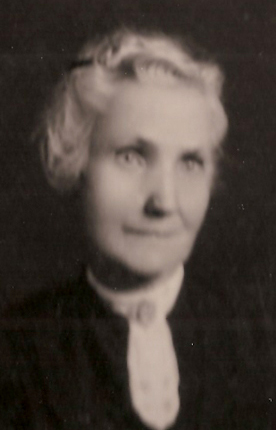
Sarah Eckersley Robinson

Sarah grew to be a beautiful young woman with black hair and blue eyes. She loved going to parties. The boys enjoyed dancing with her because she danced so gracefully. She would glide across the floor with the music, not missing a step. Even though she was considered deaf, she may have heard the low deep tones of the band or feel the beat and vibrations of the music. Either way, she was a graceful dancer.

Sarah was not a timid young lady. She had spunk and courage. She always listened to the spirit of the Lord and followed the promptings given her. After returning home one day, Sarah sensed the presence of someone in the house. Acting quickly, she grabbed her broom and began searching. She had a feeling to check her bedroom, but when she entered the room no one was in sight. She carefully stepped to her bed, lifted the ruffle, and looked under. There she found a man crouched and waiting for Sarah, but he was not prepared for a strong and determined woman with a weapon in her hands.

With all the strength she had, Sarah whacked him out from under the bed with her broom. She then pummeled him over the head again and again. Realizing what he was up against, he ran from the house. Chasing after him, she continued beating him as he ran down the street. Sarah had spirit and no doubt this wicked man thought he could take advantage of her, but he found out differently. He did not expect such courage and fled.

Sarah’s faith in God was amazing. Can our ancestors teach us to appreciate life? I believe they can with their examples and trust in God.

Dieter F. Uchtdorf said, “It is often in the trial of adversity that we learn those most critical lessons that form our character and shape our destiny.”

Dallin H. Oaks said, “Adversities are temporary. What is permanent is what we become by the way we react to them.”

My great grandmother’s faith and courage touched my heart, and she was the inspiration for my historical romance: Sarah’s Special Gift. In this novel, Sarah is a beautiful and successful dance teacher. But she is not like other young ladies. She is deaf, but this does not stop her from living life to its fullest. While visiting the Roberts family, David finds himself entranced with this very special lady and ends up defending her honor several times. He finds that Sarah has gone through many trials as she teaches him how to love life.

Allison King, from Allison’s Attic, wrote: “The romantic friction between David and Sarah is central to a story that will have you cheering for them to get together! This is a heart-warming story of finding that right person to live the rest of your life with. It teaches us that people with disabilities are just like any other person who has dreams for their life. So, if you want to laugh, learn and live in the life of some wonderful characters… read this book and enjoy the journey!”

Watch the Book Trailer on Vimeo. 

This book can be purchased as an eBook, paperback, or as an audiobook at Amazon and Audible.

Newsy Articles, Writing and Arts

The Amazing Ice Palace and the Elusive Butch Cassidy

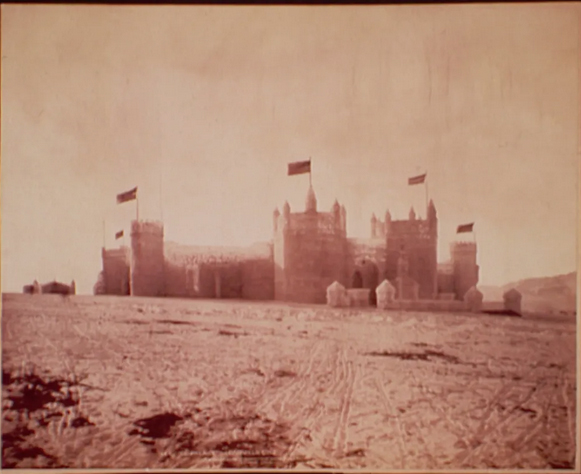
I am always amazed at the different things I learn while doing a little research for one of my historical fiction novels. I did some research for the year of 1896, which was the time period of my novel. It was so intriguing to find out that an Ice Palace had been built in Leadville, Colorado at that time and people from all over the country traveled there to see this magnificent sight.

In order to draw tourists to this mining town, the citizens decided to build a huge tourist attraction. So they hired Architect Charles E. Jay, who had designed an ice castle in Saint Paul, Minnesota. With the help of around 250 men, they began their project on November 1, 1895 to construct the palace. It was made of five thousand tons of ice blocks formed into the shape of a magnificent palace, which stood on five acres of land. Its towers were over 90 feet tall by 40 feet wide, and the palace measured at over 58,000 square feet.

After 36 days, it was completed. As a finishing touch to this palace, the walls were sprayed with water in order to freeze the blocks together so they wouldn’t come apart. To add a glow to this storybook world, it was illuminated with electric lights that sparkled against the ice block walls. In the daytime, the sun shone against the ice, making the walls sparkle. Inside the palace were several rooms. There was a gaming room, a restaurant, an ice rink, a ballroom, a theatre, toboggan runs, and a carousel house.

On January 1, 1896, the Ice Palace was opened for business. The word spread quickly and the local railroads promoted the attraction by giving special rates to its customers. More than 250,000 visitors attended between January and March. Admission into the palace was fifty cents for adults and twenty-five cents for children. In March of 1896, this magnificent palace began melting. The last event that was held there was a maypole skating party on May Day. That was such an interesting bit of history.

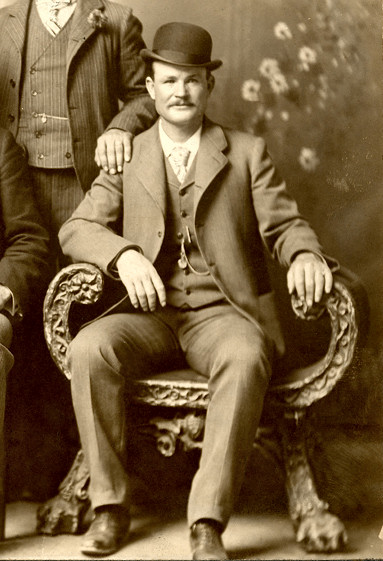
Since my book takes place in Bear Lake Valley in Montpelier and Paris, Idaho, I did some research about that area. I learned some interesting facts about Butch Cassidy, a notorious outlaw, who had robbed the Montpelier Bank in 1896. Local Bear Lake Historian Pat Wilde wrote Treasured Tidbits of Time, telling about the details of that bank robbery.

Butch Cassidy was an interesting fellow. He referred to himself as the “Robin Hood of the West,” taking from the rich and giving to the poor. Cassidy actually wrote, “The best way to hurt them is through their pocket book. They will holler louder than if you cut off both legs. I steal their money just to hear them holler. Then I pass it out among those who really need it.” He proclaimed that he was fighting for the settlers’ rights against the rich cattle baron.

Every year, Montpelier puts on a reenactment of the bank robbery for the public, exactly how it was described by the banker. Picture this scene as it was recorded.

Four men entered the building with sober faces. The two in front were the Bank President and his friend who had been chatting on the steps outside the bank. Behind them were two men dressed like cowhands. As they entered, the men in front stiffened and the fear in their eyes was obvious. The only people in the bank were a woman stenographer and a male teller by the name of Mackintosh. As one of the cowboys closed the door behind them, everyone could see a gun pointed at the banker’s back.

It was interesting to find out that Butch Cassidy was born in Utah and was raised by religious parents. When he was a teenager, he went astray and left home to ride with the outlaws, taking on the name of his mentor. Cassidy was known for his charm and quick wit, not to mention his fearlessness and bravery. He had an air of authority about him and no one could mistake that he was the leader of The Wild Bunch.

His partner in crime, Elza Lay, was a tall, slender, handsome man known for being a top bronco rider and ranch hand. He was a flirtatious sort of fellow and seemed to have a way with women and horses. Outside the bank was a third partner. Meeks was holding the horses and waiting across the street.

Elza Lay casually pointed his revolver at his hostages while Cassidy quickly scooped up the money into a gunnysack. To their surprise, there was only $7,000 in the bank. Cassidy held the gunnysack in a casual manner and slowly walked outside, closing the door behind him. He walked nonchalantly across the street as if he did not have a care in the world. After fastening the gunnysack to his saddlebags, he climbed upon his horse and rode slowly away. No one seemed to take notice of the stranger or suspect anything was wrong as he rode down the street and out of town.

Everything was planned down to the last moment. Cassidy apparently never acted without a well-staked-out plan. After he was out of town, Meeks moved across the street toward the bank with the remaining horses and left Lay’s horse standing in front of the bank. Then Meeks climbed on his horse and slowly rode away. Once again, no one took notice of the second stranger riding down the road.

Through the bank window, Lay watched Meeks ride out of town. It was now his turn to leave. After closing the door to the bank, he quickly hopped on his horse and headed down the street.

When Mr. Gray, the Bank President, ran outside and alerted everyone, it seemed as if all pandemonium erupted. Deputy Fred Cruikshank took off on his bicycle for home so he could saddle up his horse. Attorney Bagley followed after him, while Sheriff Jefferson Davis called for a posse.

Watching all the activity in town, Macintosh figured the “thirteenth” was the cause of it all. You see, it happened on the thirteenth day of the month. It took place after the thirteenth deposit had been made in the amount of thirteen dollars. And the robbery transpired at thirteen minutes after three o’clock.

So what do you think? Did it happen because of the unlucky number 13? And did Butch Cassidy get away? He and his gang were never caught.

Page One Literary Book Review wrote about Melinda and the Wild West: “Linda Weaver Clarke displays an easy and excellent style of writing, blending adventure, romance, history, humor and courage. Melinda and the Wild West is an instant classic and should put this author on the literary map all over the world.”

Melinda and the Wild West can be purchased through Amazon and Audible Audio Books.

Audible Audio Books: https://www.audible.com/pd/Melinda-and-the-Wild-West-The-Award-Winning-Original-Version-Audiobook/B07M62GL6S

Writing and Arts

What does the Light at the End of the Tunnel Mean?

The Light at the End of the Tunnel is a common statement but it means much more than anyone can imagine. I am the author of a historical romance called The Light at the End of the Tunnel. When asked about this novella, I replied, “Everyone has challenges in their lives. Many wonder if they are the only ones who are experiencing difficulties. Some people feel that each trial they have endured was so challenging that they wondered where the light at the end of the tunnel was. But they are not alone. Others have walked the same path and these trials have made them stronger in many ways.”

As an author, I wrote a historical romance based on this subject, using the inspiration of my great grandmother. Hannah and her husband came to America in the mid-1800s, wanting a better life. On the ship from England, Hannah’s one-year-old daughter became very ill, which resulted in deafness. Two years later, her husband was murdered on the streets of St. Louis, Missouri. Having never worked outside her home before, Hannah took a job as a maid at a hotel in St. Louis, hoping to earn enough money to move on. Finding out about her plight, her family volunteered to pay her passage back to England but she chose to stay instead. She didn’t have it easy but was courageous and determined to make a better life.

“No matter our circumstances, no matter our challenges or trials, there is something in each day to embrace and cherish. There is something in each day that can bring gratitude and joy if only we will see and appreciate it.” ~ Dieter F. Uchtdorf

This was Hannah’s attitude as she tried to search for the “light at the end of the tunnel.” In The Light at the End of the Tunnel, Hannah is a young single mother who has had some hardships since arriving in America, along with raising her little girl who is deaf. But her trials only make her stronger. Wanting to be independent, she opens a hot chocolate shop. At first, it’s a struggle. But she will not give up.

Book Reviewer and Author Gail Pallotta wrote: “This romance wrapped around my heart as it took me into the struggles of Hannah, such a brave woman. The characters come to life on the page as Thomas falls for Hannah. However, Hannah is caught up in her day-to-day trials, and with her independent streak she only thinks of making a life for her and her daughter. Can Thomas get her attention and change her mind?”

BreAnne Okoren narrated this historical romance for Audible audiobooks and it has received wonderful reviews. I am so amazed with BreAnne’s talent because she makes the characters feel real. She speaks with a Scottish and English accent without effort. When there was a humorous incident, the laughter in her voice makes the scene come alive. The emotion BreAnne gives to each character is genuine and you can feel how the character feels. I couldn’t have chosen a better narrator who understands my characters.

Author Regina Andrews wrote: “From the opening scene on a steamboat on the Mississippi River to the beautiful concluding paragraph, filled with gratitude and happiness, author Linda Weaver Clarke takes the reader on a journey that will touch the imagination and warm the heart. This is an incredibly engrossing sweet historical romance.”

This audiobook is available on Amazon and Audible. Listen to this incredible narration by BreAnne on youtube and you’ll be amazed, also.

This audiobook is available on Amazon and Audible.

Writing and Arts

Courageous Women who fought against Inequality in the World

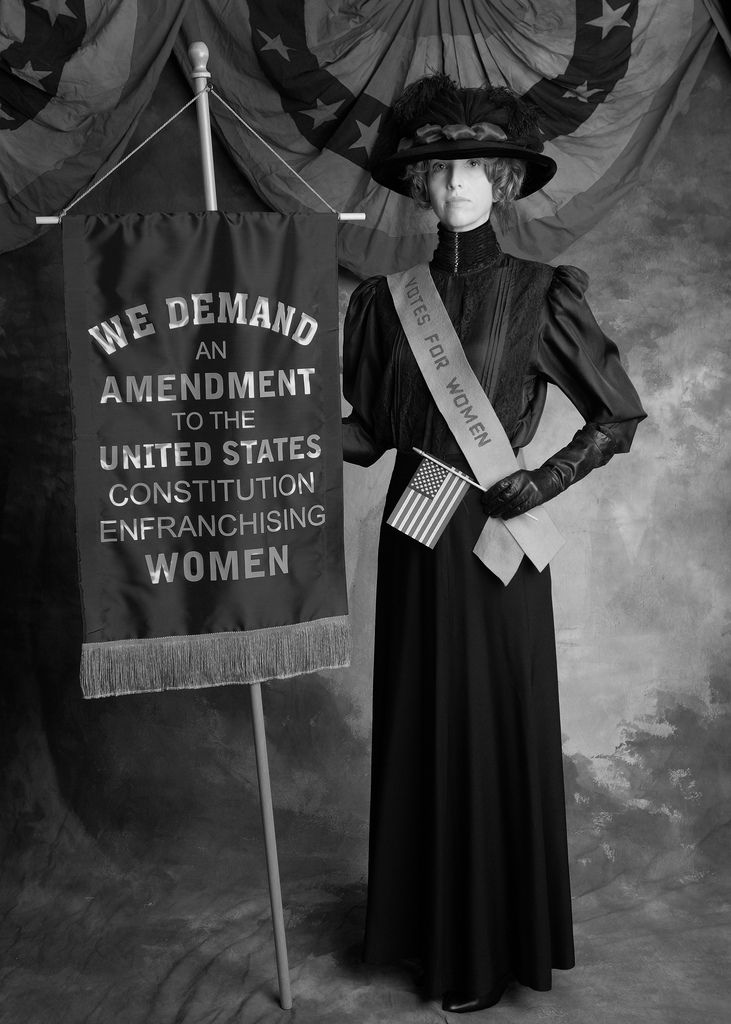
Amidst the hardships of inequality, there were many courageous women who fought against injustice during the 1840s. These women made a difference in the world. They spoke up and let their opinions be known. They would not be held back but took a stand for equal rights. Many wanted to vote, have a higher education, and fought against involuntary servitude. They were considered “women of courage.”

When several women took a stand, their actions were looked down upon. Speaking publicly was considered improper for a woman, by the standards of the day. In a pastoral letter from the 1800s, the Council of Congregationalist Ministers of Massachusetts said a woman who speaks publicly was “unwomanly and unchristian” and it would “threaten the female character with widespread and permanent injury.”

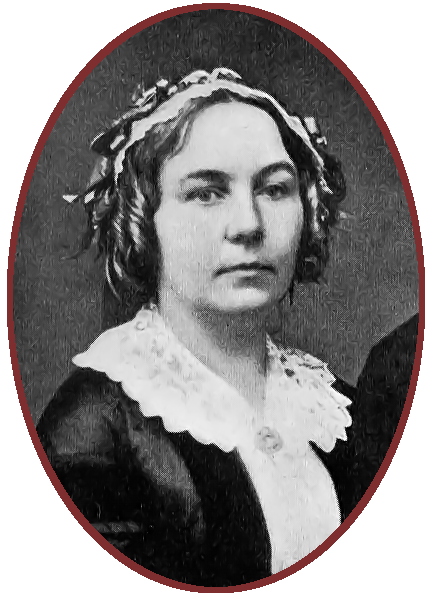
Even though it wasn’t proper, many still gave their opinions. Elizabeth Stanton and Susan B. Anthony adamantly spoke against prejudice, inequality, and slavery. They encouraged women to get an education and stand up for their rights. But they were not alone. There were many others who expressed their views. These courageous women were an important part of history and made a difference.

Did you know that the first four states to give women the right to vote were Wyoming, Colorado, Utah, and Idaho? These states encouraged women to participate in politics and run for office. They were independent and courageous women. With this in mind, I sat down and wrote three novellas that are part of a series called “Women of Courage.” Each one was inspired from the experiences of my great grandmothers.

A Mississippi Sunset is a historical romance. Laura McBride is a liberated and courageous young lady who is convinced that she can help others in her crusade for equality. She encourages women to fight for their beliefs and be heard. But she soon finds out that women who speak publicly are looked down upon. But that wasn’t how Deputy William Davies felt. When he met Laura McBride, he was intrigued with her independent nature. He admired her spunk and determination to fight against slavery and involuntary servitude.

Sunnie Reviews wrote: “I really enjoyed this sweet and clean historical fiction and romance. A Mississippi Sunset is part of a series of brave women who were not afraid to take a stand in what they believe needed to be changed and you will see some historical figures that appear in this book!  Loved that. This is a very enjoyable book and it is well worth a read!”

A Mississippi Sunset is available on Audible narrated by Elizabeth Schmidt. Stop by and listen to a sample.

Laura isn’t the only one who shows her independence. In The Light at the end of the Tunnel,Hannah is a young single mother who has had some hardships since arriving in America. But the trials in her life only make her stronger. Hannah realizes she can make something of her life by opening a hot chocolate shop. She soon finds that starting her own business isn’t as easy as she thought. But she will not give up. When Thomas learns that she has spirit, he is intrigued.

“This romance wrapped around my heart as it took me into the struggles of Hannah, such a brave woman, and her little girl, who’s also brave. The characters come to life on the page as Thomas falls for Hannah and adores her child. However, Hannah is caught up in her day-to-day trials and with her independent streak, she only thinks of making a life for her and her daughter. Can Thomas get her attention and change her mind?” –Gail Pallotta, Author

The Light at the End of the Tunnel is available on Audible narrated by BreAnne Okoren. Stop by and listen to a sample.

Serenity also has some spunk. In A Lady of Refinement, Serenity discovers thieves stealing her precious grapes. Dawning her brother’s cavalry uniform and grabbing his sword in hand, she brandishes it in the air and calls out: “Leave or Perish!” Seeing the gleaming sword, the thieves take off running. Seeing this scene from a distance, Jonathan is surprised because Serenity is a refined lady from Wales. When Serenity’s brother gives him some advice how to win her heart, Jonathan begins to question his wisdom. Should he trust his friend or is he leading him astray?

Reviewer Louise Pledge wrote: “How I enjoy finding a book that will not let me put it down until I’m done!  This was the case with A Lady of Refinement.  Linda Weaver Clarke used a true story of her ancestor’s as a base, and it rang familiar to me, as my ancestors also migrated to America from England during the same time period. The main character, Serenity, is the refined lady, and it was such a delight when she bested a few arrogant males.  My favorite character, however, was Jonathan, who was very taken with Serenity.  Time will tell if he is successful at capturing her attention.”

Lady of Refinement is available on Audible narrated by BreAnne Okoren. Stop by and listen to a sample.

These books and eBooks are available on Amazon.

Watch a book trailer on YouTube.

Writing and Arts

Pirates, Outlaws, and Civic Leaders! Oh My!

Why are pirates and outlaws an intriguing subject in stories? What grabs everyone’s attention about these people? Whether the person is a pirate upon the sea or a river pirate roaming the Mississippi River… whether he’s an outlaw robbing a bank or a highwayman robbing a stagecoach, he is robbing and plundering. I have a question. What if a civic leader, a respected man in the community, decided to become an outlaw or river pirate? Would he have the same appeal? Or is this different? Very interesting question to think about!

I love adding true events that are part of history to historical fiction. Not only does it make the setting feel real, but it’s also fun to learn historical facts. I have a few more questions to ask.

Can an outlaw, highwayman, or pirate change his lifestyle and become an upright citizen? Do you believe a person can change, repent from his lawless ways and make amends? Matt Warner was an infamous outlaw who joined Butch Cassidy’s gang. He was a bank robber, cattle rustler, and bootlegger. But as time passed, Warner decided to change his life and settle down. He was elected deputy sheriff and later on as a county judge. In fact, knowing he was a former outlaw helped him gain votes. He was noted for being a great lawman because he knew the mindset of the outlaws. I wonder what happened in his life to make him change and become a law-abiding citizen in the community?

Is it possible that an upright citizen can secretly be a pirate, outlaw, or highwayman? Why would a distinguished and upstanding citizen want to rob others? Was it because of the adventure or the money? Or both? What was his motivation? If he were caught, the community would be shocked. I actually found that some civic leaders and merchants led a double life as a River Pirate, which their family knew nothing about. There was a justice of the peace in Kentucky who was a Highwayman and River Pirate. He and his fellow pirates would hijack a flatboat full of valuable cargo along the Mississippi and Ohio Rivers and meet at the Cave-In-Rock hideout along the Mississippi River to distribute the goods. (Taken from Angel’s Serenade: A Willow Valley Historical Romance)

Civic leaders weren’t the only people who chose to be outlaws. I learned that a governor and a president of the United States acted like outlaws, even though they weren’t considered as one. They stole people’s property without any remorse.

Did you know thousands of people were forced off their land by the government in 1839? Have you heard of The Trail of Tears? I wept as I learned what had happened to the Native Americans. The Indian Removal Act signed by Andrew Jackson gave the government the right to remove the Native Americans from their own land because it just happened to be in the “Cotton Kingdom.” When Van Buren became president, he put the Removal Act into effect. It was heartbreaking to learn what he had done to the Cherokee Nation. Even though Van Buren paid them five million dollars for their property and agreed to relocate them, the Cherokee didn’t want to leave their homeland. During the freezing winter, they were forced to leave. Sadly, young children and the elderly became very ill and died from exposure along the trek. It ended March of 1839.

Did you know another group of people were forced off their land because of their views about slavery? Jackson and Van Buren weren’t the only ones who pushed thousands of people off their land in 1839. Governor Boggs did the same thing.

The members of The Church of Jesus Christ of Latter Day Saints did not believe in slavery and let their views be known. The slave owners were afraid of an uprising from their servants and saw the members as a threat to their way of life. So Governor Boggs gave the order to kick them out of Missouri or be exterminated. He sent the militia to drive them off their land and imprison their church leaders.

During February and March of 1839, these Christians made their way across the prairie to Illinois as refugees through knee-deep snow. Many only had the clothes on their backs because the militia had stolen their belongings. Some wrapped rags around their feet to keep them warm. When they arrived in Illinois, the kind citizens allowed the refugees to live in their homes and barns until they could get back on their feet.

Outlaws come in different forms. I wonder if Van Buren, Andrew Jackson, and Governor Boggs ever got their “comeuppance?” (Taken from A Pleasant Rivalry: A Willow Valley Historical Romance)

What came out of this research? Angel’s Serenade is a historical mystery romance. By adding some true facts to this story, you will discover the leader of the River Pirates who has been eluding the law for several years. You may be surprised! But that’s not all. What secret is the man running for Mayor hiding? Lucas and Emmeline are intrigued by their neighbor’s mysterious behavior. Is he friend or foe? Should they stop him from winning the votes or encourage him?

In A Pleasant Rivalry, Angelica Davis is a journalist and writes controversial articles for the Chronicle. When she writes about the removal of the Native Americans from their land, Angelica is appalled by Van Buren’s decision. To her, he is a cruel man. But that’s not all she writes about. When she discovers what Governor Boggs did to the Christians in Missouri, Angelica tells the public what is going on, getting her information first hand from someone who was kicked off her land. Her sister! Thank goodness the kind Illinois citizens took pity on the refugees and helped them find places to live. But that’s not all she writes about. Who is the notorious jewel thief and who is the arsonist wreaking havoc in Willow Valley?

Writing and Arts

Equality for All: Women of Courage

In the 1840s, women felt the need to speak out and be heard. They desired equality. They wanted to vote and get a higher education.

When brave women gave speeches on the subject, it was frowned upon. A pastoral letter from a minister in Massachusetts said a woman who speaks publicly is “unwomanly and unchristian.” The pastor also mentioned that it would “threaten the female character with widespread and permanent injury.” Was this how the men really felt back then?

When Elizabeth Stanton went with her husband to a convention that was against slavery, she tried to give her opinion but was put down and told that women were not permitted to give speeches. It was solely a man’s place to speak publicly.

But that wasn’t the only time that women tried to speak out. Susan B. Anthony was arrested for voting illegally in a presidential election. She was fined $100 but she refused to pay it. She said, “Resistance to tyranny is obedience to God.”

In the late 1700s, Abigail Adams, the wife of John Adams, was the first woman to stand up for women’s rights but America wasn’t ready for equality at that time. Even though it was not proper, women still gave their opinions.

Do you have some courageous ancestors that were an influence on you and stood up for their beliefs? I had a great grandmother who stood up for her rights and would not allow any man to intimidate her. She was told by a group of men that if she denounced her religion then they would not burn down her home. The leader of the mob was a large burly man and she had every right to be frightened. But Martha would not give in to fear. She was a devout Christian and would not deny her Faith. With strength and courage, she stomped her foot and said: “You may burn it and be damned.”

In my new historical romance, A Mississippi Sunset, Laura is a liberated and courageous young lady who is convinced that she can make a difference in the small town of Willow Valley. Standing on a tub in Town Square, she encourages all women to fight for their rights and stand up for their beliefs. Equality was her message.

“This is the third book in the Women of Courage series. It is a clean, sweet, historical romance and tells the story of Laura, who is a feminist before her time. The author paints a fabulous picture of the era, and her characters are vivid and realistic. The main theme is the topic of women’s rights and it is intriguing, interesting, and thought-provoking.” –Regina Andrews, Author and Reviewer

When voting was talked about in the 1800s, most men didn’t like the idea of women participating. They said women didn’t have the mental capacity to understand politics, so there was no need to have them vote. It was up to the men to decide what was best. But that wasn’t how Deputy William Davies felt. When he met Laura McBride, he was intrigued with her independent nature. He admired her spunk and what she represented.

While standing before her audience, a businessman in a suit raised his fist in the air and yelled, “It’s improper for a lady to preach publicly. It’s unwomanly and unchristian. Go home, lady!”

Laura lifted her chin and said with spunk, “I don’t mind being told I’m unwomanly. But I’m going to defend my faith. I’m a devout Christian. And I believe what I’m doing is what God wants me to do. How about you? Does God want you to take away people’s agency?”

The man did not answer but furrowed his brow and mumbled something that she did not understand.

After reading A Mississippi Sunset, Author Gail Pallotta wrote: “Mrs. Clarke based this interesting historical book on one of her ancestors. Taking the reader back in time, the book shows how many supported rights for women and wanted to rid the country of slavery while others wanted to leave things as they were. It also illustrates how one brave woman, such as Laura, can change the minds of so many others.”

Bringing a bit of history to life, you will learn why many fought for equality and what they had to put up with to let it be known. Women were an important part of history during this time period and made a difference.

You may purchase this book on Amazon.

Writing and Arts

Seeking a Better Life: Women of Courage

Some immigrants learned about America and its opportunities from the newspaper while others heard about it from traveling missionaries. Many were seeking relief from political and religious persecution but others were just following their hearts. They didn’t know what the future would bring to them. Frances Davies, my great grandmother, was one of them.

She left her beloved homeland of Wales to live in America, the land of opportunity. Frances had attended a private school and received an education that set her apart from other young women. She was referred to as a “lady of refinement.”

Her Aunt Susan didn’t want her to leave and begged her to stay in Wales. She said that Frances would inherit her fortune if she stayed but Frances stood firm and unyielding and wanted to join her brothers who had immigrated to America a few years earlier. No matter how hard Aunt Susan tried, she could not influence her niece’s decision.

When I read about my great grandmother’s experiences written by my grandmother, I was impressed with her courage. She was only seventeen when she left for America. That would take a lot of bravery. But that wasn’t all. She faced some thieves, dressed in a cavalry uniform, and chased them off her property. Then she saved a man’s life who had been gored by a bull in his abdomen.

When I decided to put together a series of novellas called “Women of Courage,” I took many of my great grandmother’s experiences and gave them to a fictional character named Serenity, bringing her story to life.

A Lady of Refinement is a historical romance set in 1844.Reading is Serenity’s favorite pastime, where she can go on one adventure after another. She wonders if anyone can measure up to the heroes in her books. But the adventures soon become real after arriving in America.

When Jonathan meets Serenity, an educated and courageous woman from Wales, he becomes intrigued with her and wonders how he can win her heart. Her brother gives him some advice, but Jonathan begins to question his wisdom. Should he trust his friend or is he leading him astray?

Louise Pledge, a reviewer, wrote: “How I enjoy finding a book that will not let me put it down until I’m done!  This was the case with A Lady of Refinement.  Linda Weaver Clarke used a true story of her ancestor’s as a base, and it rang familiar to me, as my ancestors also migrated to America from England during the same time period. The main character, Serenity, is the refined lady, and it was such a delight when she bested a few arrogant males.  My favorite character, however, was Jonathan, who was very taken with Serenity.  Time will tell if he is successful at capturing her attention.”

After arriving in America, Serenity found that many an adult could not read or write, so she set to work teaching an evening class especially for adults. Each night she teaches her students how to write their names so they wouldn’t have to put an X for their signature. When Jonathan joins her class, her world takes a new turn, one she didn’t expect. What was her reaction?

Author Gail Pallotta wrote: “At first she sees him as a quiet man, but when she witnesses some of his heroic actions she thinks of Ivanhoe, a character she admires in a book. Even though she’s drawn to Jonathan, she has a rule that won’t allow her to date a student, and she’s sticking to it. Jonathan’s infatuation leads him to try many approaches to get to know Serenity better, even to the extent of following her brother William’s sometimes bad advice.”

How did Jonathan react to William’s bad advice? There are some comical scenes in this story that will make you laugh out loud. Gail went on to say: “I enjoyed this sweet love story, especially Jonathan trying desperately to win over Serenity, while she hesitates to get to know him. Based on true events of the authors’ ancestors, the book takes the reader back to a gentler time when men were more chivalrous and a woman like Serenity more difficult to win over.”

To buy this book or eBook on Amazon.