
A New Year’s resolution can inspire you to do something you have been putting off. Have you ever considered writing your parent’s and grandparent’s biography? How about writing your own autobiography? Make it your New Year’s Resolution.
Why should you write your family history? Writing your family stories can help you appreciate your heritage. Each of us has a story from our ancestors or even our own story to tell. If these stories are unwritten, how are your children going to know their heritage or family traditions? Will these stories and traditions be lost to your children because no one put them down on paper? It’s up to you to write down these experiences so your children can be proud of their heritage.
This will be the beginning of a marvelous journey for you. You will learn things about them that you didn’t even know.
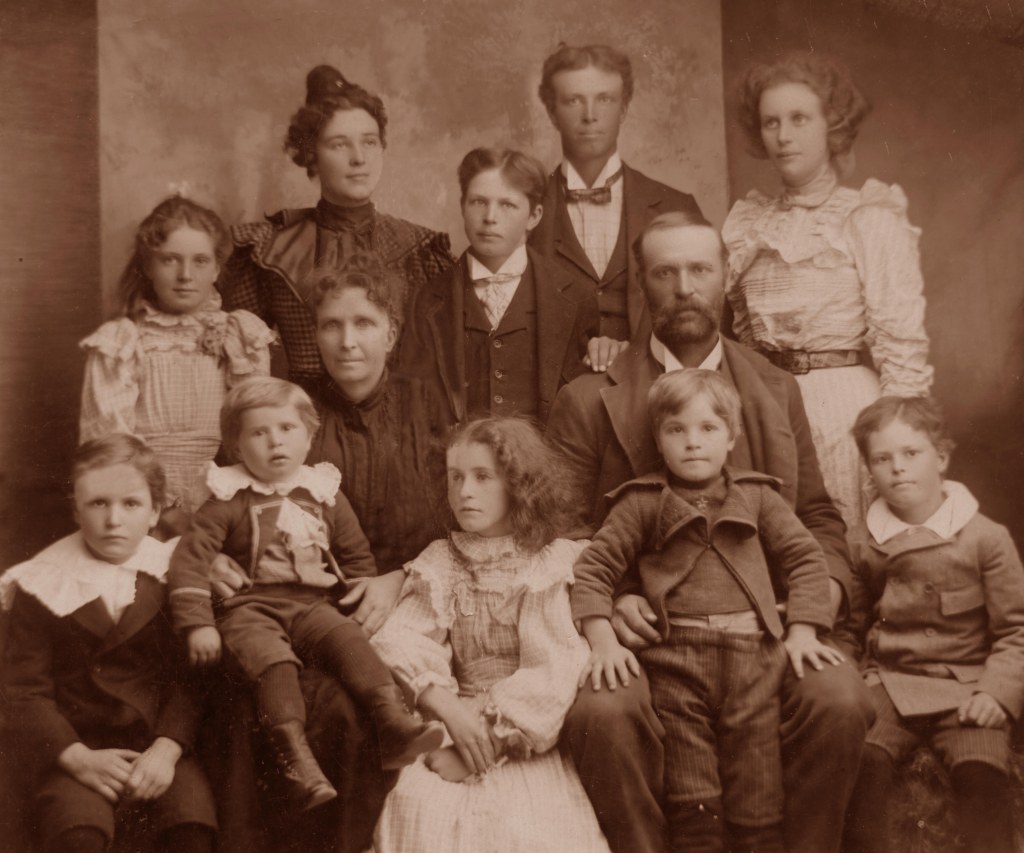
Whether you’re writing about a loved one or your own story, you might feel that it is overwhelming and aren’t sure how to begin. If you have an inspiring story to tell or intriguing incident to relate, perhaps writing each experience as a short story would be easier for you, rather than writing the stories in chronological order. Each chapter could be a short story.
How do you begin? How do you write your story to make it interesting? First thing to do is introduce your ancestor. You can begin with a humorous incident for your first chapter. That will easily grab the attention of your reader.
As you tell a hilarious incident, don’t forget to describe your relative. What does he or she look like? This way the reader can picture his grandfather in his mind.
How do you make the story interesting? The best way is putting yourself in their shoes. Adding feeling to your story is very important. If you don’t weep while telling a sad story, then write it again. If you don’t laugh during a funny incident, then rewrite it. You need to touch your own heart first before you’ll touch the hearts of your readers. How do you go about this? You must describe how your ancestor must have felt. It’s important to add feelings of joy, enthusiasm, fear, laughter, or even frustration to your story. If you’re writing your own story, tell how you felt as you tell about an incident that happened to you.
If you were scared, did your knees shake? Did your heart beat rapidly? Did you tremble? When my grandmother wrote about some experiences she had in her journal, I was impressed with how she described her emotions. This is what she wrote:
“I took to the center of the road as it was darker on the walks and I didn’t like to get too near those weird looking factory buildings and alleys on both sides of the silent streets. Presently I heard footsteps. I saw a man following me. As I hurried, he also did. My tongue became dry and fear seized me. I prayed as I ran. I not only ran but I flew. How I crossed that tiny footbridge, I never knew! But I couldn’t feel the touch of the ground under my feet as I sped onward. With my Bible clutched tightly under my arm, I had left the man, downs, and everything behind, and was soon on the lighted highway and home.”
That was a great description of fear. If you have written your own autobiography or your grandparent’s account of a fearful experience, read it again and notice if you added “emotion” to your story. This makes it hard for the reader to put down the book.
If you were frustrated about something, did your face turn red? Did you stomp your foot? Did you throw your hands in the air? How about feelings of love? Your children would absolutely love to find out how you felt about your spouse when you first met. When I asked my mother what it was like when she first met my father, this is what she told me. “When our eyes met, my heart leapt within me and a warm glow filled my soul.” I was so impressed with her description.
When I read my father’s account, this was what he wrote: “All I remember is a wonderful perfect dream that goes through my mind like a marathon night and day. I dreamed I met a girl Saturday night, a perfect girl whom I had been thinking of, who far surpassed my imagination. As we swept over the floor to the rhythm of the music I was in love with her from that moment.”
This description touched my heart. How would your children respond when they read your feelings of love toward your spouse? This is something to think about.
Remember! Emotions, feelings, moods, and describing how you felt are very important. It brings a story to life. It helps the reader to become part of the story and it will be hard to put the book down. What is the secret of grabbing your reader’s attention? You must put yourself in their shoes.
Don’t forget to add photos! They also tell a story. Remember to scan your pictures at 300 dpi for the best resolution.
There are many places to publish your book but my favorite is Kindle Direct Publishing, which is an Amazon company. You don’t have to pay anything upfront. It is absolutely free and it’s posted on Amazon. When you’re ready to buy a book, you only pay for the printing cost. For a 104-page black and white paperback, I only pay $2.15 per copy. For a 93-page color paperback, I pay $4.20 a copy. Amazon charges shipping but it’s charged by the weight of the items.
Begin today. Start writing your parent’s biography, your grandparent’s biography, and your own autobiography. Trust me. It’ll be fun.

