

Since 2006, I have taught hundreds of classes across the United States, helping those in attendance to write a biography of their father, mother, grandparents or their own autobiography. Many aren’t sure how to go about it so they attend my 2-hour writing class. Some have already written their family stories but wanted to know what more they could add to the story.
While teaching at the Cholla Branch Library in Phoenix, Arizona, a woman raised her hand and said, “I’m a professor at the University and I want you to know…”
I gulped. “Wow!” I interrupted with humor in my voice. “I’m so glad you didn’t tell me that before I began teaching. I would have been very nervous.”
The audience chuckled and the woman continued, “I want you to know that I have attended many writing classes at the university, but I learned more at this two-hour workshop than any class I’ve attended. I want to thank you.”
I was so humbled by what she said. It was something I did not expect, especially from a professor. I asked my husband why she gave me such a wonderful compliment and he said, “I think it’s because you always give examples of what you’re teaching. That really helps.”
One year as I taught my class in Colorado, a gentleman told me that he was a holocaust victim in Poland and his children wanted him to write about his experiences during World War II as a child. He said he wasn’t sure how to begin and what to include. After taking my class, he was so excited to go home and begin writing.
While in California, I met a woman before class began. She said her mother left Germany just before World War II broke out, leaving her parents and nine brothers and sisters behind. Some of them joined the underground to fight against Hitler. As we talked, she said their story was too sad to write about, and she didn’t want to do it.
I knew I had to speak to her about her dilemma but class was about to begin. Hopefully I would be able to answer her question in my lecture. When I finally came to the subject of conflict, I told the audience that this was a very important subject.
I explained, “We must tell about the trials in our ancestors’ lives. If they fought in the underground during World War II, tell about it. These were brave, valiant people who fought for freedom, who fought against tyranny. They fought against the evil powers of Hitler. Your children will be proud of their efforts. Yes, the death of a loved one is sad, but the story must be told.”
The woman smiled as I gazed down at her and she nodded. She had gotten the message and understood what I was saying.
While I was teaching at the Idaho State Historical Society Library in Boise, Idaho, a lady leaned over to my daughter towards the end of class and said: “I felt as if I had handcuffs on my wrists and your mother has just unlocked them.”
As I walk into each library to teach a class, a thrill enters my soul and I know I will be teaching someone who needs my help. Sometimes when I look down into the faces of the people I’m teaching, I’ll see a tear in someone’s eyes as they realize the importance of writing their parent’s stories.
Many times I receive very kind messages from the people who attend my class. Mike Kausch, from St. Louis, Missouri, wrote: “My wife and I received so much information last night at the Kirkwood Library. I believe you have motivated me to finally start writing my family history. We thoroughly enjoyed your presentation.”
At the Stockton County Public Library in California, Mary Jo Gohlke, from Adult Programming, wrote about my class: “I was terribly impressed! She instructs for two hours; the people were genuinely attuned to what she presents. She just impressed the heck out of me. She KNOWS her subject and can present it wonderfully. As I say, she is terrific, thorough, professional, yet strikes just the right chord with her audience.”
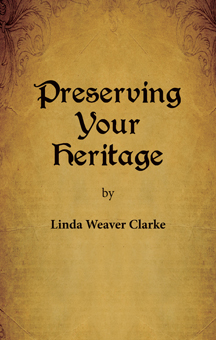
Each compliment I received throughout the years really touched my heart. I have had many people ask me to publish a book with my tips on writing a biography or autobiography as a reminder of what they learned. I have recently put one together and named it: Preserving Your Heritage. Below is a description of the book.
Preserving Your Heritage: Tips For Writing Biographies and Autobiographies—Each of us has a story from our ancestors or our own story to tell. It’s up to us to write these experiences down. In Preserving Your Heritage, you will learn the most important elements of writing. These ideas will help you to write the stories of your heritage in a way that will bring them to life. This book is available on Amazon as a paperback and ebook.
Happy Writing, everyone!

