
I am always amazed at the different things I learn while doing a little research for one of my historical fiction novels. I did some research for the year of 1896, which was the time period of my novel. It was so intriguing to find out that an Ice Palace had been built in Leadville, Colorado at that time and people from all over the country traveled there to see this magnificent sight.
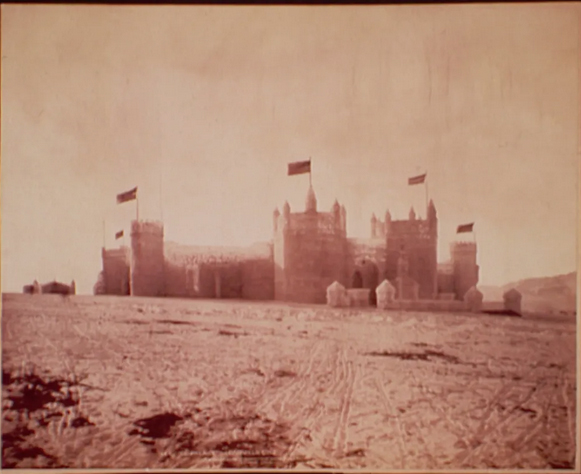
In order to draw tourists to this mining town, the citizens decided to build a huge tourist attraction. So they hired Architect Charles E. Jay, who had designed an ice castle in Saint Paul, Minnesota. With the help of around 250 men, they began their project on November 1, 1895 to construct the palace. It was made of five thousand tons of ice blocks formed into the shape of a magnificent palace, which stood on five acres of land. Its towers were over 90 feet tall by 40 feet wide, and the palace measured at over 58,000 square feet.
After 36 days, it was completed. As a finishing touch to this palace, the walls were sprayed with water in order to freeze the blocks together so they wouldn’t come apart. To add a glow to this storybook world, it was illuminated with electric lights that sparkled against the ice block walls. In the daytime, the sun shone against the ice, making the walls sparkle. Inside the palace were several rooms. There was a gaming room, a restaurant, an ice rink, a ballroom, a theatre, toboggan runs, and a carousel house.
On January 1, 1896, the Ice Palace was opened for business. The word spread quickly and the local railroads promoted the attraction by giving special rates to its customers. More than 250,000 visitors attended between January and March. Admission into the palace was fifty cents for adults and twenty-five cents for children. In March of 1896, this magnificent palace began melting. The last event that was held there was a maypole skating party on May Day. That was such an interesting bit of history.
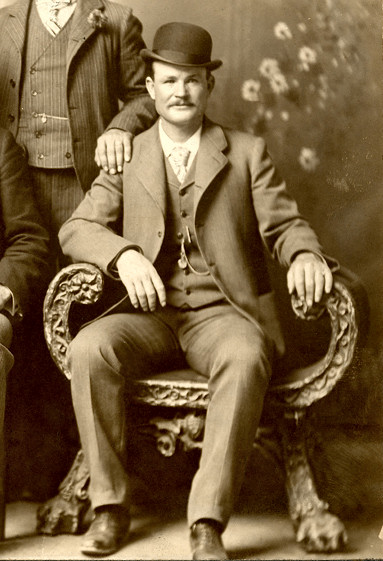
Since my book takes place in Bear Lake Valley in Montpelier and Paris, Idaho, I did some research about that area. I learned some interesting facts about Butch Cassidy, a notorious outlaw, who had robbed the Montpelier Bank in 1896. Local Bear Lake Historian Pat Wilde wrote Treasured Tidbits of Time, telling about the details of that bank robbery.
Butch Cassidy was an interesting fellow. He referred to himself as the “Robin Hood of the West,” taking from the rich and giving to the poor. Cassidy actually wrote, “The best way to hurt them is through their pocket book. They will holler louder than if you cut off both legs. I steal their money just to hear them holler. Then I pass it out among those who really need it.” He proclaimed that he was fighting for the settlers’ rights against the rich cattle baron.
Every year, Montpelier puts on a reenactment of the bank robbery for the public, exactly how it was described by the banker. Picture this scene as it was recorded.
Four men entered the building with sober faces. The two in front were the Bank President and his friend who had been chatting on the steps outside the bank. Behind them were two men dressed like cowhands. As they entered, the men in front stiffened and the fear in their eyes was obvious. The only people in the bank were a woman stenographer and a male teller by the name of Mackintosh. As one of the cowboys closed the door behind them, everyone could see a gun pointed at the banker’s back.
It was interesting to find out that Butch Cassidy was born in Utah and was raised by religious parents. When he was a teenager, he went astray and left home to ride with the outlaws, taking on the name of his mentor. Cassidy was known for his charm and quick wit, not to mention his fearlessness and bravery. He had an air of authority about him and no one could mistake that he was the leader of The Wild Bunch.
His partner in crime, Elza Lay, was a tall, slender, handsome man known for being a top bronco rider and ranch hand. He was a flirtatious sort of fellow and seemed to have a way with women and horses. Outside the bank was a third partner. Meeks was holding the horses and waiting across the street.
Elza Lay casually pointed his revolver at his hostages while Cassidy quickly scooped up the money into a gunnysack. To their surprise, there was only $7,000 in the bank. Cassidy held the gunnysack in a casual manner and slowly walked outside, closing the door behind him. He walked nonchalantly across the street as if he did not have a care in the world. After fastening the gunnysack to his saddlebags, he climbed upon his horse and rode slowly away. No one seemed to take notice of the stranger or suspect anything was wrong as he rode down the street and out of town.
Everything was planned down to the last moment. Cassidy apparently never acted without a well-staked-out plan. After he was out of town, Meeks moved across the street toward the bank with the remaining horses and left Lay’s horse standing in front of the bank. Then Meeks climbed on his horse and slowly rode away. Once again, no one took notice of the second stranger riding down the road.
Through the bank window, Lay watched Meeks ride out of town. It was now his turn to leave. After closing the door to the bank, he quickly hopped on his horse and headed down the street.
When Mr. Gray, the Bank President, ran outside and alerted everyone, it seemed as if all pandemonium erupted. Deputy Fred Cruikshank took off on his bicycle for home so he could saddle up his horse. Attorney Bagley followed after him, while Sheriff Jefferson Davis called for a posse.
Watching all the activity in town, Macintosh figured the “thirteenth” was the cause of it all. You see, it happened on the thirteenth day of the month. It took place after the thirteenth deposit had been made in the amount of thirteen dollars. And the robbery transpired at thirteen minutes after three o’clock.
So what do you think? Did it happen because of the unlucky number 13? And did Butch Cassidy get away? He and his gang were never caught.
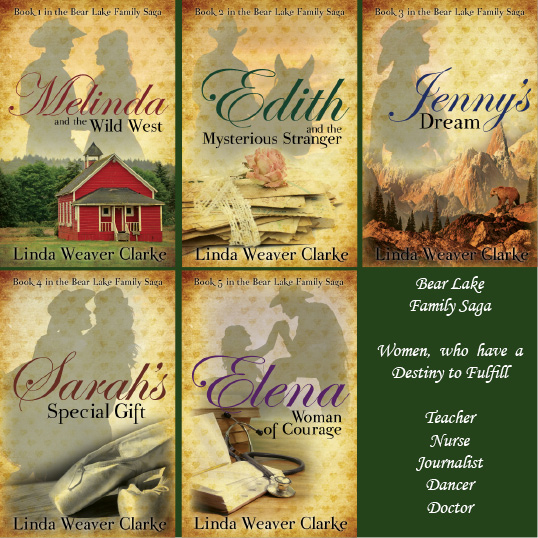
Page One Literary Book Review wrote about Melinda and the Wild West: “Linda Weaver Clarke displays an easy and excellent style of writing, blending adventure, romance, history, humor and courage. Melinda and the Wild West is an instant classic and should put this author on the literary map all over the world.”
Melinda and the Wild West can be purchased through Amazon and Audible Audio Books.
Audible Audio Books: https://www.audible.com/pd/Melinda-and-the-Wild-West-The-Award-Winning-Original-Version-Audiobook/B07M62GL6S