genealogy, Writing and Arts

Can Our Ancestors Teach Us To Appreciate Life?

We all have trials in life and we sometimes wonder if we can ever get through them. Then we get an awakening, something that helps us to appreciate the trials we do have. If given a choice, we would probably choose the problems we have rather than someone else’s hardships. Why is this?

One day when I was feeling blue, my mother took me aside and told me about a young woman who made the most of her life. Most everyone loved her because of her good nature. I wondered why my mother thought so highly of her and I soon found out.

With great affection in her voice, Mother told me that her grandmother, Sarah Eckersley Robinson, was a little over a year old when her parents left England on the ship Palmyra. On the trip, Sarah became ill. Her fever skyrocketed and her parents were worried they were going to lose their little daughter. It was a miracle that she made it through the illness.

When her mother noticed something was wrong, her father shot off a gun into the air and she did not respond. Her fever was so high that she had lost her hearing. Sarah was deaf.

As Sarah grew, her mother taught her sign language and she soon was able to communicate with others. I didn’t realize they taught sign language at such an early time in history. In fact, I was surprised to learn that the first American School for the Deaf was founded in Hartford, Connecticut in 1817. Soon more and more schools began teaching the deaf, giving them an education.

I asked my mother how Sarah communicated with others because not everyone knows sign language. What kind of education did she get? Did Sarah find lip reading easy or difficult?

According to a friend who lost her hearing, she said that sometimes she would misunderstand what someone said because some people form their words differently. Beards are especially a problem. If they are not well trimmed, it isn’t as easy to see their lips as they form their words.

My mother told me that her grandmother was able to live a fairly normal life. She was a good swimmer and would dive with such poise and grace that passersby would toss coins in the water, just to watch her dive after them.
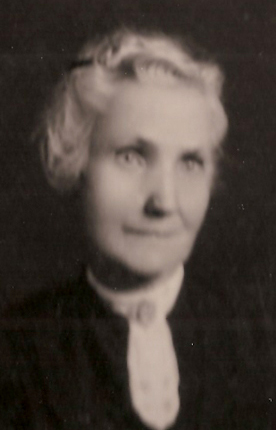
Sarah Eckersley Robinson

Sarah grew to be a beautiful young woman with black hair and blue eyes. She loved going to parties. The boys enjoyed dancing with her because she danced so gracefully. She would glide across the floor with the music, not missing a step. Even though she was considered deaf, she may have heard the low deep tones of the band or feel the beat and vibrations of the music. Either way, she was a graceful dancer.

Sarah was not a timid young lady. She had spunk and courage. She always listened to the spirit of the Lord and followed the promptings given her. After returning home one day, Sarah sensed the presence of someone in the house. Acting quickly, she grabbed her broom and began searching. She had a feeling to check her bedroom, but when she entered the room no one was in sight. She carefully stepped to her bed, lifted the ruffle, and looked under. There she found a man crouched and waiting for Sarah, but he was not prepared for a strong and determined woman with a weapon in her hands.

With all the strength she had, Sarah whacked him out from under the bed with her broom. She then pummeled him over the head again and again. Realizing what he was up against, he ran from the house. Chasing after him, she continued beating him as he ran down the street. Sarah had spirit and no doubt this wicked man thought he could take advantage of her, but he found out differently. He did not expect such courage and fled.

Sarah’s faith in God was amazing. Can our ancestors teach us to appreciate life? I believe they can with their examples and trust in God.

Dieter F. Uchtdorf said, “It is often in the trial of adversity that we learn those most critical lessons that form our character and shape our destiny.”

Dallin H. Oaks said, “Adversities are temporary. What is permanent is what we become by the way we react to them.”

My great grandmother’s faith and courage touched my heart, and she was the inspiration for my historical romance: Sarah’s Special Gift. In this novel, Sarah is a beautiful and successful dance teacher. But she is not like other young ladies. She is deaf, but this does not stop her from living life to its fullest. While visiting the Roberts family, David finds himself entranced with this very special lady and ends up defending her honor several times. He finds that Sarah has gone through many trials as she teaches him how to love life.

Allison King, from Allison’s Attic, wrote: “The romantic friction between David and Sarah is central to a story that will have you cheering for them to get together! This is a heart-warming story of finding that right person to live the rest of your life with. It teaches us that people with disabilities are just like any other person who has dreams for their life. So, if you want to laugh, learn and live in the life of some wonderful characters… read this book and enjoy the journey!”

Watch the Book Trailer on Vimeo. 

This book can be purchased as an eBook, paperback, or as an audiobook at Amazon and Audible.

Writing and Arts

Outlaws, Grizzly Bears, and Lake Monsters! Oh my!

The Bear Lake Monster

Research is so interesting and intriguing. It’s fun learning the details of something I’ve heard about for years but didn’t know all the facts or details. While writing a historical fiction series, I put some amazing incidents from history in each of my stories.

I found that Butch Cassidy robbed the bank in Montpelier, Idaho in 1896, the same place and time period that one of my stories was set. Butch Cassidy referred to himself as the Robin Hood of the West. He wrote: “The best way to hurt them is through their pocket book. They will holler louder than if you cut off both legs. I steal their money just to hear them holler. Then I pass it out among those who really need it.” Cassidy never acted without a well staked-out plan. That was why he never got caught. Did you know that Montpelier puts on a reenactment of the robbery for the public every year? (Taken from Melinda and the Wild West: A Bear Lake Family Saga)

In one of my stories, the heroine is a nurse. I wanted her experiences to be authentic so I took an experience from my great grandmother from the late 1800s. Frances Davies saved a man’s life who had been gored by a bull. Since the doctor was out of town, her neighbor went to her for help. Every detail was recorded in her biography and I was amazed at her courage. Finding that his abdomen was torn open, she washed away the blood, cleansed the wound, and relocated the man’s protruding intestines. Then she soaked a violin gut string in hot water to soften it. After sewing him up with the violin string, Frances fixed a liniment of arnica burrs steeped in alcohol and applied some sterilized cloths to his wound, which was saturated with the liniment. The man lived for over 20 years after his accident. I knew that my heroine had to have this experience as a young nurse in my story. (Taken from Edith and the Mysterious Stranger: A Bear Lake Family Saga)

In the history of Cache Valley, there have been many bears that roam the Rocky Mountains, but none so famous as Old Ephraim. He roamed the mountains from Soda Springs, Idaho to the Logan Utah Canyon from 1911 to 1923. They called him Old Ephraim or Old Three Toes since he only had three toes on one foot. He measured at exactly nine feet and eleven inches tall, and weighed 1100 pounds. The evidence of the strength and power of this grizzly bear was frightening. At one point, he bit a thirteen-foot log, twelve inches in diameter, into eleven lengths as though they had been chopped. He also bit off a six-inch aspen limb in just one bite, which was nine feet and eleven inches above the ground. Many of the sheepherders refused to stay on the job for fear he would appear. They set trap after trap at all his lairs and wallows. But it was all in vain. Many times his tracks were all around the trap as if avoiding it. Other times the bear trap was flung many yards away. He was the smartest grizzly anyone had ever encountered. (Taken from Jenny’s Dream: A Bear Lake Family Saga)

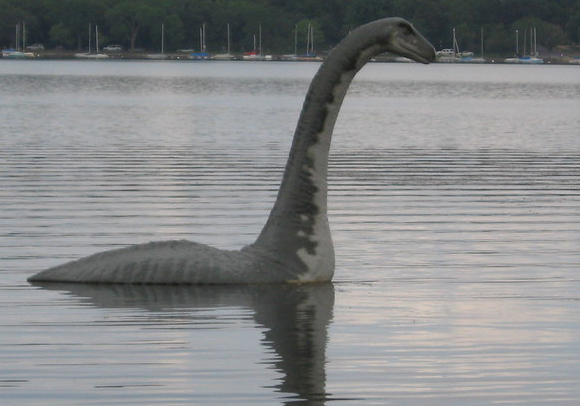
Scotland has the Loch Ness Monster and Bear Lake Valley has one just as formidable. Bear Lake is a natural freshwater lake on the Idaho-Utah border. The mystery of the Bear Lake Monster has been an exciting part of Bear Lake history since 1863 and beyond. Many people claimed to have seen the monster and gave descriptions of it. One summer day in 1868, S. M. Johnson was riding his horse alongside the shoreline when he saw an object floating in the water. At first glance, it looked like a man’s body. He was shocked and thought someone had drowned so he trotted his horse closer. He was shocked when the large brown lump opened a gigantic mouth and blew water toward him. All the reports have the same description. The monster’s eyes were flaming red and its ears stuck out from the sides of its skinny head. Its body was long, resembling a gigantic alligator, and it could swim faster than a galloping horse. It had small legs and a huge mouth.

Throughout the years, no one has ever disproved the Bear Lake Monster. A bunch of scientists figured it was a gigantic codfish that was shipped in from the East. Is the monster fact or legend? It was such fun to add the accounts of those who claimed to have seen it in my story. (Taken from Sarah’s Special Gift: A Bear Lake Family Saga)

Did you know there was a woman who got her medical degree in the 1800s? Elizabeth Blackwell was the first woman to graduate with a doctor’s degree in 1849. It was a miracle that she was accepted into college. Why? Women were not allowed to attend a medical university. So how did Elizabeth get in? She hounded them until the faculty gave in and admitted her as a joke. They figured she would fail miserably. But she fooled the professors and graduated at the top of her class. After her graduation, she found that no hospital would hire her because she was a woman. But this did not stop her. Elizabeth organized her own clinic in New York and helped many people. She also opened a medical college for women where they could have the opportunity to get an education. By 1899, women were finally allowed to attend a medical university.

Realizing this was a perfect subject for my next book, I set my story during the 1920s, a time of independent women who fought for what they got. (Taken from Elena Woman of Courage: A Bear Lake Family Saga)

Check out my Audible Audiobooks.