Writing and Arts

The Inspiration Behind A Historical Romance Series

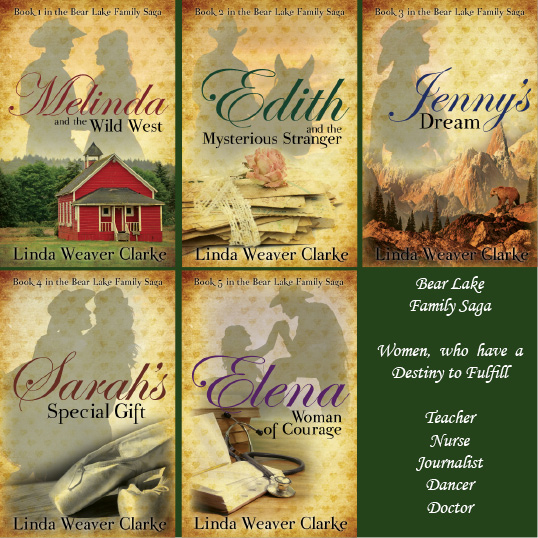
The Bear Lake Family Saga

I enjoy reading the inspiration behind a story. It makes it more personal. An article in the paper can give a bit of inspiration or even a fairytale. As for me, each book in A Family Saga in Bear Lake, Idaho was inspired from something that happened in my life or the life of a loved one.

When I began writing Book One, Melinda and the Wild West, the inspiration came from an experience I had as a substitute teacher. While the children were doing their assignments, I moved about the room and noticed a desk hidden behind a bookshelf with an eight-year-old girl resting her head against her arms. I was curious why she was separated from the others. One of the students explained, “She’s a trouble-maker. She doesn’t do her schoolwork and fights with the boys.”

After excusing the children for recess, I talked to her but she didn’t respond. So I told her how pretty her dress was and how nicely her hair was braided. The rebellious look in her eyes gradually faded and she smiled at me. With that, I asked if I could move her desk beside mine up front and she nodded. As the students entered class, they were not happy with what I had done but I reassured them that I knew what I was doing.

I helped her with her assignments and gave her jobs to do like passing out papers to the students. By the end of the day, I had grown to love this sweet girl and my heart went out to her. She had been bullied by her peers and misunderstood by her teacher. As a result, she was labeled as a troublemaker. At the end of the day, I was supposed to write a note to her parents about the young girl’s behavior. I wrote what a wonderful young girl she was and how helpful she was throughout the day and all her positive qualities. Being bullied is hard to overcome and we must try to make this world a little better for our youth.

In Melinda and the Wild West, Melinda Gamble wants to make a difference in the world. As a school teacher in the small town of Paris, Idaho, she has many challenges as she tries to help a student who is bullied, coming face-to-face with a notorious bank robber, startling a grizzly bear, and finding herself in a terrible blizzard that leaves her clinging to her life. No matter the trial that comes her way, she is ready to fight for what she believes in. But it’s a rugged rancher who challenges Melinda with the one thing for which she was least prepared—love.

When I began writing Book Two, Edith and the Mysterious Stranger, the inspiration came from my parents’ courtship. My mother’s girlfriend told her that she was being way too picky and her expectations were much too high. My mother had certain standards for a husband and first impressions were important to her. Her girlfriend said that she knew a good-looking twenty-nine year old farmer and recommended they write to each other. To help create this story, I actually used some of my father’s letters that he wrote. They were so romantic and I couldn’t help it.

The inspiration for the main character came from two people: my mother’s personality and my grandmother’s nursing experiences. Taking both, I created Edith’s character. My grandmother saved many lives and I tried to include those experiences in my story. She also had a beautiful contralto voice. Between 1904 and 1910, she sang in the famous Tabernacle Choir in Salt Lake City, Utah. As she picked her raspberries, my grandmother sang and her voice rang in the air. Thus, Edith came alive on paper and I called my story: Edith and the Mysterious Stranger. Why? Edith knows several men in Paris, Idaho but which one is the mysterious stranger who is writing to her? As the story unfolds, the reader tries to figure out who he is, as well.

In Edith and the Mysterious Stranger, Edith is a nurse and moves to Idaho to care for her cousin. Edith has wonderful qualities but never gives a man a second chance because her expectations are so high. However, all that changes when a mysterious stranger starts writing to her. For the first time, she gets to know a man’s inner soul before making any harsh judgments. Whoever he is, this man is a mystery and the best thing that has ever happened to her. The question that puzzles her is whether or not he is as wonderful in person as he is in his letters.

When I began writing Book Three, Jenny’s Dream, I centered my story around nineteen-year-old Jenny who dreams of being an author some day. But amidst her dreams, she finds it hard to forgive those who bullied her in her youth. Jenny, from book one, has to learn to forgive before she can be completely happy. Holding a grudge isn’t good and she needs to forgive those who treated her badly. But how? Is it possible? She is surprised when something most unexpected happens and turns her life around so she is able to forgive. This story is one of healing and came from a true experience.

In Jenny’s Dream, Jenny is an aspiring author. She has a dream to fulfill, but the only thing standing in her way is an unpleasant memory, which has haunted her since childhood. She must learn to forgive before she can follow her dream. Meanwhile, a legendary ten-foot grizzly is seen in the area and its boldness has frightened the community. How about Jenny’s neighbor? Is he more than a friend? After she realizes her friend means more to her than she thought, she must now choose between a career and romance. 

When I began writing Book Four, Sarah’s Special Gift, my great grandmother, Sarah Eckersley Robinson, was my inspiration for this novel. She became deaf at the age of one from a high fever. Sarah was known as one of the most graceful dancers in town. She never sat on the sidelines at dances because of her natural ability to dance. She was known for gliding across the floor with ease, with just a touch of her partner’s hand. Sarah had such agility and gracefulness, not only on the dance floor, but also while swimming and diving. People would actually throw coins in the water so they could watch her dive after them.

She was such a courageous woman. When an intruder hid in her home, he must have thought she was an easy victim but was sadly mistaken. With a broom in hand, she swatted him out of the house, and down the street. She was a spunky woman! This book was such a joy to write because it helped me to get to know her better.

In talking to a dear friend who became deaf in her youth, I learned of the struggles the deaf have to bear such as self-esteem and the fear of darkness. I didn’t realize that some might be able to hear musical instruments but not voices. And concentrating on reading lips for long periods of time can be such a strain, resulting in a headache. After all my research, I have more respect for my great grandmother and her disability.

In Sarah’s Special Gift, Sarah is a beautiful and successful dance teacher. But she is not like other young ladies. She is deaf, but this does not stop her from living life to its fullest. And it does not stop her from falling in love with a man who needs her help. While visiting the Roberts family, David finds himself entranced with this very special lady and ends up defending her honor several times. He finds that Sarah has gone through many trials as she teaches him how to love life.

The last book in this series is Elena, Woman of Courage. The Roaring ’20s was a time of great change. Women raised their hemlines and bobbed their hair. When Elena settles in Paris, Idaho as the newest doctor, a few problems arise. The town is not ready for a female doctor, let alone one so strong and independent. She must struggle against the prejudice to establish her new practice. As she fights to prove herself, the town’s most eligible bachelor finds it a challenge to see if he can win her heart.

Check out each book on Amazon at A Family Saga in Bear Lake, Idaho.

Delicious Recipes

Delicious 1800s Ginger Cookies

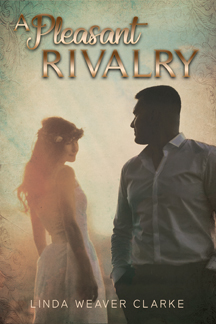
Every time I write a book and include some food from that time period or country, I can’t add it to my story until I bake it and eat it myself. It would not be right for my hero to praise something that isn’t delicious. Right? While writing A Pleasant Rivalry, a historical mystery/romance, I wanted Angelica to make some cookies for a specific scene. Not any cookies! It had to be from that time period. So I did some research online and typed in “pioneer cookies” and “cookies made in the 1800s.” When I discovered that Ginger Cookies were quite popular, I did more research and found a recipe that was originally from that era. Next thing I did was to make and bake those cookies. Wow! Double wow! It was the best recipe ever. Did my great grandmother make this recipe in her day? I bet she did. I’d like to share it with you. Happy baking!

Ginger Cookies

2 cups Flour

1 tsp Baking Soda

1/2 tsp Salt

1/2 tsp ground Ginger

1/2 tsp ground Cloves

1 1/2 tsp ground Cinnamon

Mix together. In a separate bowl, beat together following ingredients.

3/4 cups (1 ½ sticks) Butter, softened

3/4 cups Granulated Sugar

1/4 cup Brown Sugar

After it’s blended, add:

1/4 cup Molasses

1 Egg

Slowly add flour mixture. Roll dough into 1-inch balls then roll them in some granulated sugar. Place on cookie sheet 1-inch apart. Bake for 8 minutes at 375˚. If the cookies are hard, you baked them too long. This type of cookie should be soft and melt in your mouth.

A Pleasant Rivalry from A Willow Valley Historical Mystery/Romance Series: Angelica Davis is surprised when she finds out that an old school chum has returned to Willow Valley to take over his grandfather’s business. Since she writes articles for the Chronicle and Simon Morgan owns the Willow Valley News, they just happen to be rivals. The competition is on. Who will be the first to discover the identity of the jewel thief or the arsonist? Will it be Angelica or Simon? Gradually the feelings she once had for him return as they both search for the same stories. To her surprise, Angelica realizes she is losing her heart to her rival.

A Pleasant Rivalry is available on Audible and Amazon as an ebook and paperback.

A Pleasant Rivalry Book Trailer:

Writing and Arts

Are Courageous Women in Stories More Intriguing to Read About?

Courageous women in stories seem to draw readers’ attention and grab their interest. The bravery and strength of character easily draws them into the story. It takes courage to stick up for one’s rights and defend one’s beliefs. During the 1840s, there were many brave women who fought against injustice and inequality. Many wanted to have a better education. These women made a difference and influenced others to make a better life for themselves.

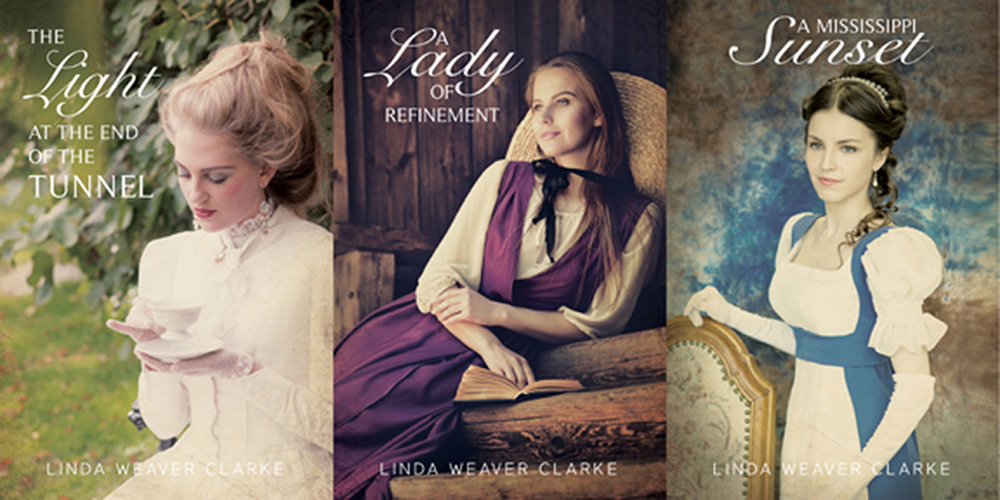
A fairly new historical romance series was released that has received outstanding reviews on Amazon and Audible Audiobooks. It is called “Women of Courage.” In these novellas, the spunk and courage of these women seem to draw the readers into a world of adventure.

In The Light at the end of the Tunnel, Hannah is a young single mother who has had a few hardships since arriving in America. But the trials in her life only make her stronger. Hannah realizes she can make something of her life by opening a hot chocolate shop. She soon finds that starting her own business isn’t as easy as she thought. But she will not give up. When Thomas learns that she has spirit, he is intrigued with her.

“This romance wrapped around my heart as it took me into the struggles of Hannah, such a brave woman… The characters come to life on the page as Thomas falls for Hannah and adores her child. However, Hannah is caught up in her day-to-day trials and with her independent streak, she only thinks of making a life for her and her daughter. Can Thomas get her attention and change her mind?” ~ Author Gail Pallotta

Hannah isn’t the only one who shows her independent nature. Serenity has just as much courage. Chasing thieves off her property and entering a horse race are just a few things that describe this young Welshwoman’s spunk. In A Lady of Refinement, Serenity teaches an evening class for adults and helps them to read and write and have a better education. Reading is Serenity’s favorite pastime, where she can go on one adventure after another. She wonders if anyone can measure up to the heroes in her books. But the adventures soon become real after arriving in America. When Jonathan meets Serenity, a refined woman from Wales, he wonders how he can win her heart.

“How I enjoy finding a book that will not let me put it down until I’m done!  This was the case with A Lady of Refinement.  Linda Weaver Clarke used a true story of her ancestor’s as a base, and it rang familiar to me, as my ancestors also migrated to America during the same time period. The main character, Serenity, is the refined lady and it was such a delight when she bested a few arrogant males.  My favorite character, however, was Jonathan, who was very taken with Serenity.  Time will tell if he is successful at capturing her attention.” ~ Louise Pledge Reviews

There is one more independent woman in this series. The third novella is about a young woman who stands before an audience and fights against involuntary servitude and slavery. Frederick Douglass, an abolitionist, wrote: “When the true history of the antislavery cause shall be written, women will occupy a large space in its pages; for the cause of the slave has been peculiarly a woman’s cause.”

In A Mississippi Sunset, Laura McBride is a liberated and courageous young lady who is convinced that she can help others in her crusade for equality. She encourages women to fight for their beliefs and be heard. But she soon finds out that women who speak publicly are looked down upon. When Deputy William Davies meets Laura, he admires her spunk and determination to fight against slavery.

“I really enjoyed this sweet and clean historical fiction and romance. A Mississippi Sunset is part of a series of brave women who were not afraid to take a stand in what they believe needed to be changed and you will see some historical figures that appear in this book!  Loved that. This is a very enjoyable book and it is well worth a read!” ~ Sunnie Reviews

Taking true experiences from the author’s ancestors, this series of novellas was created. These young ladies were considered “women of courage.”

Watch these book trailers below to peak your interest.

Watch A Lady of Refinement video below.

About Author: Author Linda Weaver Clarke is the author of 35 books. All her books are family friendly. Linda works at the FamilySearch Center where she helps people find their ancestors. She also teaches a free class at FamilySearch and on Zoom about writing biographies and publishing it.

The Light at the End of the Tunnel is available  on Amazon and on Audible narrated by BreAnne Okoren.

A Lady of Refinement is available  on Amazon and on Audible narrated by BreAnne Okoren.

A Mississippi Sunset is available  on Amazon and on Audible narrated by Elizabeth Schmidt.

I hope you enjoyed this article. If you are an audio lover, check out my Audible Audiobooks Blog.

Newsy Articles, Writing and Arts

Did Women Freely Give Their Opinions in the 17th Century?

The 17th century was a time of great change. Art, music, dance, and poetry became more elaborate and dramatic. During the 1600’s, differences of opinion were discussed and argued about between the Catholics, Protestants and other denominations. But were men the only ones who freely gave their opinion?

There were some women throughout history who spoke up for their beliefs but most were not taken seriously. When a woman spoke in public, it was considered “unwomanly.” But that didn’t stop my ancestor, Dorothea Scott.

Dorothea was of a spiritual nature and had a strong belief in God. She was a countess from Kent, England and married Major Daniel Gotherson. I learned that she was brought up as a Protestant, but she felt something lacking so she joined the Quakers. Feeling the need to bring people to God, she wrote a book named A Call to Repentance and it was published in 1661. Then she promptly took it to King Charles II as a gift, hoping to bring about more righteousness. This copy is in the Library of The Society of Friends, Devonshire House, in London. Then she went about preaching the gospel and gained a large following. They referred to her followers at Scott’s Congregation.

On March 4, 1655, a relative reported that Dorothea was giving lectures about religion and felt it was disgraceful. That was a man’s duty and not a woman’s. She wrote: “As for the countess, I can tell you heavie news of her, for she is turned Quaker and preaches every day on a tubb.” (This letter is in the Bodleian Library at Oxford.)

In her journal, Dorothea wrote: “Then began I to be led by the Spirit of God out of darkness into His marvelous light … and where I have known Him most is too hard to be uttered.”

This was just the beginning for women to stand up for what they believed. In the late 1700s, Abigail Adams, the wife of John Adams who was the second president of the U.S., encouraged her husband to “remember the ladies” as they made their new laws. She believed in women’s rights, women’s education, and was against involuntary servitude. It was said that he respected her opinions and she advised her husband in several decisions.   

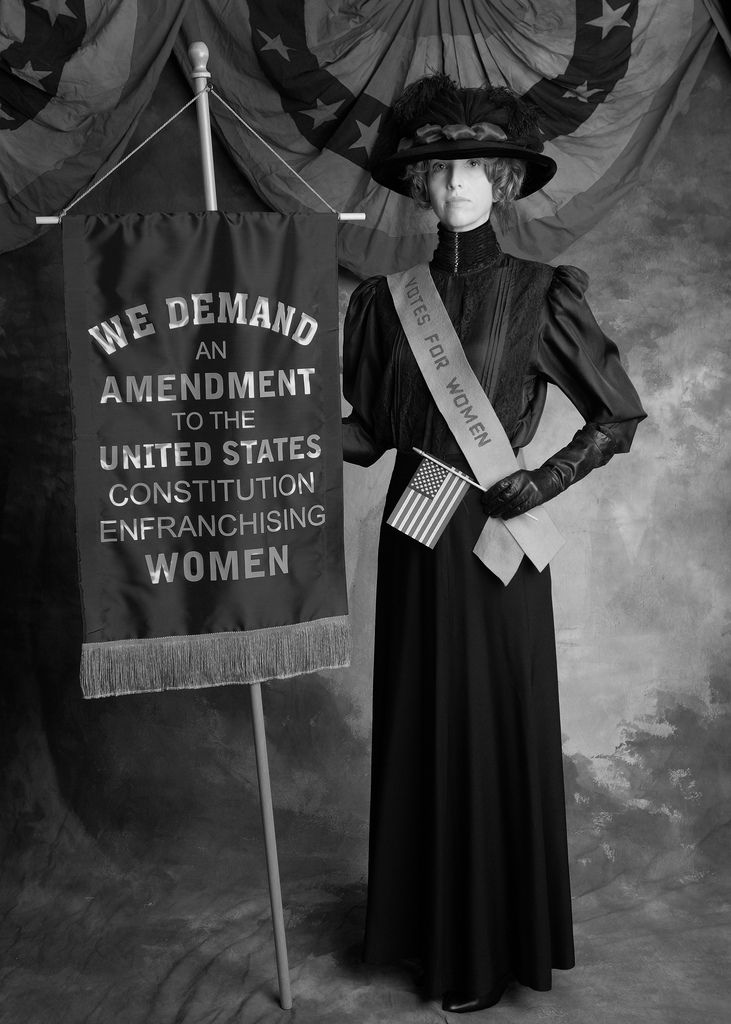
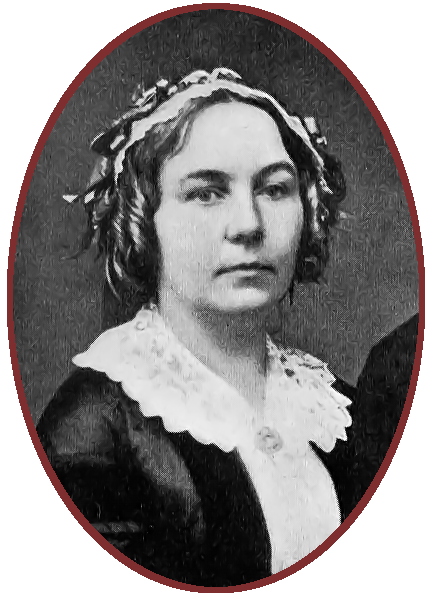
During the 1800s, more and more women spoke up and let their opinions be heard. When these women took a stand, their actions were looked down upon. Speaking publicly was considered improper for a woman. Even though it wasn’t accepted, Elizabeth Stanton still gave her opinions. Both she and her husband were abolitionists. When they went to a convention in England that was against slavery, she tried to give her opinion but was put down and told that women were not permitted to give speeches or their opinions. It was solely a man’s place to speak publicly. That experience made her all the more determined to speak out for what she believed.

Susan B. Anthony was another who spoke out against inequality. She encouraged women to stand up for their rights. And that was exactly what she did and was arrested for it. On November 5, 1872 in a presidential election, the authorities were summoned and Susan B. Anthony was arrested for voting illegally. When she was fined $100, she refused to pay it. Susan said firmly, “Resistance to tyranny is obedience to God.”

Eighteen years later, one state after another began allowing women to vote. The first four states were Wyoming (1890), Colorado (1893), Utah (1896), and Idaho (1896). In fact, Wyoming and Utah actually gave women the right to vote before they were states and when they were just territories. Women in these states immediately began running for office and won the vote.

These courageous women were an important part of history but that was just the beginning. It wasn’t until March 22, 1972 that the Equal Rights Amendment was passed by the U.S. Senate and it was sent to the states for ratification. In this amendment, women were not to be discriminated against when it came to jobs or equal pay.

This subject was the inspiration for my new book, A Mississippi Sunset. In this historical romance set in 1844, Laura McBride is a liberated and courageous young lady who is convinced that she can help others in her crusade for equality. She encourages women to fight for their beliefs and be heard. But she soon finds out that women who speak publicly are looked down upon. But that wasn’t how Deputy William Davies felt. When he met Laura McBride, he was intrigued with her independent nature. He admired her spunk and determination to fight against slavery and involuntary servitude.

Watch a book trailer of the Women of Courage series on YouTube.

A Mississippi Sunset is available on Amazon as a paperback, ebook, and as an Audible Audiobook narrated by Elizabeth Schmidt.

Amazon: https://www.amazon.com/Mississippi-Sunset-Women-Courage-ebook/dp/B09SRDBHNX

Newsy Articles, Writing and Arts

Chocolate Lovers and Chocolatiers

Did you know that chocolate is good for you? Not only mentally but health-wise? Research shows that chocolate has many benefits for the health of your heart, cognitive function, and helps with iron deficiency. Especially dark chocolate! If you’re a milk chocolate lover, it still helps.

In a controlled trial, it was found that eating dark chocolate daily for 30 days actually improved cognitive functioning such as learning, reasoning, thinking, and it improved the memory. Wow! I like those benefits. The researchers said it had something to do with “methylxanthines” in chocolate.

For those who may have iron deficiency, dark chocolate is a great source of iron. If you are low in iron, you may have fatigue and don’t have much energy to do your daily chores. But no worries! Fifty grams of dark chocolate has six milligrams of iron. If you have anemia, it is a great excuse to eat a chocolate bar daily.

But that’s not all! If you want a healthy heart, eat chocolate. Both dark and milk chocolate have cacao, which contains flavonoids. What are flavonoids? It helps to improve the health of your heart. Dark chocolate has a higher percent of cacao, though, because it is richer in flavonoids.

This next part may astound you. Chocolate is rich in magnesium. What is magnesium? It relaxes muscles that are tense. This is great news for women because it eases the pain of menstrual cramps. This may be the reason why many women crave chocolate. For those who have wives that are miserable during this time, give them a chocolate bar. Of course, dark chocolate has more milligrams of magnesium than milk chocolate. If you’re not a dark chocolate fan, milk chocolate is just fine when craving a treat.

I learned that chocolate was invented in the spring of 1765. Dr. James Baker and John Hannon who was an Irish immigrant made their first batch of chocolate by grinding cocoa beans between two massive circular millstones. After pouring the chocolate syrup into an iron kettle, they poured the liquid into molds to cool into blocks of chocolate. Soon the word spread that Baker and Hannon had a factory that produced chocolate bricks. The customers would shave strips of chocolate into boiled water to make cocoa syrup.

During the American Revolution, they struggled to keep the business going since they had to get the beans from the West Indies. In 1779, Hannon disappeared when he went on a voyage to the West Indies to buy more cocoa beans. With all these trials, Baker kept the business alive until the 1790s when he handed the family business over to his son Edmund. After a time, he in turn handed it over to his son Walter.

It was Walter who decided it was time to hire two young women to work for him. In 1834, Mary and Christiana Shields worked hard and helped his business grow. They were the first women Chocolatiers in America.

It was such fun to learn about the beginnings of chocolate and hot chocolate drinks. In my historical romance, The Light at the End of the Tunnel, Hannah is a chocolatier. It was her desire to own her own business. When she was questioned about a woman owning a business, this was her response.

Glancing at her shop, Thomas said, “It’s not easy opening your own business. Especially if you’re a woman. There’s a lot to take into consideration before plunging into such a thing. Do you know what you’re getting yourself into?”

“Don’t worry about me,” she said firmly. “I’ve done my research.”

When he raised his brow, Hannah knew that she had surprised him with such a curt answer. But she was so tired of defending herself and convincing everyone that she could make her own living. The last thing she wanted to do was work as a maid for the rest of her life.

Folding his arms over his broad chest, he asked, “What’s the name of your business and what are you going to sell?”

“I’m calling it: Hannah’s Hot Chocolate.”

So there you have it! The Light at the end of the Tunnel is the first book in a series called Women of Courage. This series tells of courageous women who make a difference in their community.

The Light at the end of the Tunnel  is about Hannah, a young single mother, who wants to make something of her life by opening a hot chocolate shop. She soon finds that starting her own business isn’t as easy as she thought. But she will not give up. She has had some hardships since arriving in America. But the trials in her life only make her stronger.

When Thomas finds out that Hannah’s shop is struggling, he comes to the rescue with a clever plan. Will she agree to such an unconventional idea? Can he convince her to find room in her heart for one more person?

Watch this Book Trailer and get in the mood of chocolate.

Check out this historical romance on Amazon or at Audible Audiobooks at https://www.amazon.com/Light-End-Tunnel-Women-Courage-ebook/dp/B09JHRQYF1

genealogy, Writing and Arts

Can Our Ancestors Teach Us To Appreciate Life?

We all have trials in life and we sometimes wonder if we can ever get through them. Then we get an awakening, something that helps us to appreciate the trials we do have. If given a choice, we would probably choose the problems we have rather than someone else’s hardships. Why is this?

One day when I was feeling blue, my mother took me aside and told me about a young woman who made the most of her life. Most everyone loved her because of her good nature. I wondered why my mother thought so highly of her and I soon found out.

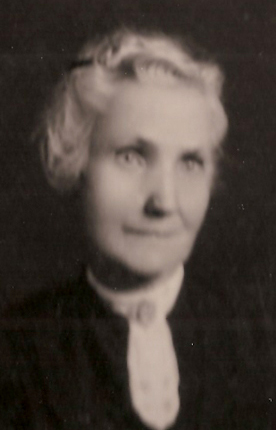
With great affection in her voice, Mother told me that her grandmother, Sarah Eckersley Robinson, was a little over a year old when her parents left England on the ship Palmyra. On the trip, Sarah became ill. Her fever skyrocketed and her parents were worried they were going to lose their little daughter. It was a miracle that she made it through the illness.

When her mother noticed something was wrong, her father shot off a gun into the air and she did not respond. Her fever was so high that she had lost her hearing. Sarah was deaf.

As Sarah grew, her mother taught her sign language and she soon was able to communicate with others. I didn’t realize they taught sign language at such an early time in history. In fact, I was surprised to learn that the first American School for the Deaf was founded in Hartford, Connecticut in 1817. Soon more and more schools began teaching the deaf, giving them an education.

I asked my mother how Sarah communicated with others because not everyone knows sign language. What kind of education did she get? Did Sarah find lip reading easy or difficult?

According to a friend who lost her hearing, she said that sometimes she would misunderstand what someone said because some people form their words differently. Beards are especially a problem. If they are not well trimmed, it isn’t as easy to see their lips as they form their words.

My mother told me that her grandmother was able to live a fairly normal life. She was a good swimmer and would dive with such poise and grace that passersby would toss coins in the water, just to watch her dive after them.

Sarah Eckersley Robinson

Sarah grew to be a beautiful young woman with black hair and blue eyes. She loved going to parties. The boys enjoyed dancing with her because she danced so gracefully. She would glide across the floor with the music, not missing a step. Even though she was considered deaf, she may have heard the low deep tones of the band or feel the beat and vibrations of the music. Either way, she was a graceful dancer.

Sarah was not a timid young lady. She had spunk and courage. She always listened to the spirit of the Lord and followed the promptings given her. After returning home one day, Sarah sensed the presence of someone in the house. Acting quickly, she grabbed her broom and began searching. She had a feeling to check her bedroom, but when she entered the room no one was in sight. She carefully stepped to her bed, lifted the ruffle, and looked under. There she found a man crouched and waiting for Sarah, but he was not prepared for a strong and determined woman with a weapon in her hands.

With all the strength she had, Sarah whacked him out from under the bed with her broom. She then pummeled him over the head again and again. Realizing what he was up against, he ran from the house. Chasing after him, she continued beating him as he ran down the street. Sarah had spirit and no doubt this wicked man thought he could take advantage of her, but he found out differently. He did not expect such courage and fled.

Sarah’s faith in God was amazing. Can our ancestors teach us to appreciate life? I believe they can with their examples and trust in God.

Dieter F. Uchtdorf said, “It is often in the trial of adversity that we learn those most critical lessons that form our character and shape our destiny.”

Dallin H. Oaks said, “Adversities are temporary. What is permanent is what we become by the way we react to them.”

My great grandmother’s faith and courage touched my heart, and she was the inspiration for my historical romance: Sarah’s Special Gift. In this novel, Sarah is a beautiful and successful dance teacher. But she is not like other young ladies. She is deaf, but this does not stop her from living life to its fullest. While visiting the Roberts family, David finds himself entranced with this very special lady and ends up defending her honor several times. He finds that Sarah has gone through many trials as she teaches him how to love life.

Allison King, from Allison’s Attic, wrote: “The romantic friction between David and Sarah is central to a story that will have you cheering for them to get together! This is a heart-warming story of finding that right person to live the rest of your life with. It teaches us that people with disabilities are just like any other person who has dreams for their life. So, if you want to laugh, learn and live in the life of some wonderful characters… read this book and enjoy the journey!”

Watch the Book Trailer on Vimeo. 

This book can be purchased as an eBook, paperback, or as an audiobook at Amazon and Audible.

Newsy Articles, Writing and Arts

The Amazing Ice Palace and the Elusive Butch Cassidy

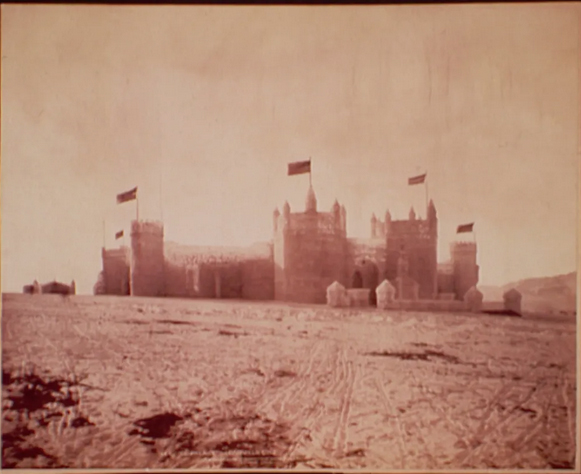
I am always amazed at the different things I learn while doing a little research for one of my historical fiction novels. I did some research for the year of 1896, which was the time period of my novel. It was so intriguing to find out that an Ice Palace had been built in Leadville, Colorado at that time and people from all over the country traveled there to see this magnificent sight.

In order to draw tourists to this mining town, the citizens decided to build a huge tourist attraction. So they hired Architect Charles E. Jay, who had designed an ice castle in Saint Paul, Minnesota. With the help of around 250 men, they began their project on November 1, 1895 to construct the palace. It was made of five thousand tons of ice blocks formed into the shape of a magnificent palace, which stood on five acres of land. Its towers were over 90 feet tall by 40 feet wide, and the palace measured at over 58,000 square feet.

After 36 days, it was completed. As a finishing touch to this palace, the walls were sprayed with water in order to freeze the blocks together so they wouldn’t come apart. To add a glow to this storybook world, it was illuminated with electric lights that sparkled against the ice block walls. In the daytime, the sun shone against the ice, making the walls sparkle. Inside the palace were several rooms. There was a gaming room, a restaurant, an ice rink, a ballroom, a theatre, toboggan runs, and a carousel house.

On January 1, 1896, the Ice Palace was opened for business. The word spread quickly and the local railroads promoted the attraction by giving special rates to its customers. More than 250,000 visitors attended between January and March. Admission into the palace was fifty cents for adults and twenty-five cents for children. In March of 1896, this magnificent palace began melting. The last event that was held there was a maypole skating party on May Day. That was such an interesting bit of history.

Since my book takes place in Bear Lake Valley in Montpelier and Paris, Idaho, I did some research about that area. I learned some interesting facts about Butch Cassidy, a notorious outlaw, who had robbed the Montpelier Bank in 1896. Local Bear Lake Historian Pat Wilde wrote Treasured Tidbits of Time, telling about the details of that bank robbery.

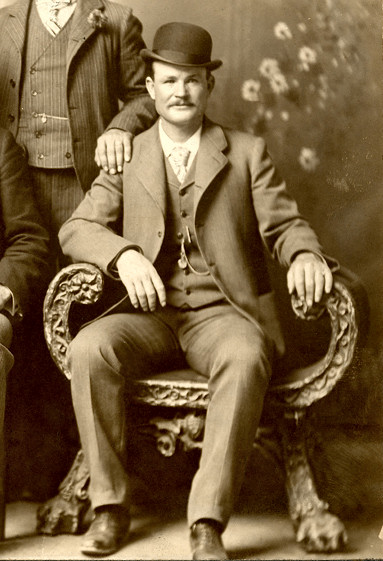
Butch Cassidy was an interesting fellow. He referred to himself as the “Robin Hood of the West,” taking from the rich and giving to the poor. Cassidy actually wrote, “The best way to hurt them is through their pocket book. They will holler louder than if you cut off both legs. I steal their money just to hear them holler. Then I pass it out among those who really need it.” He proclaimed that he was fighting for the settlers’ rights against the rich cattle baron.

Every year, Montpelier puts on a reenactment of the bank robbery for the public, exactly how it was described by the banker. Picture this scene as it was recorded.

Four men entered the building with sober faces. The two in front were the Bank President and his friend who had been chatting on the steps outside the bank. Behind them were two men dressed like cowhands. As they entered, the men in front stiffened and the fear in their eyes was obvious. The only people in the bank were a woman stenographer and a male teller by the name of Mackintosh. As one of the cowboys closed the door behind them, everyone could see a gun pointed at the banker’s back.

It was interesting to find out that Butch Cassidy was born in Utah and was raised by religious parents. When he was a teenager, he went astray and left home to ride with the outlaws, taking on the name of his mentor. Cassidy was known for his charm and quick wit, not to mention his fearlessness and bravery. He had an air of authority about him and no one could mistake that he was the leader of The Wild Bunch.

His partner in crime, Elza Lay, was a tall, slender, handsome man known for being a top bronco rider and ranch hand. He was a flirtatious sort of fellow and seemed to have a way with women and horses. Outside the bank was a third partner. Meeks was holding the horses and waiting across the street.

Elza Lay casually pointed his revolver at his hostages while Cassidy quickly scooped up the money into a gunnysack. To their surprise, there was only $7,000 in the bank. Cassidy held the gunnysack in a casual manner and slowly walked outside, closing the door behind him. He walked nonchalantly across the street as if he did not have a care in the world. After fastening the gunnysack to his saddlebags, he climbed upon his horse and rode slowly away. No one seemed to take notice of the stranger or suspect anything was wrong as he rode down the street and out of town.

Everything was planned down to the last moment. Cassidy apparently never acted without a well-staked-out plan. After he was out of town, Meeks moved across the street toward the bank with the remaining horses and left Lay’s horse standing in front of the bank. Then Meeks climbed on his horse and slowly rode away. Once again, no one took notice of the second stranger riding down the road.

Through the bank window, Lay watched Meeks ride out of town. It was now his turn to leave. After closing the door to the bank, he quickly hopped on his horse and headed down the street.

When Mr. Gray, the Bank President, ran outside and alerted everyone, it seemed as if all pandemonium erupted. Deputy Fred Cruikshank took off on his bicycle for home so he could saddle up his horse. Attorney Bagley followed after him, while Sheriff Jefferson Davis called for a posse.

Watching all the activity in town, Macintosh figured the “thirteenth” was the cause of it all. You see, it happened on the thirteenth day of the month. It took place after the thirteenth deposit had been made in the amount of thirteen dollars. And the robbery transpired at thirteen minutes after three o’clock.

So what do you think? Did it happen because of the unlucky number 13? And did Butch Cassidy get away? He and his gang were never caught.

Page One Literary Book Review wrote about Melinda and the Wild West: “Linda Weaver Clarke displays an easy and excellent style of writing, blending adventure, romance, history, humor and courage. Melinda and the Wild West is an instant classic and should put this author on the literary map all over the world.”

Melinda and the Wild West can be purchased through Amazon and Audible Audio Books.

Audible Audio Books: https://www.audible.com/pd/Melinda-and-the-Wild-West-The-Award-Winning-Original-Version-Audiobook/B07M62GL6S

Writing and Arts

Courageous Women who fought against Inequality in the World

Amidst the hardships of inequality, there were many courageous women who fought against injustice during the 1840s. These women made a difference in the world. They spoke up and let their opinions be known. They would not be held back but took a stand for equal rights. Many wanted to vote, have a higher education, and fought against involuntary servitude. They were considered “women of courage.”

When several women took a stand, their actions were looked down upon. Speaking publicly was considered improper for a woman, by the standards of the day. In a pastoral letter from the 1800s, the Council of Congregationalist Ministers of Massachusetts said a woman who speaks publicly was “unwomanly and unchristian” and it would “threaten the female character with widespread and permanent injury.”

Even though it wasn’t proper, many still gave their opinions. Elizabeth Stanton and Susan B. Anthony adamantly spoke against prejudice, inequality, and slavery. They encouraged women to get an education and stand up for their rights. But they were not alone. There were many others who expressed their views. These courageous women were an important part of history and made a difference.

Did you know that the first four states to give women the right to vote were Wyoming, Colorado, Utah, and Idaho? These states encouraged women to participate in politics and run for office. They were independent and courageous women. With this in mind, I sat down and wrote three novellas that are part of a series called “Women of Courage.” Each one was inspired from the experiences of my great grandmothers.

A Mississippi Sunset is a historical romance. Laura McBride is a liberated and courageous young lady who is convinced that she can help others in her crusade for equality. She encourages women to fight for their beliefs and be heard. But she soon finds out that women who speak publicly are looked down upon. But that wasn’t how Deputy William Davies felt. When he met Laura McBride, he was intrigued with her independent nature. He admired her spunk and determination to fight against slavery and involuntary servitude.

Sunnie Reviews wrote: “I really enjoyed this sweet and clean historical fiction and romance. A Mississippi Sunset is part of a series of brave women who were not afraid to take a stand in what they believe needed to be changed and you will see some historical figures that appear in this book!  Loved that. This is a very enjoyable book and it is well worth a read!”

A Mississippi Sunset is available on Audible narrated by Elizabeth Schmidt. Stop by and listen to a sample.

Laura isn’t the only one who shows her independence. In The Light at the end of the Tunnel,Hannah is a young single mother who has had some hardships since arriving in America. But the trials in her life only make her stronger. Hannah realizes she can make something of her life by opening a hot chocolate shop. She soon finds that starting her own business isn’t as easy as she thought. But she will not give up. When Thomas learns that she has spirit, he is intrigued.

“This romance wrapped around my heart as it took me into the struggles of Hannah, such a brave woman, and her little girl, who’s also brave. The characters come to life on the page as Thomas falls for Hannah and adores her child. However, Hannah is caught up in her day-to-day trials and with her independent streak, she only thinks of making a life for her and her daughter. Can Thomas get her attention and change her mind?” –Gail Pallotta, Author

The Light at the End of the Tunnel is available on Audible narrated by BreAnne Okoren. Stop by and listen to a sample.

Serenity also has some spunk. In A Lady of Refinement, Serenity discovers thieves stealing her precious grapes. Dawning her brother’s cavalry uniform and grabbing his sword in hand, she brandishes it in the air and calls out: “Leave or Perish!” Seeing the gleaming sword, the thieves take off running. Seeing this scene from a distance, Jonathan is surprised because Serenity is a refined lady from Wales. When Serenity’s brother gives him some advice how to win her heart, Jonathan begins to question his wisdom. Should he trust his friend or is he leading him astray?

Reviewer Louise Pledge wrote: “How I enjoy finding a book that will not let me put it down until I’m done!  This was the case with A Lady of Refinement.  Linda Weaver Clarke used a true story of her ancestor’s as a base, and it rang familiar to me, as my ancestors also migrated to America from England during the same time period. The main character, Serenity, is the refined lady, and it was such a delight when she bested a few arrogant males.  My favorite character, however, was Jonathan, who was very taken with Serenity.  Time will tell if he is successful at capturing her attention.”

Lady of Refinement is available on Audible narrated by BreAnne Okoren. Stop by and listen to a sample.

These books and eBooks are available on Amazon.

Watch a book trailer on YouTube.