The writing of love notes to someone for Valentine’s Day has been popular since the 1700s. Many people made their own Valentines to give to a loved one. In the 1820s, special stationary was sold for Valentine greetings and was popular in the United States and Great Britain. In the 1840s, Valentine cards were finally created. They were sheets with embossed borders and illustrations that could be folded and sealed with wax.
The New York Courier in1830 wrote a humorous article about Valentine’s Day and picking a husband or wife at this time. It said: “We have ascertained the fact that the bachelors are moving around the city and actually making preparations for the celebration of St. Valentine’s Day. They have positively crawled out of their flannels, trimmed their whiskers, shaved the growth of ages, straightened the vertebrae, and bound them up in cloaks ten yards wide to keep the cold weather at a distance during the approaching festival. We give the ladies fair warning to hold themselves in readiness. The picked youth of the city, such as will make loving husbands, are to be present, if God prosper them.”
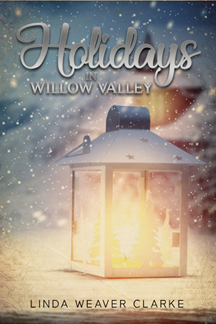
This article made me laugh. I love holidays, especially in fictional stories. One of my books is a Collection of Six Holiday Stories. Each story is fun and full of surprises. The first story is about Valentine’s Day. The Valentine Bandit has struck again. Each year he sneaks out of his hiding place and finds some poor unsuspecting widow to surprise. He is spreading happiness throughout the city of Willow Valley. Many a young girl wants to meet this bandit, but he is too sly to be caught. Reports say he has a black mask just like a bandit and is dressed all in black. Valentine’s Day is a day to show that we care about others, and this bandit is doing just that.
Check out Holidays in Willow Valley below and see what you think. Then read about other holidays, as well. Happy Valentine’s Day, everyone! I hope you have a great week.
This book is vailable as an eBook in Kindle Unlimited, as a Paperback, and as an audiobook.
When researching certain holidays for Holidays in Willow Valley, it was intriguing to find out how different they were in the 1800s compared to how we celebrate them today. I was amazed at the differences. After completing my novel, I decided to sit down and write about all the many holidays that we love and celebrate as a family today. The origin of many holidays may surprise you. How they got started may not be what you expected.
It is interesting to find out how each holiday tradition came about. It may astound you the reasoning behind each one. Our children have fun celebrating April Fools Day as they try to fool their friends, but why do we celebrate such an interesting day? Why do we get dressed up in costumes on Halloween night and go trick or treating? What was the inspiration behind this fun holiday?
Is it really true that the Puritans actually stopped the Americans from celebrating Christmas, a beloved holiday that we all cherish and love? Was it really outlawed? How can that be? On Memorial Day, who were the first people that placed flowers on the graves of the soldiers? It just may surprise you. Have you heard of Juneteenth, a very important part of history? When and where was the first time it was actually celebrated and why?
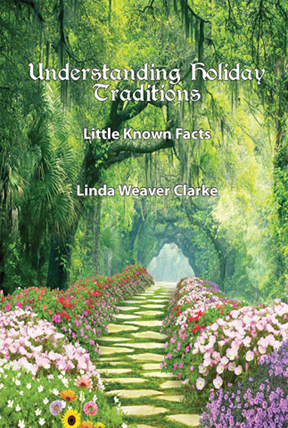
The answers to these questions may be surprising. The beginnings of each American Holiday have an interesting story to tell. Understanding Holiday Traditions: Little Known Facts will help you to appreciate holidays with a new perspective.
Sunnie Reviews wrote: “I really enjoyed reading the old and interesting traditions and beginnings of the various holidays we celebrate each year. It’s so fun to know and come to understand the events that led up to these becoming holidays and how each has a significant historical meaning. I enjoyed reading of a holiday that, as I grew up in Minnesota, was a holiday that was always celebrated there. That was May Day. I remember little baskets on my doorstep and giving some out as well. Then when we moved to California, I was sad that there was no celebration of that particular day. I enjoyed the vintage cards and the mentions of how different countries celebrated these days as well. A nice way to share the meaning of holidays to family members and to learn of their true meanings.”
Louise Pledge enjoyed Understanding Holiday Traditions and explained how she felt as she read it: “I feel that this book belongs in every home with children. Imagine the fun it would be to tell your kids the reasons they are celebrating these holidays. And then make every holiday a little more special than usual. What I probably liked the most, though, was the old postcards from each one. They were priceless!”
You may find this book on Amazon in paperback and in color.
In 1620, the people from England sailed to America for religious freedom because all English citizens were required to belong to only one church… the Church of England. Many didn’t agree with the teachings of the priests and decided to build a new life in the Netherlands and in the Americas. But not everyone was searching religious freedom. Others were only seeking a better life economically.
After arriving on the Mayflower in November, they had to build homes for shelter. Hunting for food was another problem. With the cold winter and lack of food, many became ill and half of them died. When spring came, they planted crops and built up their colony. By autumn, they had built several homes and stored plenty of food for the winter.
While building their colony, they became friends with the Pokanoket people and invited them to the first Thanksgiving in America. They celebrated with seafood, porridge, cornbread, deer, and roasted fowls.
When George Washington was President, he wanted to make Thanksgiving a national holiday, but some of the congressmen were against it. Unfortunately, the idea brought a lot of discord because many felt the hardships of just a few Pilgrims did not warrant a national holiday. But…. those who thought it was important celebrated Thanksgiving intermittently.
In 1863, President Abraham Lincoln officially proclaimed the last Thursday in November as a National Day of celebration. He said it should be a day of “thanksgiving and praise” to God. He knew the importance of this day.
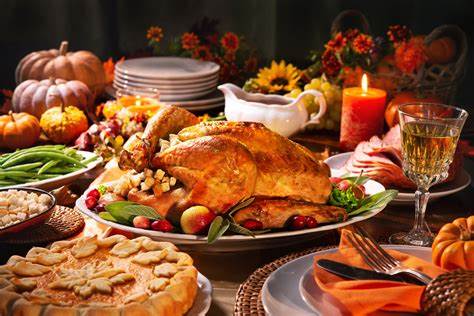
After he declared Thanksgiving as a national holiday, turkey became a popular tradition. Since William Bradford wrote about the colonists hunting wild turkeys during the autumn of 1621, it was only natural to choose a turkey. Did you know that turkeys are native only to the Americas? No other country has turkeys. That is something I didn’t know.
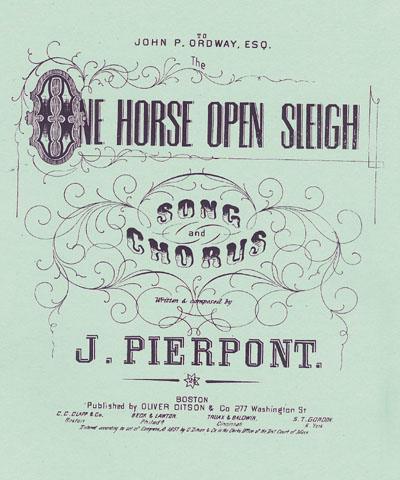
I found out something about Thanksgiving that I didn’t know before. In 1857, James Pierpoint composed a song especially for the celebration of Thanksgiving called One Horse Open Sleigh. The original words were:
Dashing thro’ the snow, In a one horse open sleigh, O’er the hills we go, Laughing all the way; Bells on bobtail ring, Making spirits bright, Oh what sport to ride and sing a sleighing song tonight.
Chorus: Jingle bells, Jingle bells, Jingle all the way; Oh! What joy it is to ride in a one horse open sleigh. Jingle bells, Jingle bells, Jingle all the way; Oh! What joy it is to ride in a one horse open sleigh.
It wasn’t long until everyone started singing this song for the Christmas season, and the name was changed to Jingle Bells in 1859.
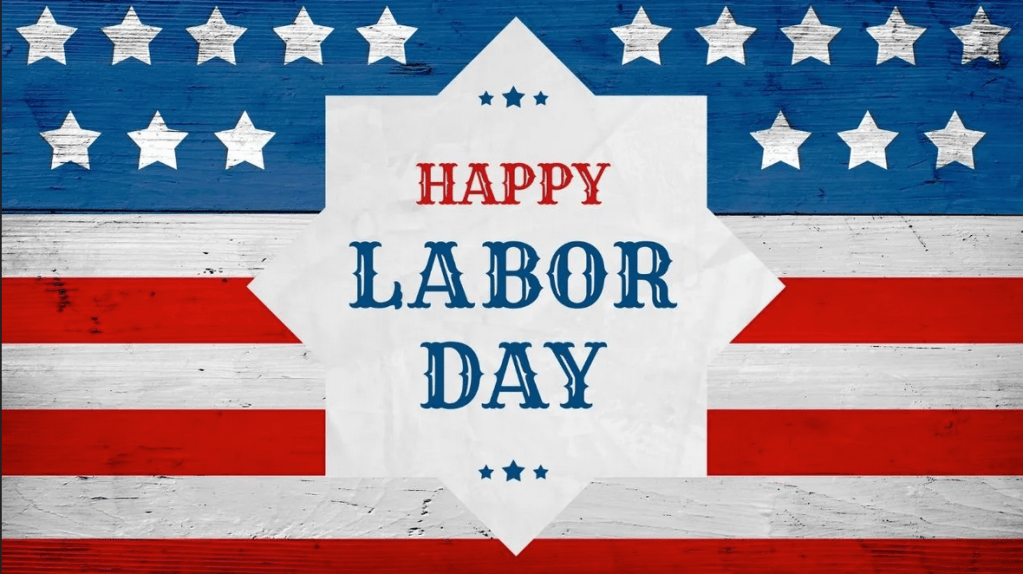
Did you know activists celebrated Labor Day twelve years before it was declared a holiday? The origin of Labor Day came about when Unions encouraged organized strikes for better wages. With the encouragement of the Labor Union, New York City held the first Labor Day parade on September 4, 1882. It was a way to celebrate all the achievements of the American workers and to fight against oppressive working conditions.
In the late 1800s, the average American worked 12-hour shifts for seven days a week. Did you know that eight-year-old children worked in factories and coalmines? They were doing their part to earn money for the family because their parents weren’t making enough to live on.
Many factories were not safe and the working conditions were terrible. The restrooms weren’t sanitary and there was not enough fresh air. Employees were worn-ragged because they did not have enough breaks during their shift. If anyone was caught resting when it was not break time, they could lose their job. The company cared more about making money than their workers.
Realizing how bad the conditions were, labor unions were created. When negotiations didn’t work, going on strike was the next step. If the hours were too long and the wages were too low, the unions stepped in and encouraged them to go on strike. Organizing a protest was not easy on the workers because it meant not being paid while on strike. It could last from three to six months. That’s a long time to be without a paycheck.
The largest strike that made a difference in history was the Pullman Strike in Chicago. It lasted from May to July of 1894. The Pullman Palace Car Company had cut the wages of their workers by twenty-five percent because of the depression. Everyone was upset and decided to meet with the president of the company to complain about the low wages and sixteen-hour workdays. In response, George Pullman fired them. That made the rest of the employees angry, so the union stepped in and encouraged them to go on strike. There were 250,000 workers who walked off the job. When another Railway Union heard about it, they joined them in the cause and refused to run any trains that were Pullman-owned cars.
President Cleveland was not happy when he found out that the strike had stopped the mail trains from delivering the mail, so he sent troops to Chicago to stop the strike. When the governor found out about it, he was upset and quickly wired the president to pull the troops out because it wasn’t necessary. But the stubborn president ignored him. Sending the troops was a terrible idea. It promoted violence. The troops weren’t there to make peace. They were there to stop the strike in any way possible.
In response, the strikers overturned railcars and erected barricades to prevent the soldiers from reaching the yards. Hundreds of railcars were damaged in the process. Sadly, thirty people were killed and dozens wounded during the strike. How devastating that must have been to the families when they were told of the death of their loved ones. All in the cause for better wages and conditions at work. When the strike finally ended, it cost the company millions of dollars in damages.
When the company reopened, Pullman agreed to rehire the workers but on one condition. They had to sign a pledge to not join a union. Even though it was considered a victory for the labor movement, it took years before they changed the hours to an eight-hour workday.
When Senator James Kyle realized that 28 states were celebrating Labor Day, he introduced a bill, asking to make it a federal holiday. It is believed the Senate accepted the request because they wanted to appease the Labor Unions. It was signed into law on June 28, 1894.
Labor Day weekend is a time to celebrate the achievements of the workers with parties, parades, and picnics. How did you celebrate Labor Day this year?
Thomas Jefferson wrote the Declaration of Independence on July 2, 1776 and it was approved on July 4. When General George Washington read the Declaration, he knew it was inspired of God and was willing to lead his men into battle to fight for their liberty.
One day when George Washington stood before the Continental Army, he realized his men were weary and discouraged. They had not eaten a decent meal for months. Knowing his men needed to be encouraged, Washington read the Declaration of Independence to his men. Not a sound was heard as the men listened to every word.
With soberness, he read, “…We hold these truths to be self-evident, that all men are created equal, that they are endowed by their Creator with certain unalienable Rights, that among these are Life, Liberty, and the pursuit of Happiness.”
That was exactly what they needed to hear. The Declaration of Independence inspired every patriot to fight for his freedom. The fire inside them grew and no one could stop the need they felt to fight against the tyranny placed upon them by the King of England.
Many of these patriots were willing to die for their freedom. Nathan Hale, a 23-year-old artist and schoolteacher, felt the conviction of his beliefs so strongly that he agreed to go on a dangerous mission for George Washington. He was caught with sketches of British gun emplacements and the penalty for being a spy was to be hanged. As he marched up the steps of the gallows, he held his head high. Turning to face the people standing before him, he declared boldly, “I regret that I have but one life to give for my country.”
The Continental Army consisted of farmers and merchants, not learned in the ways of combat. Many were barefoot and in tattered clothes. They went hungry several times but yet fought for what they believed in. The patriots knew the value of freedom and were willing to pay the price.
Seeing the sad condition of the army, Thomas Paine wrote, “These are the times that try men’s souls… Tyranny, like hell, is not easily conquered… Heaven knows how to set a proper price upon its goods; and it would be strange indeed, if so celestial an article as Freedom should not be highly rated.”
They lost many battles but the battle that made a difference was the “Crossing of the Delaware.” George Washington knew they were outnumbered, but he felt inspired by God to take his army across the Delaware in a terrible blizzard. In the early hours of the morning, the surprise attack was a never-forgotten battle of victory that shocked the Hessians, who were German mercenaries paid by the British to cut down the patriots. After a count was taken, it was discovered that not one patriot had been killed in that battle. This victory turned the war around.
The Revolutionary War began in 1775 and ended in 1783. After eight long years, the patriots beat the greatest military power in the world. Without God’s help, we would never have won the war. Have you ever thought about the tremendous price these men paid for our freedom? The next time you see our flag, remember the cost they paid. Remember that we are “one nation under God, indivisible, with Liberty and Justice for all.”
When was the first Independence Day celebration? In 1777, the following year after the Declaration of Independence was written and six years before the Revolutionary War ended, the first celebration was held. It soon became tradition to fire off a cannon, have a parade, and read the Declaration of Independence aloud. In 1870, Independence Day became an official holiday. In 1938, it became a paid federal holiday.
Check out my book of short stories. Each story is about a different holiday and has an intriguing theme with a surprise ending.
Holiday Stories
A Collection of Six Holiday Stories: When Emmeline is invited to a Valentine’s Ball, she and Charlotte wonder if they will have an opportunity to meet the Valentine Bandit? When it’s St. Patrick’s Day, what three wishes will Josie make if she finds a leprechaun? Is it common to play jokes on one another on April Fools Day? Nicholas and Lucas find out first hand and are surprised who the culprits are. On Independence Day, Angelica’s eyes are opened when she is challenged. She believes in independence for all people. When the Scottish came to America, they brought their Halloween traditions with them. Will Charlotte find her true love on Halloween? When it’s time for Christmas, Angelica learns what the gift of giving is all about. This book is full of surprises.
April Fools’ Day is a time where anyone is allowed to lie, deceive, and do pranks to one another and hopefully get away with it. In 1708, the British Apollo Magazine wrote: “Whence proceeds the custom of making April Fools?”
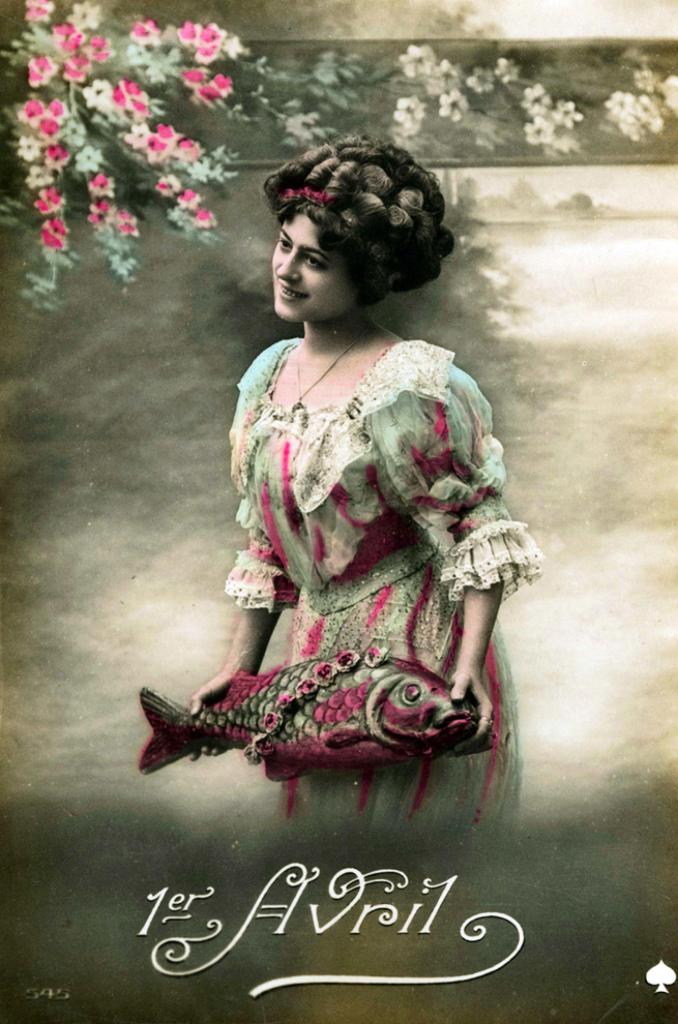
That is a very good question. Some historians say it started back in 1582, when France switched calendars. The Julian calendar said April 1 was the start of the New Year because of the spring equinox. But the Gregorian calendar chose January 1. Those who didn’t know the start of the New Year was moved to January 1 and celebrated it during the last day of March through April 1 were made fun of and called “April Fools.” Some pranks included having a paper fish placed on one’s back, referring to him as an April fish. Why an April fish? A young and easily caught fish was a gullible person.
History.com wrote: “There’s also speculation that April Fools’ Day was tied to the vernal equinox or first day of spring in the Northern Hemisphere, when Mother Nature fooled people with changing, unpredictable weather.”
In 1698, a British newspaper wrote: “Yesterday being the first of April, several persons were sent to the Tower Ditch to see the lions washed.” Now that was quite the April Fools’ joke.
In 1839, The Baltimore Sun reported an April Fools’ joke in the paper. Apparently, a husband woke his wife in the early hours of the morning and told her that the nursemaid was knocking at their door, saying their baby was very ill. When she found no one at the door, he laughed and called her an “April Fool.” The husband reported to the paper, “She put me in mind of a locomotive letting off steam. In the torrent of her passion, she poured the contents of a water bottle over me, and thus emptied the phials of her wrath.”
In 1862, the U.S. Times told about a husband who wanted to play an April Fools’ joke on his wife. When he was about to leave for work, he gave a shilling to the watchman and asked him to cry out: Fire! He did as requested and this is what the husband reported to the paper: “Sally started up in a terrible fright; and, no light being in the room, overturned everything in her way, until she reached the street nearly in a state of nudity. I was obliged to talk sweet things to appease her warmth.” It sounds like he got into trouble.
In 1905, a newspaper in Berlin said the United States Treasury was robbed and it gave specific details of the robbery. Of course, it wasn’t true. I’m sure they got a good laugh with that one.
Do you have a little joke prepared for April Fools’ Day? If so, have fun but please remember to be kind to others as you celebrate April Fools’ Day. Kindness goes a long way!
Holidays in Willow Valley is a Collection of Six Holiday Stories: What were the holidays like in 1840? How will Emmeline and Felicity celebrate Valentine’s Day? Do Sam and Josie believe in leprechauns and the pot of gold when St. Patrick’s Day comes around? Is it common to play jokes on one another on April Fools’ Day? Nicholas and Lucas find out first hand, much to their surprise. Angelica’s eyes are opened when she is challenged on Independence Day. When the Irish and Scottish came to America, they brought their Halloween traditions with them. How about Christmas? Will Willow Valley accept these traditions? Find out as you share their experiences. This book is full of surprises.
With several holidays coming up one after another, we get excited to celebrate each one. Have you ever wondered how each of our holidays came about? Who created the traditions we have today? After much research for a historical fiction called Holidays in Willow Valley, I learned some very interesting facts.
Let’s begin with February: Valentine’s Day! Have you ever wondered how long Valentine’s Day has been around? In 1375, English Poet Geoffrey Chaucer first talked about Valentine’s Day as a day of love in one of his poems. But why was it celebrated?
One legend says that Valentine was a priest in Rome. When Claudius proclaimed that single men made better soldiers and outlawed marriage for these young men, Valentine knew this was not right. So he continued performing marriages for the young soldiers in secret. When Valentine was discovered, Claudius arrested him and he was put to death. There are other stories that say Valentine was killed for helping the Christians escape the Roman prisons. According to History.com, they said, “Although the truth behind the Valentine legends is murky, the stories all emphasize his appeal as a sympathetic, heroic and—most importantly—romantic figure.”
The writing of love notes and making cards for Valentine’s Day became popular in the 1700s. In the 1820s, special stationary was sold for Valentine greetings. In the 1840s, Valentine cards were sold with embossed borders and illustrations. You could fold it, seal it with wax, and mail it to a loved one. In the wealthier society, gift giving was popular for Valentine’s Day. You always gave a gift to someone you loved or admired.
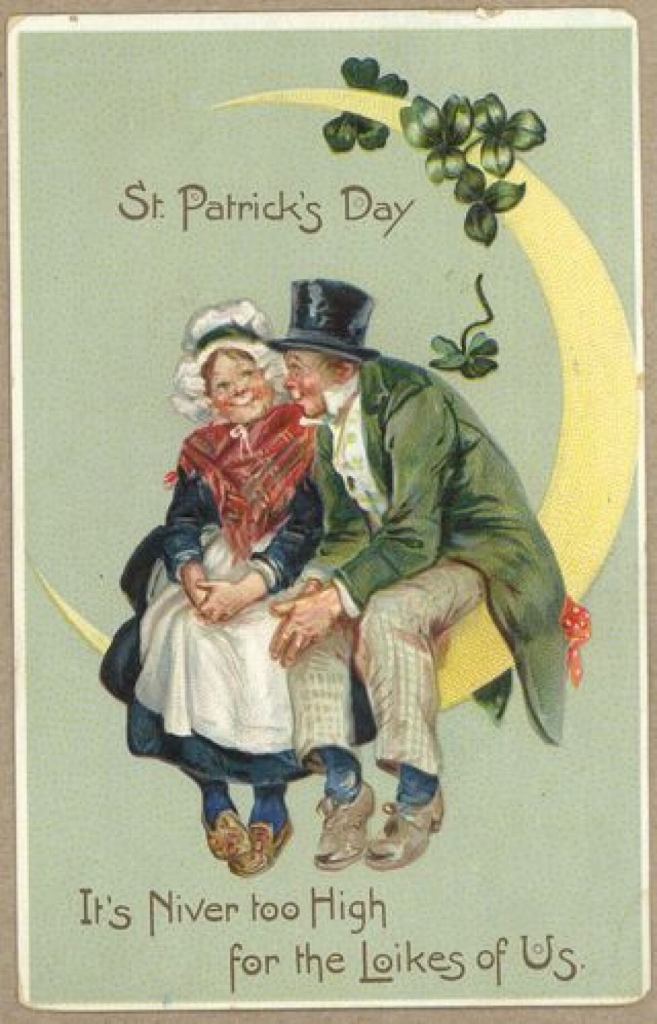
Next, we move onto March: St. Patrick’s Day! Did you know St. Patrick’s Day is a religious celebration? The man who introduced Christianity to the Irish was a Saint by the name of Patrick. While teaching them the gospel in Ireland, he compared the three-leaf clover to the Father, the Son, and the Holy Ghost. To us it’s just a clover, but to the Irish it’s referred to as a Shamrock. In honor of St. Patrick, they display a Shamrock in their homes and on their clothing.
Leprechauns are part of the celebrations, as well. As you know, a leprechaun is short and has a red beard, but he didn’t originally wear green. He wore a red jacket, vest, and hat. As time passed, his colors changed to green. It is the desire of every young girl and boy to catch a leprechaun. If you catch him, he has to grant you three wishes. Some say that if you catch a leprechaun, he has to give you three wishes. If you caught a leprechaun, what would your three wishes be?
Next is April Fools Day. It is a time where anyone is allowed to lie, deceive, and do pranks on anyone and hopefully get away with it. How long has this “foolish” day been around? In 1698, a British newspaper wrote: “Yesterday being the first of April, several persons were sent to the Tower Ditch to see the lions washed.” In 1708, the BritishApollo Magazine wrote: “Whence proceeds the custom of making April Fools?”
That is a very good question. Some historians say it started back in 1582, when France switched calendars. The Julian calendar said April 1 was the start of the New Year because of the spring equinox. But the Gregorian calendar chose January 1. Those who didn’t know the start of the New Year was moved to January 1 and celebrated it during the last day of March through April 1 were made fun of and called “April Fools.” Some pranks included having a paper fish placed on one’s back, referring to him as an April fish. Why an April fish? A young and easily caught fish was a gullible person.
History.com wrote: “There’s also speculation that April Fools’ Day was tied to the vernal equinox or first day of spring in the Northern Hemisphere, when Mother Nature fooled people with changing, unpredictable weather.”
In 1839, The Baltimore Sun reported an April Fools joke in the paper. Apparently, a husband woke his wife in the early hours of the morning and told her that the nursemaid was knocking at their door, saying their baby was very ill. When she found no one at the door, he laughed and called her an “April Fool.” The husband reported to the paper, “She put me in mind of a locomotive letting off steam. In the torrent of her passion, she poured the contents of a water bottle over me, and thus emptied the phials of her wrath.”
How about May Day? The Celts celebrated this holiday on May 1st, welcoming in a change of the season. It was celebrated with bonfires that symbolized the return of life and fertility to the earth. A popular tradition was dancing around the Maypole that was covered with ribbons. The day was full of merriment and festivities. It was a day to gather together and celebrate life.
The Maypole Dance didn’t last long in America because the Puritans discouraged everyone from celebrating the holiday. They felt it was a worldly custom. Although, Americans did continue to celebrate with baskets full of sweets and flowers, which they hung on the doors of their friends on May 1st.
How do we celebrate May Day today? Spring flowers are gifted to friends. Sometimes it’s a secret and only a note is left in the basket. In some of the schools, teachers will have the children decorate a May Pole with ribbons and flowers. Then the girls will dance around it, holding onto one of the ribbons as they wind it around the pole.
Next we have July:Independence Day. The Declaration of Independence was written on July 2, 1776 and it was approved on July 4. August 2 was the official signing of the document. The following year on 1777, the first celebration of Independence Day was held, six years before America won its freedom. The patriots knew this war meant liberty and would not give up.
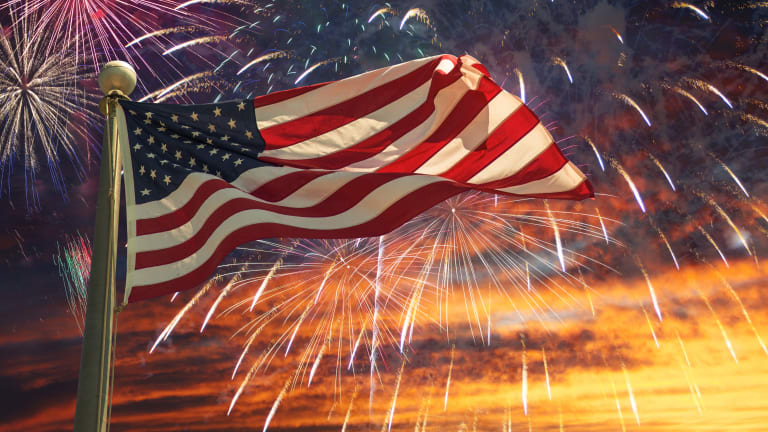
As the years passed, it was common to have fireworks, parades, concerts, bonfires, the firing of cannons, and the reading of the Declaration of Independence. The tradition of celebrating the Fourth of July became even more popular and widespread after the War of 1812, when Americans once again had to fight for their liberty against Great Britain. They did not take it for granted any longer but realized how precious freedom was.
The patriotic song, My Country, ‘Tis of Thee, was sung in public for the first time on July 4, 1831 at the Park Street Church in Boston. In 1870, Independence Day was an official unpaid holiday. In 1938, it became a paid federal holiday.
In the month of October, we celebrate Halloween. The English, Irish, Scotch and Welsh immigrants brought this tradition to America during the mid-1800s. It was called All Souls’ Day and has deep Catholic roots. It was a time to remind people of their mortality and the importance to pray for the souls of their kindred dead who were in purgatory. The celebration began in the evening of October 31st, which gave its new name All Hallows Eve – Halloween. The festivity lasted until Nov 1st. This was a time to honor the dead. It was celebrated with bonfires and everyone dressed up in costumes such as saints, angels, devils, or animals.
The community would meet together and have bonfires to ward off bad luck and evil spirits. They celebrated by telling ghost stories, playing games, and making mischief. The following day the ashes were spread over their gardens for good luck. This was also a time for finding one’s future husband and wife. If you dropped a strand of your hair into the bonfire, the identity of your spouse would be revealed in a dream. “May fate reveal by candle’s gleam your own true love on Halloween?”
It was tradition to put a candle inside a carved-out turnip. When the immigrants came to America, they found there were not many turnips, so they started using pumpkins. And so a new tradition came about! They began carving faces in pumpkins and put candles inside.
Next is November:Thanksgiving! George Washington wanted to make Thanksgiving a national holiday, but some of the congressmen were against it. Thomas Jefferson especially didn’t like the idea. Unfortunately, the idea brought a lot of discord because many felt the hardships of just a few Pilgrims did not warrant a national holiday. Thanksgiving was only celebrated intermittently until Abraham Lincoln was president. In 1863, he officially proclaimed the last Thursday in November as a National Day of Thanksgiving, saying it should be a day of “thanksgiving and praise” to God.
Did you know that James Pierpoint composed a song in 1857 especially for Thanksgiving called One Horse Open Sleigh? It was so popular that everyone started singing it for Christmas, and the name was changed to Jingle Bells in 1859.
December: Christmas! The most beloved of holidays is Christmas. Itwasn’t always celebrated in America as it is today. There was a time when it was actually outlawed. The Puritans and English separatists believed celebrating the birth of Jesus Christ was disgraceful and disrespectful because the people would get drunk, gamble, and be riotous. A 16th-century clergyman, Hugh Latimer, wrote, “Men dishonor Christ more in the twelve days of Christmas than in all the twelve months besides.”
The Puritans had a great deal of influence, so celebrating Christmas became a crime and you were fined or arrested if you were found celebrating. It was banned until the 1680s. For many years afterwards, the New England Puritans continued to boycott Christmas. In 1856, Henry Wadsworth Longfellow wrote about New England: “The old Puritan feeling prevents it from being a cheerful, hearty holiday; though every year makes it more so.”
Since Americans were free to celebrate Christmas, we celebrated the birth of Jesus Christ by having a feast. We didn’t have Santa Claus, Christmas trees, and mistletoe in America. So how did we get these traditions? Who influenced Americans to celebrate Christmas? The Dutch brought St. Nick to America and the Germans brought the Christmas tree to America, but we didn’t incorporate it into our lives until the late 1830s and 1840s.
It wasn’t until Clement Moore wrote his famous poem that Americans took notice of these traditions. Twas the Night Before Christmas introduced St. Nicholas, giving gifts, and flying reindeer… ideas we hadn’t heard of before. Gift giving caught on quickly because of his poem. It was published in 1837 under the name of A Visit from St. Nicholas. A Christmas Carol was another book that had an influence on Americans, which was written in 1843. It changed our way of celebrating Christmas.
Is this your new site? Log in to activate admin features and dismiss this message