genealogy, Writing and Arts

Tips For Writing a Biography

Part 2

Writing Your First Story

 Your Research is done. You are now going to write your first short story. How do you organize your story to make it interesting? First thing to do is divide it into four sections.

1. The Hook: Introduce your ancestor. Tell something interesting about him or her. If you’re writing your autobiography, introduce yourself. I will use my great grandmother’s biography as an example:

“Sarah Eckersley was a little over a year old when her parents left England on the ship Palmyra. They were six weeks crossing the ocean. On the trip, Sarah was taken ill and her fever was so high that she lost her hearing. When they noticed something was wrong with Sarah, her father shot off a gun and she did not respond. Sarah was deaf.”

2. Develop your Ancestor: Describe your relative’s personality. What does he or she look like? I will now continue to give an example of Sarah.

  1. Sarah’s mother taught her sign language and she soon was able to communicate with others.
  2. Sarah grew to be a beautiful young woman with black hair and blue eyes, five foot and five inches tall.    
  3. Sarah could tell when the train was coming when it was three miles away because she could feel the vibrations of the train.
  4. Sarah was a very good swimmer and would dive into the water with such poise and grace that passersby would throw coins in the creek to watch her dive after them. 
  5. She enjoyed dancing. Even though she was deaf, Sarah could feel the beat and vibrations of the music and she danced with such grace that most every gentleman wanted to dance with her.

3. Construct Events: It sets the stage for what you’re about to tell your reader, leading up to the purpose of the story. Continuing Sarah’s story, here is another example:

“Sarah had to rely on women’s intuition to raise her family. She knew when her baby was awake and needed her. Her husband never had to tell her. She sensed it. At night, she would wake up even before her baby cried. When the neighbors were visiting, they were amazed when Sarah excused herself to get her baby who had just awakened from a nap.”

4. Present the Theme of Your Story: You are now ready to narrate your story. Your character should be faced with a decision to make or a problem to solve. This is the plot of the story. In this biography, Sarah senses that someone is in her home. What is she going to do about it? She has a decision to make and a problem to solve. Sarah’s story continues.

“After returning from town, she sensed the presence of someone in the house. Acting quickly, she grabbed her broom and began searching her home. She had a feeling to check her bedroom. But when she entered the room, no one was in sight.

 “Quietly stepping to her bed, she looked under it. There she found an evil man crouched and waiting for Sarah. But he was not prepared for a strong and determined woman with a weapon in her hands.

“With all the strength she had, Sarah whacked him out from under the bed with the broom. Hitting him over the head again and again, she chased him from the house and down the street. Sarah had spirit. This man thought he could take advantage of her since she was deaf, but he did not expect such courage and fled.”

By narrating Sarah’s experience, her story comes to life. How would it have sounded with just the facts and no narration? Here is an example: Sarah sensed the presence of someone in the house. She grabbed her broom and began searching. When she looked under her bed, she found a man crouched and waiting for her. Sarah whacked him out from under the bed with her broom and chased him out of the house.

Did you feel part of the story with just the facts? Write your story in narrative style. Keep it interesting. Add description.

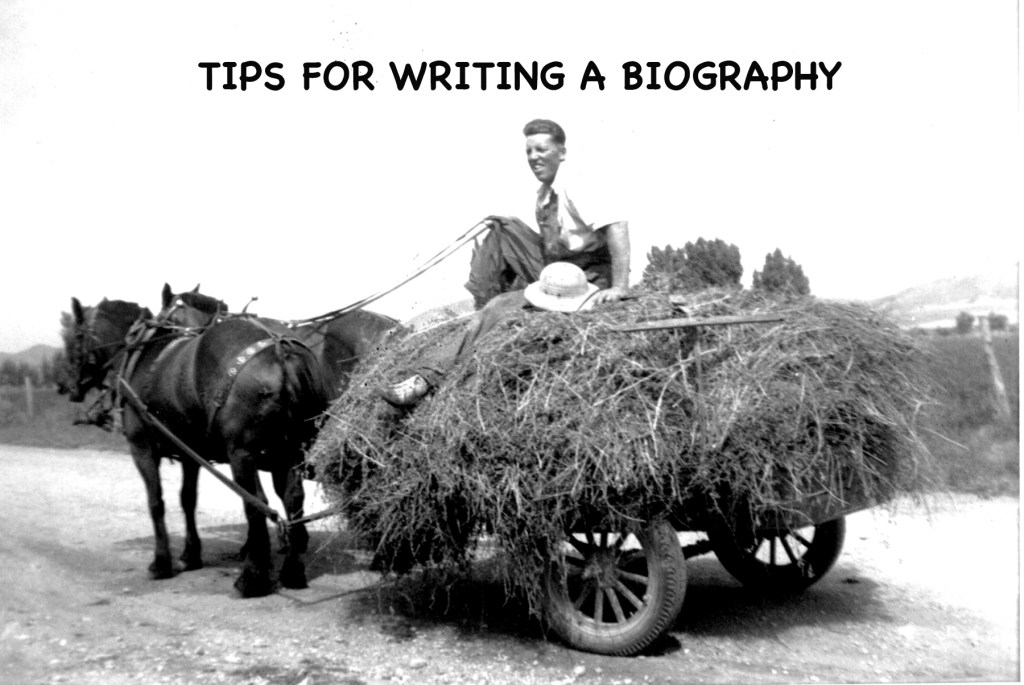
Here is another example from my father’s biography with the facts only: The skunks were always trying to get into the chicken coop. So Marcus was asked to bury the skunks his father had shot. Before burying them, he would drain their scent into a bottle. When he took the “skunk oil” to school to show his friends, he accidentally dropped it and it splattered all over the floor. It smelled so bad that the teacher excused school for the rest of the day. His friends considered him a hero because he had gotten everyone out of school.

Now… taking these facts, I narrated this story and added description. This is how my father’s story turned out.

“When Marcus was thirteen, one day he closed down the school. It wasn’t on purpose, but his friends thought he was a hero. Marcus was asked to bury the skunks that his father had shot. Before he buried these skunks, he went to his bedroom and got his glass jar. Then he drained their scent glands and screwed on the lid nice and tight.

“The following day, he took the “skunk oil” to school with him to show his classmates. Marcus was so excited as he explained what he had done. His friends were listening and a few girls were peeking over his shoulder. They had never seen “skunk oil” before. With all the excitement and attention he was receiving, he felt the bottle slip from his hands and land on the floor of the schoolroom.

“The bottle broke into a million pieces and skunk oil splattered everywhere. It landed on the pant legs of his friends, the skirts of young girls standing nearby, and on his own shoes. As the oil saturated the wooden floor, the children moaned as the room filled with the most putrid, foul, disgusting, detestable odor anyone had ever breathed in. 

“The children instantly held their noses with their fingers and turned and ran out the door, stumbling over one another as they ran. Marcus was close behind. And so was the teacher! She excused school for the rest of the day and Marcus did not get into trouble. He figured the children were so excited to get out of school that no one told on him.”

It is important to narrate your story by putting yourself in your ancestor’s shoes. Make the story interesting. Paint a picture like an artist, making the scenery and characters believable.

Next week, I’ll post Part 3: Putting Yourself in Your Ancestor’s Shoes.

genealogy, Writing and Arts

Tips For Writing a Biography

Part 1

Reasons you should write the stories of your parents, grandparents, and ancestors: Learning about your ancestors can be so much fun. As I learned more and more about my ancestors, it was the beginning of a marvelous experience.

The importance of writing your family history can never be over emphasized. Each of us has a story from our ancestors or even our very own story to tell. If these stories are unwritten, how are your children going to know their heritage or family traditions from the past? Are these stories and traditions going to be lost to your children because you failed to put them down on paper? It’s up to you to write down these experiences.

Why should you write their stories? The memory of your parents, grandparents, and great grandparents will live on if you write them down. Secondly, did you know that their lives were and are an influence on us? Who do you take after? What genetics were passed on to you? Lastly, if you don’t write their stories down, future generations won’t know about them. It’s time to get busy! Take the time to write the stories that have been passed down to you. Or you can write your own autobiography.

Whether you’re writing about a loved one or your own story, you might feel that it is overwhelming and aren’t sure how to begin. If you have an inspiring story to tell or intriguing incident to describe, perhaps writing each experience as short stories would be easier for you, rather than beginning at birth and listing everything they did or you did chronologically. Each chapter could be a short story.

In this four-part series, I will explain how to write each experience as a short story so it’s easy to understand and you won’t feel overwhelmed.

You Must Research 3 Things Before Writing Your Story

1. The area your story takes place: Find out everything you can about the area to educate your readers and make the setting feel real. Describe what the area looks like. If you can’t go there in person, do research online.

2. Your parents or grandparents: Find out what they were like, their strengths and weaknesses, their hobbies, their failures and victories. What was their occupation? Ask friends, neighbors, and family about them. Get them together with friends who like to reminisce. That works every time. It would be good to take along a recorder. If you don’t know much about them, don’t worry. You will get to know them as you write their stories.

3. The time period: What were the hairstyles or clothes styles like? During the roaring twenties, women raised their hemlines and bobbed their hair, but the new style created a lot of trouble. Some women were fired from their jobs. A New Jersey schoolteacher was told that if she grew her hair back then the school board wouldn’t fire her. In a 1925 newspaper, a preacher warned his congregation that a “bobbed woman was a disgraced woman.” Did your mother bob her hair?

What kind of games did they play? Men played games that challenged their strength such as: wrestling and stick-pull. Did your grandmother play with paper dolls? They have been around for over 200 years. You can find paper dolls online that date back to the 1800s to add to your story.

How about jump rope rhymes? A guest at one of my classes told me that she wanted to teach her grandchildren the jump rope rhymes that she grew up with but couldn’t remember them. So she searched online and found them. Don’t you think your children would get a big kick out of the rhymes you grew up with? Add them to your story. Here are two that you might remember:

Cinderella dressed in yella,
Went downstairs to kiss a fella,
Made a mistake and kissed a snake.
How many doctors did it take
1, 2, 3, . . .

I eat my peas with honey,
I’ve done it all my life.
It looks a little funny.
But it keeps them on my knife.
How many peas can I get on my knife?
1, 2, 3, . . .

Put a bit of history in your story to let your family know what it was like to live at that time period. Did you know that they rationed gas to 3 gallons per week during World War II? In my father’s letters to my mother, he said he couldn’t drive up to see her very often because of the rationing of gas and tires. They even rationed silk stockings. How did the women react to the rationing of silk stockings? My mother told me that she put leg makeup on her legs and drew a line down the back of her leg with an eyebrow pencil so it would look like the seam of a silk stocking.

In one of my classes, a woman told me that her little brother had lost his shoe. It fell in a canal and floated away. When they went to town to buy some shoes, they found that they were being rationed and had to be on a waiting list. A gentleman in one of my classes told me that his mother was on a waiting list for a washing machine because the metal was being used for the war. But that wasn’t all. Sugar, meat, and other foods were being rationed. Spam became very popular during that time period. World War II affected everyone’s lives.

When your research is done, you will be ready to write your story. Next week I’ll post Part 2: Writing Your First Story.

genealogy, Writing and Arts

Writing Your Family Legacy

The importance of writing your family history can never be over emphasized. Each of us has a story from our ancestors or even our very own story to tell. If these stories are unwritten, how are your children going to know of their ancestry, of their parentage, or even family traditions of the past? Are these stories and traditions going to be lost to your children simply because you failed to put them down on paper? It’s up to us to write these experiences.

You can turn your family history into a variety of fun stories. Remember, conflict is part of life. Don’t leave out what your grandparents endured and why. You want your children to be proud of who they are. We must share these stories with them.

First, collect your thoughts. Write down any experiences that you remember. Talk to family members and discuss memories. Use letters they wrote to one another. Do research of that time period and find out what the country was going through, and insert it in the biography of your ancestor. The turmoil of a country helps you to understand what your family went through and why they suffered. Did they live during the depression? If so, how did it affect them? What the country went through has to do with the circumstances of your ancestors. If they lived during World War II, it helps your children understand why their grandparents had such tough times, why they barely made ends meet, or why they had to flee a certain country.

Find out everything you can about the area, to both educate your readers and to make the setting feel real. If possible, go to the area you want to write about and walk around. Find out where your ancestors lived, went to school, and played. If you can’t go there, do research and find pictures of that area.

The time period is another important part of research. During the roaring twenties, bobbed hair was the rage. If your grandmother bobbed her hair and went to the dance marathons, write about it. If he or she loved reading books in the evening before retiring, it would be interesting to add what kind of light he used. Little details like this warms a story up and can bring your ancestor to life. Did he use electricity, candlelight, or an oil lantern? It sounds more interesting to say, “Grandfather sat in his overstuffed chair and read for hours with an oil lantern at his side.” Rather than just saying, “Grandfather read extensively before retiring.”

For those writing your own autobiography, don’t forget the importance of description. Remember, emotion is part of life and is an essential part of your story. Use it! If you had been faced with a bear in the wild, did your face turn pale and your hands tremble? Describe your feelings when you fell in love. I asked my mother what it was like when she first met my father, and she said, “When our eyes met, my heart leapt within me and a warm glow filled my soul.”

It’s important to write your family legacy. Your children will be grateful once they’re grown. They’ll want to know their heritage, what their ancestors stood for and what they believed. Make your family legacy something your children will remember, something they will be proud of.

genealogy, Writing and Arts

The Secret of Writing a Biography

Have you considered writing a biography of your parents, grandparents, or your own life story? Whether you’re writing a story about a loved one or your own autobiography, you want to make the story intriguing for your readers. But it seems overwhelming to you. Right?

Beginning your story can be difficult. Sometimes starting with a bit of humor can grab the attention of your reader. Here is an example from my father’s biography that I wrote.

“I can make my cat eat a pickle,” said Marcus with a grin, his bright blue eyes shining with mischief.

“Eat a pickle? I bet you can’t. Prove it,” replied his friend.

Marcus related this story to me one day, of how his cat had eaten a pickle. His statement had made the exact reaction that he had wanted. What person wouldn’t be interested in seeing a cat eat a pickle?

Now I’ve got the attention of my reader. How is Marcus going to make his cat eat a pickle? Next… how do you organize your story to make it interesting? First thing to do is divide it into four sections.


1. The hook: Introduce your character. Tell some interesting things about him and what he was like… something to grab the interest of your reader.

2. Develop your Character: Invite your reader to be part of the story, by adding description. What does he look like? What were his hobbies?

3. Construct Events: You need events that lead up to the plot of the story. It sets the stage for what you’re about to tell your reader.

4. Present the Theme of the Story: The character should be faced with a decision to make or a problem to solve. This is the plot of the story.

Remember! Write your story in narrative style rather than just adding facts. Keep it interesting. Add description. Here is an example.

Marcus was asked to bury the skunks his father had shot. Before burying them, he would drain their scent into a bottle first. When he took the skunk oil to school with him to show his friends, he accidentally dropped it and it splattered all over the floor. It smelled so bad that the teacher excused school for the rest of the day. His friends considered him a hero because he had gotten everyone out of school.

Now… taking these facts, I narrated this story and added description. This is how it turned out.

When Marcus was thirteen, one day he closed down the school. It wasn’t on purpose, but his friends thought he was a hero. Marcus was asked to bury the skunks that his father had shot. Before he buried these skunks, he went to his bedroom and got his glass jar. Then he drained their scent glands and screwed on the lid nice and tight.

The following day, he took the “skunk oil” to school with him to show his classmates. Marcus was so excited as he explained what he had done. His friends were listening and a few girls were peeking over his shoulder. They had never seen “skunk oil” before. With all the excitement and attention he was receiving, he felt the bottle slip from his hands and land on the floor of the schoolroom.

The bottle broke into a million pieces and skunk oil splattered everywhere. It landed on the pant legs of his friends, the skirts of young girls standing nearby, and on his own shoes. As the oil saturated the wooden floor, the children moaned as the room filled with the most putrid, foul, disgusting, detestable odor anyone had ever breathed in. 

The children instantly held their noses with their fingers and turned and ran out the door, stumbling over one another as they ran. Marcus was close behind. And so was the teacher! She excused school for the rest of the day and Marcus did not get into trouble. He figured the children were so excited to get out of school that no one told on him.

Did you feel as if you were a part of this story with the narrative style rather than just the facts? While editing your story, watch for repetition. Snip clarifying details. The reader is smart, so you don’t need to re-emphasize a point. Even though it’s said differently, it’s still repetitive. Lastly, don’t forget to add photos. Pictures help to bring a story to life.

genealogy, Writing and Arts

Your Family Tree

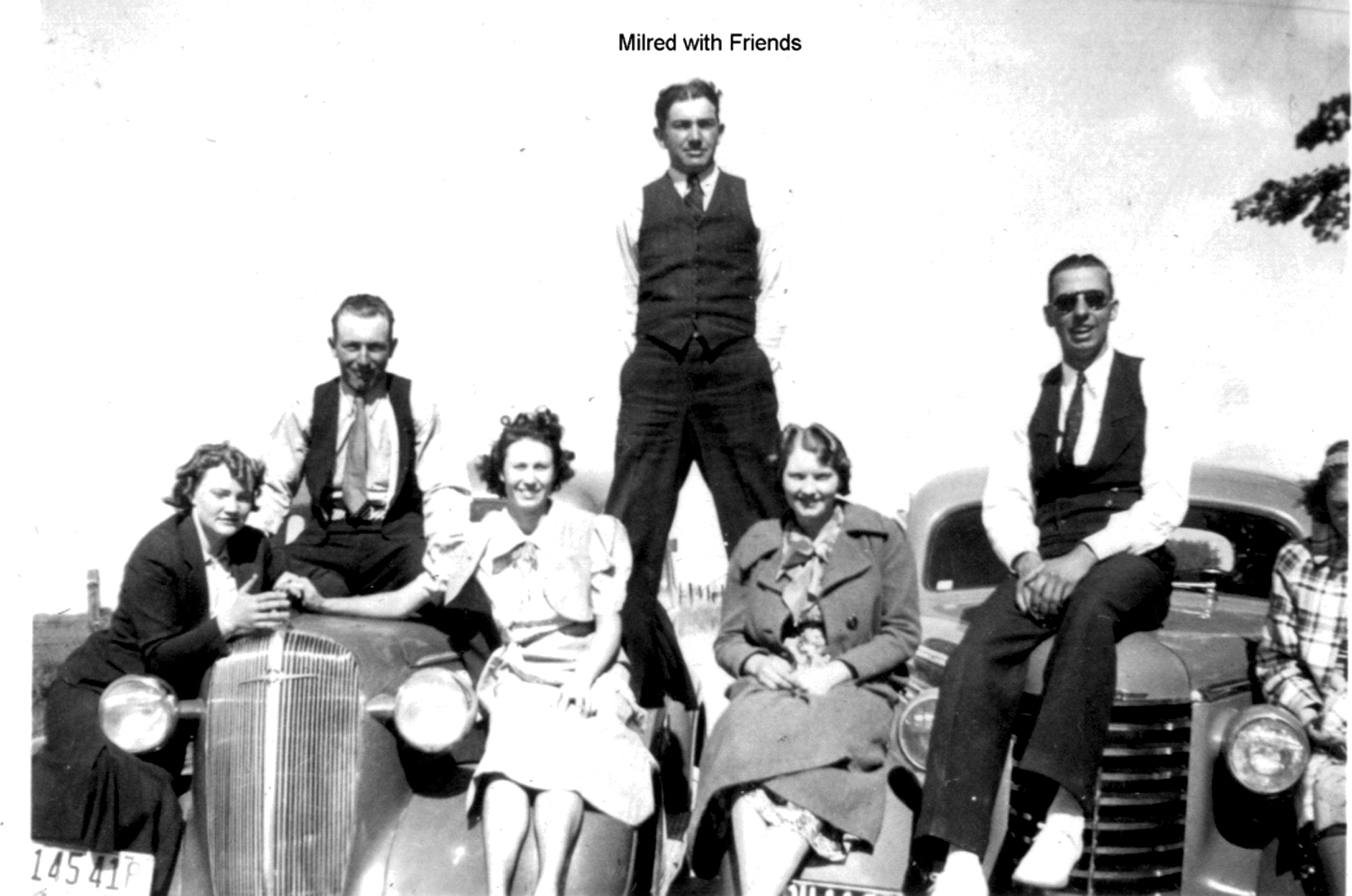
milred and dora sitting on carLearning about your ancestors can be so fun. When it comes to genealogy, you probably wonder where to begin, especially if you’re a beginner. A genealogy website that is free to the public is www.FamilySearch.org. There are no fees.
After you create a username and password, fill in the information about your parents and grandparents. Remember one thing! Only loved ones who have passed on will be visible on FamilySearch. Anyone who is still alive that you added to your family tree will not be visible to the public until that person passes on. It will only be visible to you. This is for the privacy of that person.

How do you begin? Here are the most important steps in order.

  1. Preserve Memories: Record the memories of your parents and grandparents. Talk to your relatives and find out what they can remember. Write down their trials in life, their accomplishments, and humorous experiences. Add letters they wrote to the biography. If you don’t do this, their experiences will be forgotten. Your children need to know their heritage. When you’re done, go to that person’s page and post the biography you wrote in the section labeled: Memories. You can also have it published in paperback to give to your family.
  2. Collect Photos: Scan all your family photos at a high resolution such as 300dpi. Then upload them to FamilySearch in the section labeled: Memories. When you upload them, make sure to label them, telling about who is in the photo and the date or their age. Get your children involved and have them help you with this project. The FamilySearch Center allows you to scan your photos free. There’s no charge.
  3. Collect Documents: These should be birth certificates, marriage certificates, and death certificates. You can add certificates that they earned during their lifetime such as graduation, competitions they were involved in, sports, plays they were in, etc. When you’re ready, upload them to that person’s page under “documents” in Memories.
  4. Record your family for two to four generations and all their children.

There are also free online classes at FamilySearch in the link below that can help you in your research. To see what classes are taught each day online, click on the “Class Schedule.” Classes are taught daily at 10:00 a.m., 1:00 p.m., 5:00 p.m. and 7:00 p.m.

Go to Family Search Online Classes: https://www.familysearch.org/wiki/en/St_George_Utah_FamilySearch_Center

Milred and 2 carsA

genealogy, Writing and Arts

Genealogy for Beginners

Would you like to learn about your ancestors? There is a genealogy website that is free to the public where you can learn about your heritage. It’s absolutely free. No fees at all. How do you get started?

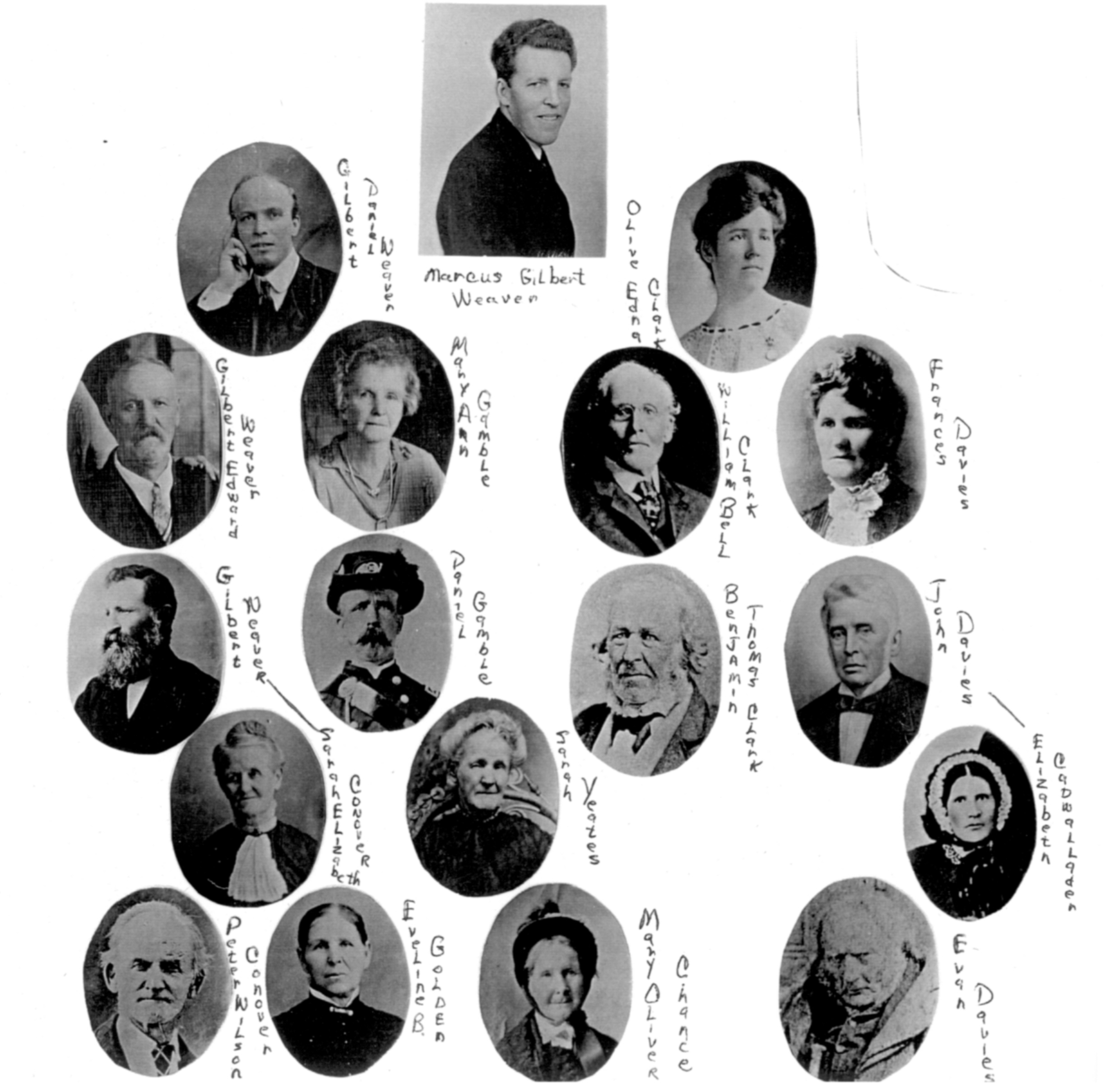
Marcus Weaver Family 01

Go to www.familysearch.org.

  1. Create a username and password and any other information about yourself.
  2. Fill in the information about your parents and grandparents next. Record your family back two to four generations and record all their children.
  3. You can upload photos, documents, stories, and audios to the pages of your parents and ancestors in the section labeled “Memories.” Preserve original photographs by scanning them and uploading them to Memories. This should be your number one priority. If you don’t record these memories, they will be lost.

Remember one thing. Due to the privacy policy, only information about deceased people will show. So if you upload a bunch of photos and stories on your own page about yourself, it won’t be visible to others until you pass on. This is the same for any of your living relatives.

Don’t get overwhelmed with too many projects! As you gradually become confident, you can set more goals such as researching your family’s history. Work on “Memories” first and make that your number one priority.

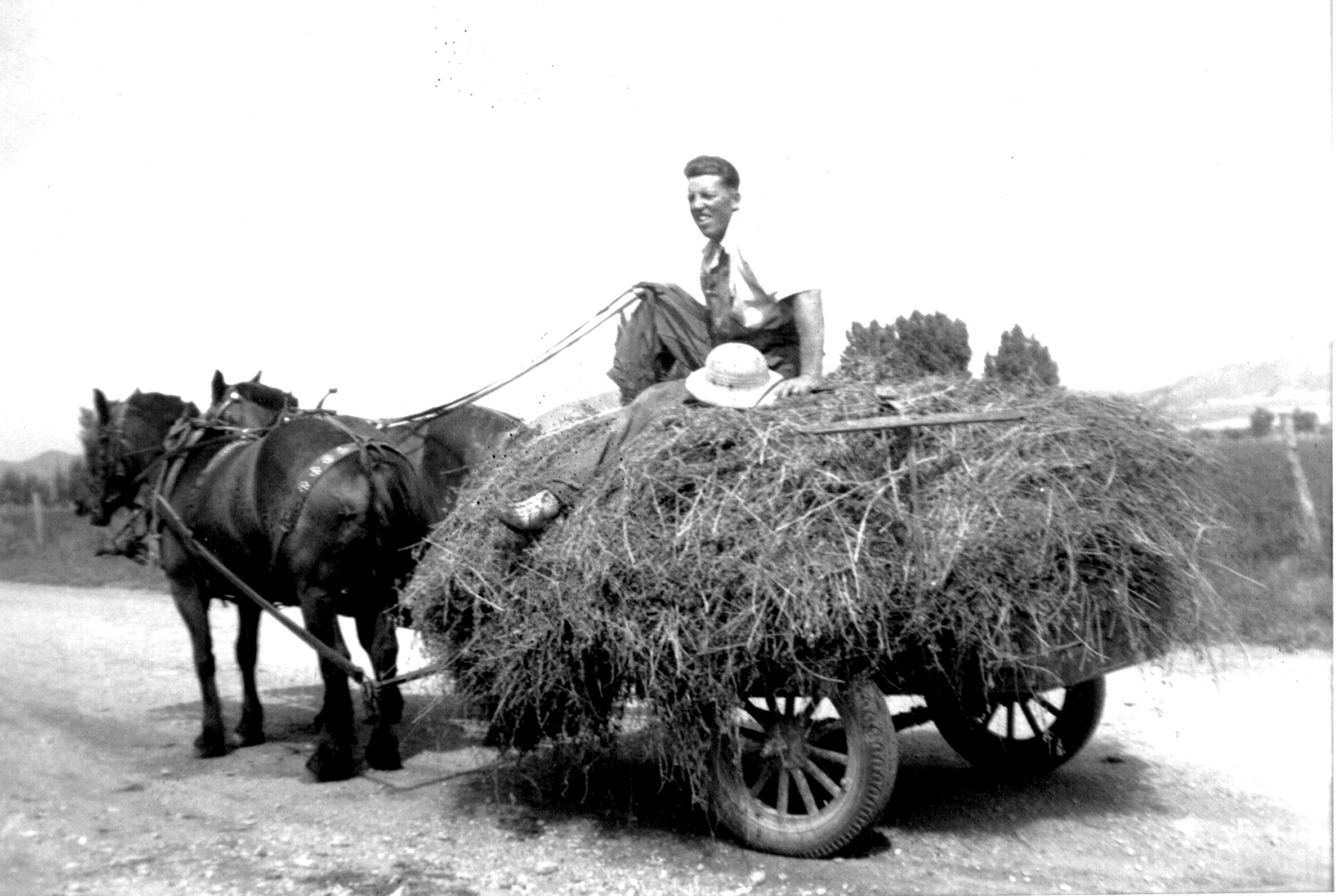
Marcus and haywagonA

What is Genealogy?

“Genealogy is the study of a family’s origins and history and is often referred to as a family history.  The first known use was in the 14th century to display a pedigree of royal, aristocratic, or clerical blood lines as a means of gaining and commanding respect.   Some family trees, like that of Confucius, have been found to list 80 generations dating back 2,500 years.

“Initially passed down by word of mouth the family genealogy was later depicted in the form of stylish paintings and documents.   It has currently gained international interest as access to more and more on-line records has resulted in significant advances in its documentation and display capabilities.   As it was in the times of an ancient king’s genealogy which showed his relationship to the gods, today’s family histories continue to be a form of storytelling to preserve the past for future generations.   In today’s climate, the more accurately one can document the past the more likely it will survive through the ages.  Today’s genealogy can take the form of simply collecting and preserving family information, all the way up to adding information to the world tree.” –FamilySearch

There are free online classes at FamilySearch:

https://www.familysearch.org/wiki/en/St_George_Utah_FamilySearch_Center

To see what classes are taught each day online, click on the “Class Schedule.” Classes are taught daily at 10:00 a.m., 1:00 p.m., 5:00 p.m. and 7:00 p.m.

Below the Class Schedule is “Join Class.” When you click on that link during a class, you can listen and join in the conversation because it will be live. The teacher can answer any questions you have. The two classes I teach each month are: Writing Your Biography and Publishing Your Biography.