Blog Posts

genealogy

Why Is It Important To Remember Our Pioneer Heritage?

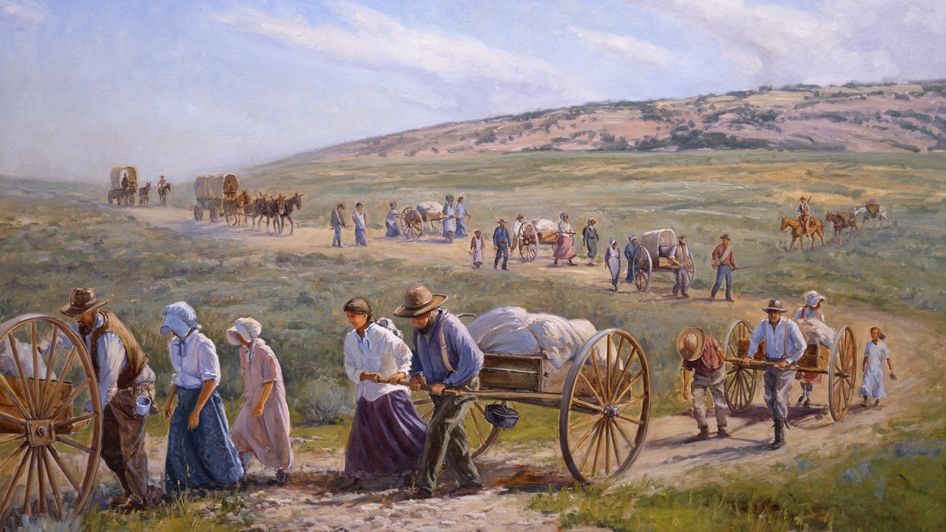
Do you celebrate Pioneer Day or Pioneer History Day in your state? If so, do you know the circumstances of why your ancestors settled in that territory? Was the reason so important to those pioneers that it made a big difference in their lives? My pioneer ancestors trekked across the plains of the United States for a very important reason and it did make a difference.

On the twenty-fourth of July, we celebrate with fireworks, parades, picnics, and concerts. Why is this date so important in Utah? Because this is the day the pioneers arrived in Utah Territory to escape persecution. The members of the Church of Jesus Christ of Latter-day Saints were considered refugees because they were kicked out of their homes in Nauvoo, Illinois just because of their religious beliefs. Mobs got together and burned their homes to the ground and persecuted them. Anyone who resisted were beaten or murdered. So why were they persecuted?

These Christian “Saints,” as they were called, disapproved of slavery and were allowing free blacks to join the Church. The “slave owners” from Missouri and Illinois were upset. Slavery was legal and they were afraid of an uprising or rebellion. They saw the “Saints” and their opinions as a threat to their community and way of life. But how could they stop them? They needed to get rid of Joseph Smith, the founder of the church.

When Joseph Smith decided to run for president of the United States, his enemies were outraged. They needed to stop him. On June 27, 1844, Joseph Smith was martyred at Carthage, Illinois by an armed mob of about 100 men. The murder of Joseph Smith was not spontaneous. It was a deliberate “political assassination” condoned by the citizens of Hancock County in Illinois.

Anyone who got to know Joseph Smith said he was a gentle man. Joseph taught Christian values. He loved our Savior Jesus Christ and had a spiritual nature. He believed in women’s rights, encouraged women to have a say in politics, and was strongly against slavery. Joseph believed in equality and treated everyone with respect, both “black and white, bond and free, male and female… and all are alike unto God.” This was his belief and his followers considered him a prophet of God.

With Joseph Smith out of the way, the persecution grew in Nauvoo, Illinois. Mobs from Missouri and Illinois became more forceful and violent as time went on. That was when the new President of the Church announced that they would be moving out West to the Rocky Mountains.

My great, great grandmother did not expect to be the mob’s next victim. Martha Raymer Weaver stood in the doorway of her home, staring at the mob that surrounded her. They were going to force her out of her home. 

The leader was described as a large burly man. Standing before her, he demanded, “Denounce your religion and deny that Joseph Smith is a Prophet of God! If you do, we will not burn down your home.”

Martha had every reason to fear for her life but her strength and faith in Jesus Christ was strong. How could she deny what she believed to be true? She would not deny it. 

Martha faced this wicked man and his mob with dignity. Stomping her foot with defiance, she said, “You may burn it and be damned.” 

Martha’s spunk surprised the mob because she was standing up to them. When the leader realized he could not intimidate her, he said, “I’ll give you twenty minutes to get out.”

Edward Weaver, her husband, had passed away from pneumonia the year before so it was up to her and her seven children to gather their most important items together. She only had one ox and a cow, so the boys yoked them to the wagon. As they drove away, the mob threw a torch to the roof and burned the house to the ground. 

Martha was a brave and courageous woman who stood up for what she believed to be true. So that is why Pioneer Day is so important to the residents of Utah. It is a celebration of freedom where the pioneers could worship God as they pleased. The twenty-fourth of July is a day of celebration.

How about you? Why did your pioneer ancestors move out west and settle down? It is important to learn about your ancestors. We should teach our children to be proud of their heritage.


Patriotism

The Battle for Freedom

Why do Americans value their freedom and hold it close to their hearts? Why do some get tears in their eyes when they sing “America the Beautiful” or pledge alliance to the flag? Why is freedom of choice important to Americans?

The patriots and many of our ancestors desired to live in a free land, not ruled by a monarchy. They fought with every fiber of strength they had, both bond and free, for the freedom they desired. The Continental Army consisted of farmers and merchants, men who were not learned in the way of combat. These men knew the value of freedom and were willing to pay the price.

They lost many battles but won the battles that made a difference. The battle that turned the war around for the Americans was the Crossing of the Delaware in 1776. George Washington knew the Continental Army was outnumbered, but he had knelt in prayer and asked for God’s help. That was when it came to him. He would take his army across the Delaware in the middle of the night, hoping the enemy would be sleeping from all the Christmas festivities.

In the early hours of the morning of December 26, 1776, the surprise attack shocked the Hessians, who were German mercenaries, paid by the British to cut down the patriots and end this battle. That day was a never-forgotten battle of victory for the American patriots. The amazing thing about this battle was that not one patriot had been killed. This victory turned the war around.

The British were stunned at what had happened. They considered the patriots as untrained rebels. They figured the war would not last long because they were merely fighting uneducated rogues.

During the war, many of the victories came from the South. Colonial Francis Marion knew how to deal with the enemy in his own homeland. He was known as the Swamp Fox. He had trained his men to disappear into the thick forest and swamps of South Carolina without a sound. Hidden from sight, they would strike and then quickly move through the woods like silent shadows, fading into the forest without a sound. Francis Marion and his men tormented the British army with one ambush after another. This frustrated the British officers who were helpless in the woods and swamps of the South.

While Francis Marion kept the British flustered, the last major battle that made a difference was the Battle at Yorktown, Virginia in 1781. Knowing that General Clinton was stationed in New York and General Cornwallis was in Virginia, General Washington came up with a plan. According to the Army Heritage Center Foundation, “He would fool Clinton into thinking the Continentals were planning to attack New York while instead sneaking away to the south to attack Cornwallis. Washington ordered the construction of large camps with huge brick bread ovens where Clinton could see them to create the illusion that the Continental Army was preparing for a long stay. Washington also prepared false papers discussing attack plans on Clinton, and let these papers fall into British hands.”

In mid-September of 1781, Washington and his men arrived in Virginia, 13 miles from Yorktown, where General Cornwallis and his men had built ten small forts and waited for reinforcements from General Clinton.  Fortunately, “Cornwallis received the unfortunate news that Clinton’s departure from New York had been delayed.”

In the meantime, Washington quickly moved his army south with his French allies to keep Cornwallis in place. At the same time, French naval forces guarded the entrance to Chesapeake Bay, which stopped reinforcements from helping Cornwallis.

It was a genius plan and worked out perfectly. It was Washington who fired the first cannon beginning the “Siege of Yorktown.”  After the capture of various British entrenchments, Cornwallis realized he was trapped and formally surrendered on October 19, 1781. He sent a drummer boy, followed by an officer who was waving a white handkerchief. This was the battle that ended the war. The patriots beat the greatest military power in the world.

Have we ever thought about the tremendous price these men paid for our freedom? The next time you look at an American flag waving in the distance, remember the cost of our freedom. We are “one nation under God, indivisible, with Liberty and Justice for all.” Samuel F. Smith wrote, “Long may our land be bright with freedom’s holy light. Protect us by thy might, Great God, our King!” Without God’s help, we would never have won the war.

Writing and Arts

An Unusual Mystery Series

This mystery series is unlike any other mystery. Most mysteries are about murder and “who-done-it,” but this series specializes in missing persons. Why has “So-and-So” gone missing? Why has he or she disappeared without a clue? This series of mysteries are called Cozies.

What is a cozy mystery? A Cozy is a slow paced mystery with a bit of humor but not boring by any means. This genre is supposed to be G-rated. In a cozy, the sleuth is an intelligent woman who investigates and discovers the hints left behind to solve. You find out about her life and you get to know her personally as she solves each mystery in the series. In other words, you become part of her world. (Cozy mysteries are usually a series of sleuths.)

In this mystery series, Amelia Moore is the founder of the Moore Detective Agency and specializes in missing persons. In search of a missing person, she has gone to some very interesting places, which has put her in some dangerous situations. But she always solves the case. With the help of Rick Bonito, her business is flourishing. Each of these stories has enough twists to stump the reader. It has a nice blend of mystery, humor, and clean romance. Watch Amelia and Rick as they investigate each case in the Amelia Moore Detective Series and discover how true love can bring joy into their lives.

If you have longed to visit an exotic island, The Bali Mystery will take you there. When Mrs. Brody hires Amelia to find her missing brother, she and Rick find themselves in Bali, Indonesia. They are mystified why her brother quit his job, put his home up for sale, and ran off to this mysterious and exotic island without telling a soul.

“This is a cozy mystery, but there is also suspense, danger and, of course, romance. Throw in two mysterious men in black – complete with black suits and sunglasses and you have all the makings of an exciting novel.” –Library of Clean Reads

Ireland is the next place you can visit with Amelia and Rick. When Amelia is hired to search for her client’s grandparents in The Shamrock Case, the case takes them to Ireland. Kate must learn about her heritage. Who are her grandparents and could they still be alive after all these years? Why did her parents leave Ireland suddenly and move to America without telling a soul? Is there more to this case than meets the eye?

“Amelia and Rick have the makings of being a lasting couple that readers will adore and root for. The Shamrock Case moves along quickly. The author paints a vivid picture of the beauty of Ireland. I could easily see the greenery and magnificence of the country. Clarke knows both her characters and locations well and it shines through each word she writes.” –Socrates Book Review

The last place Amelia was thinking about visiting was Mexico. In The Missing Heir, Dell Murphy has passed on and left a fortune to his nephew. He wants his nephew to continue his work at the orphanage in Mexico, but there is one problem. Neal Woods is missing! If Amelia and Rick can’t find him soon, the fortune will be turned over to Dell’s brother and sister who intend to close down “Uncle Dell’s Orphanage.” If that happens, where will the children go?

“It’s refreshing to me to discover a “cozy mystery,” with two likeable, romantic characters who enjoy each other and are able to solve a mystery together. It is a book I am happy to be able to recommend and share with teens as well as adults of all ages!” –Author Sherril S. Cannon

The agency gets to stay in the United States for their next case. In The Mysterious Doll, Pauline Jones is confused why her boyfriend took off without telling a soul where he was going. But that isn’t all. Sam Whitaker is accused of stealing a valuable porcelain doll from the museum. His disappearance makes him look guilty, but Pauline is convinced he is innocent. When Amelia finds Sam, she realizes they need to prove his innocence. Where is the antique doll and who has taken it?

“I’ve read all of this author’s mysteries and this one is my favorite! They’re all good, but they just keep getting better and better. I think part of it is getting to know the characters more with each book and watching the way Amelia and her partner, Rick, work together. The mystery element was great! It moved along at a good pace and just when I thought I had it figured out at the end, a few twists were thrown in and I was at a loss once again.” –Katie Watkins, Katies Clean Book Collection

The next book in this series is a “second-chance” love story. In Her Lost Love, Julie Anderson feels a need to find the man she fell deeply in love with during her youth. When Julie went off to college to become a lawyer, she lost contact with her high school sweetheart. She now wants to know what became of Joey and why he stopped writing to her? This is an assignment that intrigues Amelia. The thought of finding a long-lost love seems quite romantic.

“I love long-lost love stories. So this one grabbed my interest right from the beginning. What I enjoy about this series is that there’s always more to each case than they originally think. This case was no different. I love how their personal relationship is progressing and am excited to see what happens next. Rick is so irresistible and romantic and he steps up big time in this book. I’m definitely looking forward to reading more!” –Melanie Valderrama, Mel’s Shelves

If you have never heard of Marfan’s Syndrome, you will learn about it in Mystery on the Bayou. A woman who is concerned about the son she gave up for adoption sixteen years ago approaches Amelia. Millie has been having nightmares that make her fear he is in danger. She petitioned the court to view the sealed records but was refused. Will Amelia and Rick be able to convince the courts to help them? If her son is in danger, will they get there in time?

“Dedicated to all of those who have had to deal with Marfan’s Syndrome, the story centers on a search for an adopted child who is potentially suffering from this rare genetic disorder which can result in optical and cardiovascular problems and may be life-threatening. The story takes us into the Louisiana bayous, introduces us to Cajun food including crayfish, describes alligator life in the deep south, and even teaches us some interesting self-defense maneuvers for women!” –Author Sherrill Cannon

For The Lighthouse Secret, the last book in this series, Rick Bonito’s uncle supposedly drowned five years ago and his body was never found, but something did not seem right about the report. Uncle Antonio was an excellent swimmer. His disappearance seems quite suspicious to Rick’s father. He never felt the complete truth had come out about his brother. It is now up to Amelia and Rick to find out the truth about his uncle. In this story, you will learn about lighthouses and the deep meaning they have in life.

“In the Amelia Moore Detective Series, the author delivers a delightful, fairly fast-paced tale in the pursuit of a missing person, for that’s what Amelia’s agency specializes in. This time it is personal, as Rick’s Uncle Antonio Bonito dies in suspicious circumstances. But what do lighthouses have to do with his disappearance? The reader gets a brief education into lighthouses, their importance in the past and the interesting uses they have today.” –Sandra Olshaski, Library of Clean Reads

Library of Clean Reads wrote: “This is a fast-paced, creative mystery.” Each novel in this mystery series has enough twists and turns to keep the reader guessing.

To read a sample about each book on Amazon, check this website under mysteries and click on the link.

Holiday Celebrations

Juneteenth is a Time to Celebrate

“We hold these truths to be self-evident, that all men are created equal, that they are endowed by their Creator with certain unalienable Rights, that among these are Life, Liberty and the pursuit of Happiness.” ~Declaration of Independence

President Abraham Lincoln believed these words and wanted freedom for everyone. He wanted equality. When he signed the Emancipation Proclamation in September of 1862, proclaiming that slavery was to be abolished, it went into effect on January 1, 1863.

This proclamation freed all people who were under involuntary servitude in the Confederate States. After General Robert E. Lee surrendered in Virginia on April 9, 1865, it was found that slavery still remained in Texas. In June of 1865, General Gordon Granger and some federal troops went to Galveston, Texas to enforce the law. At that time, there were around 250,000 slaves in Texas.

In December of 1865, the 13th Amendment was added to the United States Constitution, which abolished slavery in the United States. But President Abraham Lincoln never got to see the final ratification of the amendment because he was assassinated on April 14, 1865.

The following year on June 19th, the citizens of Texas organized the first celebration and called it “Jubilee Day” because that was the day the federal troops arrived in Texas to free all enslaved people. This holiday became popular throughout Texas and was soon called Juneteenth. In 1979, Texas made Juneteenth an official holiday. It was a day of celebrations, which included church services where they thanked God for the blessing of freedom. It was a day of rejoicing. In 2021, it finally became a federal holiday.

As we celebrate Juneteenth, we need to realize that we are all brothers and sisters with the same Father in Heaven, no matter the difference of race, religion, or culture. We are all God’s children and we are equal in His eyes.

Reverend Amos C. Brown and President Russell M. Nelson, two spiritual leaders from two different faiths, embrace one another.

Jesus taught, “This is my commandment, that ye love one another, as I have loved you.” (John 15:12)

genealogy, Writing and Arts

WRITING A BIOGRAPHY IN SHORT STORY FORM

When writing a biography, writing in short story form can be easier than you think. Each chapter can be a short story of an amusing experience or a mischievous one. Here are some tips for creating each story. First thing to do is divide it into four sections.

1. The Hook: Introduce your ancestor in chapter 1. Tell something interesting about your ancestor that will grab the interest of your reader. If you’re writing your own autobiography, introduce yourself. I will use my great grandmother Sarah’s biography as an example:

“Sarah Eckersley was a little over a year old when her parents left England on the ship Palmyra. They were six weeks crossing the ocean. On the trip, Sarah was taken ill and her fever was so high that she lost her hearing. When they noticed something was wrong with Sarah, her father shot off a gun and she did not respond. Sarah was deaf.”

This introduction grabs your attention right off because you find out in the first paragraph that she is deaf and you found out why.

2. Develop your Ancestor: Describe your ancestor’s personality. What does he or she look like? List some interesting things about your ancestor. Here are some examples.

  1. Sarah’s mother taught her sign language and she soon was able to communicate with others.
  2. Sarah grew to be a beautiful young woman with black hair and blue eyes, and she was five foot and five inches tall.    
  3. Sarah could tell when the train was coming when it was three miles away because she could feel the vibrations of the train.
  4. Sarah was a very good swimmer and would dive into the water with such poise and grace that passersby would throw coins in the creek to watch her dive after them. 
  5. She enjoyed dancing. Even though she was deaf, Sarah could feel the beat and vibrations of the music and she danced with such grace that most every gentleman wanted to dance with her.

All of these traits tell you what kind of person Sarah was. It grabs the interest of the reader. That is why it is so important to tell what kind of person she was.

3. Construct Events: It sets the stage for what you’re about to tell your reader, leading up to the purpose or plot of the story. Here is an example:

“Sarah had to rely on women’s intuition to raise her family. She knew when her baby was awake and needed her. Her husband never had to tell her. She sensed it. At night, she would wake up even before her baby cried. When the neighbors were visiting, they were amazed when Sarah excused herself to get her baby who had just awakened from a nap.”

At this point, your reader finds out that Sarah listens to inspiration. This is one of her traits and has become part of her because she is deaf.

4. Present the Theme of Your Story: You are now ready to narrate your story. Your character should be faced with a decision to make or a problem to solve. Sarah senses that someone is in her home. What is she going to do about it? She has a “problem to solve.” This is the plot of the story.

After returning to her home one day, Sarah sensed the presence of someone in the house. Acting quickly, she grabbed her broom and began searching. She had a feeling to check her bedroom, but when she entered the room no one was in sight. She carefully stepped to her bed, lifted the ruffle, and looked under. There she found a man crouched and waiting for Sarah, but he was not prepared for a strong and determined woman with a weapon in her hands.

With all the strength she had, Sarah whacked him out from under the bed with her broom. She then pummeled him over the head again and again. Realizing what he was up against, he ran from the house. Chasing after him, she continued beating him as he ran down the street. Sarah had spirit and no doubt this wicked man thought he could take advantage of her, but he found out differently. He did not expect such courage and fled.

By narrating Sarah’s experience, her story comes to life. How would it have sounded with just the facts and no narration?

Here is an example of just the facts: Sarah sensed the presence of someone in the house. She grabbed her broom and began searching. When she looked under her bed, she found a man crouched and waiting for her. Sarah whacked him out from under the bed with her broom and chased him out of the house.

Did you feel part of the story with just the facts? Remember to write your story in narrative style. Add description. Keep it interesting. It is important to narrate your story by putting yourself in your ancestor’s shoes. Make the story come alive. Paint a picture like an artist, making the scenery and characters believable.

Now it’s your turn! Try it. You don’t have to be an author to write a story. Write it in your own words, the way you would talk to a friend when describing an experience you had. Use adjectives to describe your actions and how you felt. That brings the story to life.

genealogy, Writing and Arts

PRESERVING YOUR HERITAGE

Learning about your ancestors can be so much fun. As I learned about mine, it was the beginning of a marvelous journey. Each of us has a story from our ancestors or even our very own story to tell. If these stories are unwritten, how are your children going to know their heritage or family traditions from the past?

It is important to think about our ancestors and how they influenced our lives. We should be proud of them. We are the people we are because of our ancestors.

Thomas S. Monson said, “I admonish all families: search out your heritage. It is important to know those who came before us. We discover something about ourselves when we learn about our ancestors.”

This is true. It’s interesting to learn what traits we inherited from our ancestors. Why do you have an olive complexion? Why are you so tall? Where does your red hair come from? Are you as stubborn as your grandfather? Are you musically inclined? It can be fun to learn about your heritage and all the characteristics you have inherited from them.

James E. Faust said, “Begin to unlock the knowledge of who you really are by learning more about your forebearers… In many ways each of us is the sum total of what our ancestors were. The virtues they had may be our virtues, their strengths our strengths, and in a way their challenges could be our challenges. Some of their traits may be our traits.”

I asked myself. Do I have some traits of my great grandparents? In some way, would my challenges be similar to my ancestor’s challenges? Could his or her strengths be my strengths?

When I found out how courageous my great grandmother was, I became intrigued and wanted to learn more about Frances Davies. I wondered if I could be as brave as she was.

One day a band of thieves came to her home and started gathering her grapes into bags. The grapes were bearing for the first year and it broke her heart because Frances wanted to make grape jelly. She could not allow them to steal her grapes.

As she searched her home for a weapon to defend herself, an inspiration came to her. She quickly donned her husband’s military suit, cap, and long cape. If she looked like a man, she could scare them off. 

Grasping the sword, she bravely marched out of the house onto the porch and into full view of the thieves, brandishing the gleaming weapon in a threatening manner.

“Leave or perish,” she demanded in a loud voice.

Terrified by her appearance, the thieves dropped their sacks of grapes and fled. After they disappeared, she gathered up the grapes and made grape jelly.

One day a neighbor frantically rushed to Frances’ home, begging her to help her husband who had been gored by a bull. His abdomen had been torn open. There were no telephones and only two doctors in town. Not only were they too far away, but there was no one to go for them.

Frances, with courage and a prayer, followed her neighbor home. When she saw the terrible condition he was in, she went to work washing away the blood and gently pushing the intestines back into place the best she could. Then she sewed up his abdomen with a violin gut string that she had soaked in hot water and placed cloths over the wound that were saturated with a liniment she had made herself. It was made of arnica burrs steeped in alcohol.

Each day she washed the wound with carbolic water and applied fresh boiled cloths and liniment. Frances wanted the farmer to have a doctor look him over, but he said he was doing fine and never called one. He lived for more than twenty years.

I asked myself: could my ancestors’ strengths be my strengths? Could their challenges be my challenges? Would I ever have to be as brave as she was?

Gerrit W. Gong said, “Connecting with our ancestors can change our lives in surprising ways. From their trials and accomplishments, we gain faith and strength. From their love and sacrifices, we learn to forgive and move forward.”

Could he be right? Will their sacrifices teach us to forgive those who have hurt us? Will their trials and accomplishments help us to gain faith because of their example? Will their trials and sacrifices strengthen us? I would like to tell you a story about a courageous woman who did not back down and stood up for what she believed.

While living in Illinois in 1844, a mob pounded on the door of Martha’s home. Standing before her, the leader demanded that if she denounced her religion then they would not burn down her home.

Martha had every reason to fear for her life but her strength and faith in Jesus Christ was strong. How could she deny her faith? She would not deny it. Martha faced this large burly man and his mob with dignity. With spunk, she told him that he could burn it to the ground because she would not deny what she believed to be true.

When the leader realized he could not intimidate her, he said, “I’ll give you twenty minutes to pack up and get out.”

With the help of her seven children, Martha gathered all she could into the back of a buckboard. She only had one ox and a cow, so the boys yoked them to the wagon. As they drove away, the mob threw a torch to the roof and burned the house to the ground.

Would I ever have the strength to do what she did? Would I be too afraid to even speak? Would I stand up for my rights as she did? This courageous woman, Martha Raymer Weaver, was my great, great, great grandmother. Her son Gilbert wrote his autobiography and told about this incident.

Did your ancestors struggle at times and have trials to bear? If so, did it make them stronger? Has it made you stronger?

Dennis Neuenschwander said, “A life that is not documented is a life that, within a generation or two, will largely be lost to memory. What a tragedy this can be in the history of a family. Knowledge of our ancestors shapes us and instills within us values that give direction and meaning to our lives.”

Think about who you are. Were your ancestors musically inclined and was that handed down to you? How about mannerisms and the way we express ourselves? Or the way we walk or even talk? These are questions you may have about your heritage.

Russell M. Nelson said, “We have a natural yearning to connect with our ancestors. This desire dwells in our hearts, regardless of age… When our hearts turn to our ancestors, something changes inside us. We feel part of something greater than ourselves.”

I believe this to be true. Something changed inside me. I learned to feel part of something greater than myself. I’ll tell you how this happened. My grandmother died when I was 15 years old. I didn’t know her very well and didn’t know much about her life. One day I sat down and read her autobiography. At that moment, my grandmother’s experiences drew me closer to her and I’m excited to meet her some day in the hereafter.

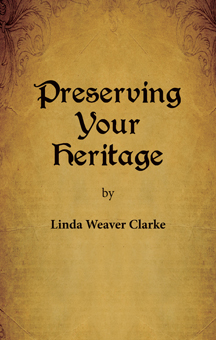
I have recently published a book called: Preserving Your Heritage: Tips For Writing Biographies and Autobiographies—Each of us has a story from our ancestors or our own story to tell. It’s up to us to write these experiences down. In Preserving Your Heritage, you will learn the most important elements of writing. These ideas will help you to write the stories of your heritage in a way that will bring them to life.

Faith, Hope & Charity, Holiday Celebrations, Jesus Christ

Why Is Easter Important To You?

Have you ever explained to someone who is not a Christian why you celebrate Easter? Have you ever thought about how you would explain the reason you believe in Jesus Christ and why He is important in your life? This is a question that most of us probably haven’t thought about before.

One day Ahmad S. Corbitt met a woman who asked him if he were a Christian. He replied that he was. He soon discovered that this Asian woman was not a Christian so he asked her, “Do you know why I as a Christian believe in Jesus Christ?”

I wondered how he would explain this personal belief to her? If someone didn’t understand who Christ was, how would I explain my beliefs? To this lady, Jesus was just a prophet that Christians believe in.

I liked how Ahmad Corbitt explained that we are all children of God and lived with our Heavenly Father before He sent us here to this earth. Then he told her that we faced “two main obstacles in this world: (1) physical death—the separation of our bodies from our spirits. And (2) spiritual death—our separation from God because our sins, mistakes, and flaws as mortals distance us from His holy presence.”

We know that God is merciful and loves all His children, so He provided a plan for us. It was a plan to help us overcome both physical and spiritual death. In the scriptures, it says: “God so loved the world, that he gave his only begotten Son, that whosoever believeth in him should not perish, but have everlasting life.” (John 3:16)

We needed a Savior, someone who could help us with these two “obstacles.” Ahmad Corbitt said: “Someone with infinite godly power to overcome all such opposition and obstacles would need to save us… Jesus Christ is that Savior. He had to suffer, die, and rise again—His infinite Atonement—to redeem all humanity from physical death and to give eternal life with God and our families to all who would follow Him.”

Ahmad was right. Jesus Christ suffered for our sins so we could be forgiven of our mistakes and wrong choices in this life. He also gave His life for us so we could be resurrected. Jesus Christ was the literal Son of God and the only one who could suffer for us. If you were approached by someone and asked why you believe in Christ, would you be able to explain your beliefs to him or her so they would understand?

Happy Easter, everyone!

A very touching video

Holiday Celebrations, Writing and Arts

A Fun Valentine’s Story

The writing of love notes to someone for Valentine’s Day has been popular since the 1700s. Many people made their own Valentines to give to a loved one. In the 1820s, special stationary was sold for Valentine greetings and was popular in the United States and Great Britain. In the 1840s, Valentine cards were finally created. They were sheets with embossed borders and illustrations that could be folded and sealed with wax.

The New York Courier in1830 wrote a humorous article about Valentine’s Day and picking a husband or wife at this time. It said: “We have ascertained the fact that the bachelors are moving around the city and actually making preparations for the celebration of St. Valentine’s Day. They have positively crawled out of their flannels, trimmed their whiskers, shaved the growth of ages, straightened the vertebrae, and bound them up in cloaks ten yards wide to keep the cold weather at a distance during the approaching festival. We give the ladies fair warning to hold themselves in readiness. The picked youth of the city, such as will make loving husbands, are to be present, if God prosper them.”

This article made me laugh. I love holidays, especially in fictional stories. One of my books is a Collection of Six Holiday Stories. Each story is fun and full of surprises. The first story is about Valentine’s Day. The Valentine Bandit has struck again. Each year he sneaks out of his hiding place and finds some poor unsuspecting widow to surprise. He is spreading happiness throughout the city of Willow Valley. Many a young girl wants to meet this bandit, but he is too sly to be caught. Reports say he has a black mask just like a bandit and is dressed all in black. Valentine’s Day is a day to show that we care about others, and this bandit is doing just that.

Check out Holidays in Willow Valley below and see what you think. Then read about other holidays, as well. Happy Valentine’s Day, everyone! I hope you have a great week.

This book is vailable as an eBook in Kindle Unlimited, as a Paperback, and as an audiobook.

Writing and Arts

A Fairytale Retold Book Release

Serena Clarke has written a fairytale romance that is so delightful. It is taken from a Grimms’ Fairytale. I was so impressed with how close she stayed to the true fairytale. I loved the intrigue and romance. But I especially loved how Larik was so patient with her and helped the spoiled princess begin to change and become humble. I loved how she learned to care about the peasants around her. It is truly a great story.

When Sunny Reviews wrote her review, she explains that she is a native of Germany and is familiar with Grimms’ Fairytales. She wrote: “This book is a retelling of a story from a Grimms’ Fairytale called King Thrushbeard. In German it was Koenig Drosselbard. Being a native German, I hate to admit that this is a Grimms’ story that I had not heard of. I really enjoyed the story how a very pampered princess learned to live a life of a peasant and was forced to marry someone against her will. This man, Larik, appears to be a most patient and thoughtful peasant and the story of their lives as husband and wife will be a great challenge for this man. It is a very engaging story, one that you will want to finish and find out what happens. Very good story!” ~Sunny Reviews

A young college-age reviewer added her review as well. She wrote: “In Royal Ruins was adventurous, exciting and romantic. All you could need from one of Serena Clarke’s books. I was on the edge of my seat with every turn of the page! I will definitely be reading this one again! ~ Kayla Ree

After reading these two reviews, I am sure you are intrigued by now and would like to know what the story is about. Here is the description of In Royal Ruins: Appalled by his daughter’s vain and impertinent attitude, the king forces her to marry a peasant, hoping to teach her a lesson. Feeling devastated by this decree, Alora loses everything she knows and is thrust into a world she is not prepared for. The skills she learned to help her rule a kingdom have not prepared her for the drudgery of living the life of a peasant’s wife. 

Larik, her new husband, is determined to help Alora and show her kindness despite her unfriendly personality. Will Larik’s example and affection towards her be enough to heal her heart of anger and grief so that she can see the beauty in the world once again? Can she let go of the past and allow herself to be loved?

I really liked what Author Gail Pallotta wrote about this story because she tells a few extra things in her review to help you understand why the Princess is ornery. It helps you to have compassion for her situation. She wrote: “Alora, a royal who was destined to rule a kingdom, loses her true love to a war. Afterward she grows bitter and hardened to love because she doesn’t want to get hurt again. Even though she has many suitors and her father tries to encourage her to marry, she finds fault with all of them and refuses. She tells her father since she can’t marry for love, she’ll marry for wealth, and he’s horrified. When Larik, a peasant with battle scars marring his face, comes to call, her father marries he and Alora. She grieves now, not only for lost love, but also for the way of life she once knew. She’s unaccustomed to the work of a peasant’s wife, but Larik is a kind, gentle husband who helps her and is determined to win her affection.

“Ms. Clarke does an excellent job of pulling the reader into a fantasy world of peasantry coated with an aura of yesteryear courting and romance. Even though I thought I knew how the book would end, the twists and turns held so much interest, I couldn’t put the book down. It’s a sweet story of true love with a wonderful message. I highly recommend it to all who like fairytale romances, true love and stories with happy endings. I thoroughly enjoyed it.” ~ Gail Pallotta

All in all, I could not put this book down. It intrigued me so much, wondering how she was going to adapt to her new life. And how was Larik going to soften her heart toward him? This book is available at Amazon in paperback, eBook, and also in Kindle Unlimited:

genealogy, Writing and Arts

Is it Important to Write Your Parent’s Biography?

Since 2006, I have taught hundreds of classes across the United States, helping those in attendance to write a biography of their father, mother, grandparents or their own autobiography. Many aren’t sure how to go about it so they attend my 2-hour writing class. Some have already written their family stories but wanted to know what more they could add to the story.

While teaching at the Cholla Branch Library in Phoenix, Arizona, a woman raised her hand and said, “I’m a professor at the University and I want you to know…”

I gulped. “Wow!” I interrupted with humor in my voice. “I’m so glad you didn’t tell me that before I began teaching. I would have been very nervous.”

The audience chuckled and the woman continued, “I want you to know that I have attended many writing classes at the university, but I learned more at this two-hour workshop than any class I’ve attended. I want to thank you.”

I was so humbled by what she said. It was something I did not expect, especially from a professor. I asked my husband why she gave me such a wonderful compliment and he said, “I think it’s because you always give examples of what you’re teaching. That really helps.”

One year as I taught my class in Colorado, a gentleman told me that he was a holocaust victim in Poland and his children wanted him to write about his experiences during World War II as a child. He said he wasn’t sure how to begin and what to include. After taking my class, he was so excited to go home and begin writing.

While in California, I met a woman before class began. She said her mother left Germany just before World War II broke out, leaving her parents and nine brothers and sisters behind. Some of them joined the underground to fight against Hitler. As we talked, she said their story was too sad to write about, and she didn’t want to do it.

I knew I had to speak to her about her dilemma but class was about to begin. Hopefully I would be able to answer her question in my lecture. When I finally came to the subject of conflict, I told the audience that this was a very important subject.

I explained, “We must tell about the trials in our ancestors’ lives. If they fought in the underground during World War II, tell about it. These were brave, valiant people who fought for freedom, who fought against tyranny. They fought against the evil powers of Hitler. Your children will be proud of their efforts. Yes, the death of a loved one is sad, but the story must be told.”

The woman smiled as I gazed down at her and she nodded. She had gotten the message and understood what I was saying.

While I was teaching at the Idaho State Historical Society Library in Boise, Idaho, a lady leaned over to my daughter towards the end of class and said: “I felt as if I had handcuffs on my wrists and your mother has just unlocked them.”

As I walk into each library to teach a class, a thrill enters my soul and I know I will be teaching someone who needs my help. Sometimes when I look down into the faces of the people I’m teaching, I’ll see a tear in someone’s eyes as they realize the importance of writing their parent’s stories.

Many times I receive very kind messages from the people who attend my class. Mike Kausch, from St. Louis, Missouri, wrote: “My wife and I received so much information last night at the Kirkwood Library. I believe you have motivated me to finally start writing my family history. We thoroughly enjoyed your presentation.”

At the Stockton County Public Library in California, Mary Jo Gohlke, from Adult Programming, wrote about my class: “I was terribly impressed! She instructs for two hours; the people were genuinely attuned to what she presents. She just impressed the heck out of me. She KNOWS her subject and can present it wonderfully. As I say, she is terrific, thorough, professional, yet strikes just the right chord with her audience.”

Each compliment I received throughout the years really touched my heart. I have had many people ask me to publish a book with my tips on writing a biography or autobiography as a reminder of what they learned. I have recently put one together and named it: Preserving Your Heritage. Below is a description of the book.

Preserving Your Heritage: Tips For Writing Biographies and Autobiographies—Each of us has a story from our ancestors or our own story to tell. It’s up to us to write these experiences down. In Preserving Your Heritage, you will learn the most important elements of writing. These ideas will help you to write the stories of your heritage in a way that will bring them to life. This book is available on Amazon as a paperback and ebook.

Happy Writing, everyone!

Writing and Arts

An Interview with Author Susie Carter

Susie is a first time children’s author. I have read Susie’s Children’s book and it is adorable. In The Contraption, a father and his son move to a quaint little village and are readily accepted by the villagers until the father gives his son a birthday present. The neighbors don’t understand and think the boy will be hurt with this gift. There are many lessons to be learned by what happens as the story unfolds. Here is a picture of the artistry inside the book.

Let’s find out more about this story from the author. Thank you for visiting my blog, Susie. Congratulations on your first children’s book! What age group is this book for?

This is a bedtime story to be read by an adult to a child. Almost any age child. My 11 year old grandson kept asking me all kinds of questions. The Idea is to get conversation going. (This grandson LOVES video games and rarely will sit and read) This book encourages children to find the hidden messages throughout the story. Gossip, Trust, misunderstanding, hurt, compassion, faith, and forgiveness.

What was the inspiration behind this story and what inspired you to write it? 

I thought of the analogy one day while talking to a group of ladies about the trials God lets us go through… why he continues to let us be hurt over and over. It continued to play over in my mind after the meeting till I finally had to write it down. Then people just begin to appear in my life to help me put this book together. I never in my wildest dreams thought of writing a book. 

What was your favorite part and what was the most difficult part of writing this children’s story?

My favorite part of the story is when the boy comes riding in on his bike. So unassuming. Not trying to show off, just wanting to show his dad he could do it. I suppose the difficult part was finding an illustrator. But again someone came into my life and told me about FIVER. I just had no idea. 

What characteristics do you like most about the main character and why? 

There are actually two characters. The father seems calm and wise. The boy is trusting and has total faith in his father. The combination creates a perfect relationship. There is no need to talk about the honest trust between them because it just is. This is what I believe should be the relationship we have between our God. Trusting that no matter what he allows us to go through is for our better good.

Do you have a favorite scene and what is it? 

The very last picture is my favorite where the father is hugging his son. The artist captured the emotion of complete love they have for each other perfectly. The town could see it too. 

Here is a sample from Susie’s book for my readers to enjoy.

Once again the Father picked up his son, hugged him, wiped off the dirt and drops of blood and kissed away his tears and bruises. “How could a father be so cruel? What kind of monster has moved into our village?” the people cried. Yet again as the boy stood up the father placed him back on the bike, the boy began to peddle while the father held tight to the seat and ran close beside him. 

This is a delightful story. You can find The Contraption on Amazon:

Christmas, Jesus Christ, Writing and Arts

Christ’s Humble Birth

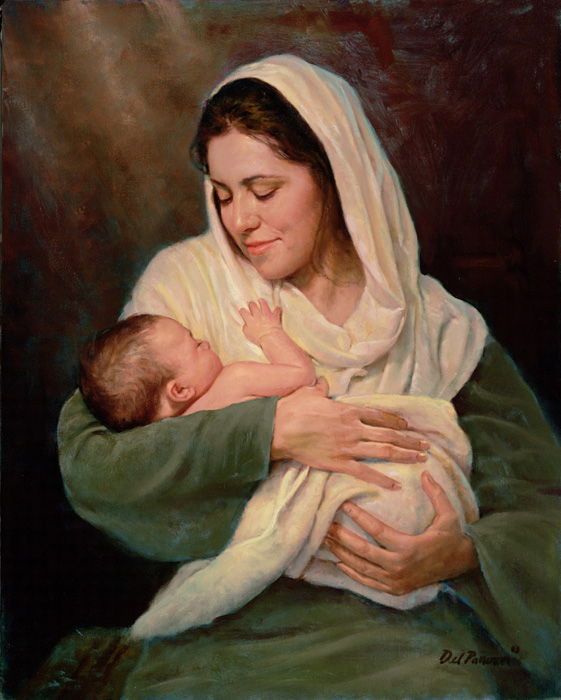
Mary and Baby Jesus

Off in the distance, a group of shepherds were tending their sheep when they heard choirs of angels singing. At first, they were startled and confused, not sure what to think of it.

An angel stood before them and said, “Fear not, for behold, I bring you good tidings of great joy, which shall be to all people. For unto you is born this day in the city of David a Savior, which is Christ the Lord. And this shall be a sign unto you: Ye shall find the babe wrapped in swaddling clothes, lying in a manger.”

With that announcement, the angels sang: “Glory to God in the highest and on earth peace, good will toward men.”

After the angels left, one of the shepherds said, “Let us now go even unto Bethlehem, and see this thing which is come to pass, which the Lord hath made known unto us.”

With haste, they traveled to the city of Bethlehem. It did not take long to arrive at the stable because the shepherds felt God directing them where to go and they soon found the babe lying in a manger just as the angel had announced.

With humble hearts, they knelt in reverence before the newborn babe. The happiness they felt was indescribable. They were grateful that God had sent the angels to them with a message about the Messiah. Why had they been so privileged to know about his birth? With great joy, the shepherds went about, making it known to everyone about the spiritual experience they had seen that night.

Meanwhile, the Star of Bethlehem shone brightly in the sky, announcing to everyone that the Messiah was born. It was a star that no one had ever seen before. The brightness got everyone’s attention throughout the world. When some Wise Men from the East noticed the star, they realized what it was. They had studied the signs and were aware of what it meant.

Packing what they needed and bringing along some servants, the men followed the star. It was a long journey but they did not give up. The star guided them in the right direction as they continued on their way.

When the Wise Men saw the “young child,” they instantly knew he was the one they were seeking and knelt before him in reverence, thanking God for leading them to the Savior of the World.

Jesus Christ is the Savior of the world and gave His life for us so we could be forgiven of our mistakes. In the Gospel of John, he wrote: “For God so loved the world, that he gave his only begotten Son, that whosoever believeth in him should not perish but have everlasting life. For God sent not his Son into the world to condemn the world; but that the world through him might be saved.” (John 3: 16-17)

During this Christmas season, think about how grateful you are to Jesus Christ. Then show it with your actions. “May we give as the Savior gave. To give of oneself is a holy gift. We give as a remembrance of all the Savior has given. May we also give gifts that have eternal value, along with our gifts that eventually break or are forgotten. How much better the world would be if we all gave gifts of understanding and compassion, of service and friendship, of kindness and gentleness? As the Christmas season envelops us with all its glory, may we, as did the wise men, seek a bright particular star to guide us in our celebration of the Savior’s birth. May we all make the journey to Bethlehem in spirit, taking with us a tender caring heart as our gift to the Savior. ~ Thomas S Monson

The Christmas Story & Other Beloved Stories of Jesus is available at Amazon.

Christmas, Holiday Celebrations, Jesus Christ

The Spirit of Giving at Christmastime

I read a story years ago that touched my heart like no other. I had heard of many stories about charity during Christmastime but none ever affected me like the one I read long ago. It brought tears to my eyes and I never forgot it. It was a true story that took place six years after World War II ended. This story reminds us to have compassion for our fellow man. Thomas S. Monson tells of an experience he had when he found out that someone was in need. Here is his story:

On a cold winter’s night in 1951, there was a knock at my door. A German brother from Ogden, Utah, announced himself and said, “Are you Bishop Monson?” I answered in the affirmative. He began to weep and said, “My brother, his wife, and family are coming here from Germany. They are going to live in your ward. Will you come with us to see the apartment we have rented for them?”

On the way to the apartment, he told me he had not seen his brother for many years. Through the holocaust of World War II, his brother had been faithful to the Church, once serving as a branch president before the war took him to the Russian front.

I observed the apartment. It was cold and dreary. The paint was peeling, the wallpaper soiled, the cupboards empty. A forty-watt bulb, suspended from the living room ceiling, revealed a linoleum floor covering with a large hole in the center. I was heartsick. I thought, “What a dismal welcome for a family which has endured so much.”

My thoughts were interrupted by the brother’s statement, “It isn’t much, but it’s better than they have in Germany.” With that, the key to the apartment was left with me, along with the information that the family would arrive in Salt Lake City in three weeks—just two days before Christmas.

Sleep was slow in coming to me that night. The next morning was Sunday. In our ward welfare committee meeting, one of my counselors said, “Bishop, you look worried. Is something wrong?”

I recounted to those present my experience of the night before, revealing the details of the uninviting apartment. There were a few moments of silence. Then Brother Eardley, the group leader of the High Priests, said, “Bishop, did you say that apartment was inadequately lighted and that the kitchen appliances were in need of replacement?” I answered in the affirmative. He continued, “I am an electrical contractor. Would you permit the High Priests of this ward to rewire that apartment? I would also like to invite my suppliers to contribute a new stove and a new refrigerator. Do I have your permission?”

I answered with a glad “Certainly.”

Then Brother Balmforth, the Seventies president, responded, “Bishop, as you know, I’m in the carpet business. I would like to invite my suppliers to contribute some carpet, and the Seventies can easily lay it and eliminate that worn linoleum.”

Then Brother Bowden, the president of the Elders quorum, spoke up. He was a painting contractor. He said, “I’ll furnish the paint. May the Elders paint and wallpaper that apartment?”

Sister Miller, the Relief Society president, was next to speak. “We in the Relief Society cannot stand the thought of empty cupboards. May we fill them?”

The three weeks which followed are ever to be remembered. It seemed that the entire ward joined in the project. The days passed, and at the appointed time, the family arrived from Germany. Again at my door stood the brother from Ogden. With an emotion-filled voice, he introduced to me his brother, his brother’s wife, and their family. Then he asked, “Could we go visit the apartment?” As we walked up the staircase leading to the apartment, he repeated, “It isn’t much, but it’s more than they have had in Germany.” Little did he know what a transformation had taken place and that many who had participated were inside waiting for our arrival.

The door opened to reveal a newness of life. We were greeted by the aroma of freshly painted woodwork and newly papered walls. Gone was the forty-watt bulb, along with the worn linoleum it had illuminated. We stepped on carpet deep and beautiful. A walk to the kitchen presented to our view a new stove and new refrigerator. The cupboard doors were still open; however, they now revealed every shelf filled with food. As usual, the Relief Society had done its work.

In the living room, we began to sing Christmas hymns. We sang “Silent night! Holy night! All is calm, all is bright.” We sang in English; they sang in German. At the conclusion, the father, realizing that all of this was his, took me by the hand to express his thanks. His emotion was too great. He buried his head in my shoulder and repeated the words, “Mein Bruder, mein Bruder, mein Bruder.”

It was time to leave. As we walked down the stairs and out into the night air, snow was falling. Not a word was spoken. Finally, a young girl asked, “Bishop, I feel better than I have ever felt before. Can you tell me why?” I responded with the words of the Master: “Inasmuch as ye have done it unto one of the least of these my brethren, ye have done it unto me.” (Matt. 25:40) (Thomas S. Monson, “A Provident Plan—A Precious Promise,” Ensign, May 1986, 64)

May we remember to give from our hearts during this Christmas season. Kindness and a gentle smile go a long ways and can cheer someone up. Merry Christmas, everyone!

Merry Christmas!

Writing and Arts

An Interview with Author Lori Hansen Jacobsen

I have read Lori’s book and it is delightful. The story, Shadows, is written in rhyme. Young children love books that rhyme. My children surely did when they were young. I had a book full of Mother Goose Rhymes that I read to them. Just recently they were reminiscing about how much they loved that book. Let’s find out more about this children’s book from the author. 

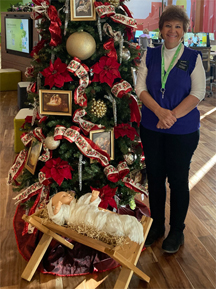
Thank you for visiting my blog, Lori. I love your photo next to a Christmas tree with Baby Jesus. It’s lovely. Congratulations on your first children’s book! I bet you’re so excited. What age group is this book for?  

I wrote this book as I was teaching 1st grade then moved to 2nd grade, ages 6-8. The students were learning about rhyming words so I wrote this book for them to discover many words that rhyme.

What was the inspiration behind Shadows and what inspired you to write it? 

I was inspired to write this book while teaching lower grades to help the students learn a variety of rhyming words.

When you develop a story line especially for children, what is your favorite part and what is the most difficult part?  

My favorite part was finding things that children could relate with in their own families. The most difficult part was finding the best way to rhyme words with the objects I wanted to include from shadows.

When creating a story in rhyme, do you find it easy? 

It was fun to look around and explore the many shadows that surround us and rhyme words with those objects.

What do you hope children will learn from this book? 

I hope children will have fun reading and exploring the many shadows they see around them. I hope to inspire them to write their own rhyming book on subjects that they love to explore.

Thank you, Lori. I read Shadows and it is a delightful story. Check out Lori’s book on Amazon with this link below. Click on “preview” and read a few pages.